
How Working Professionals Should Create Multiple Resume Versions

Last Updated At: 17 Mar 2026
7 min read
Learn to Create Multiple Versions of a Resume to Impress Employers
Many professionals spend hours perfecting a
single resume and then send the same document to dozens of job applications. While this approach feels efficient, it rarely produces strong results.
The reality is that every job opportunity has slightly different expectations, priorities, and keywords. When a resume is not tailored to reflect those differences, it may fail to capture the recruiter’s attention or pass automated screening systems.
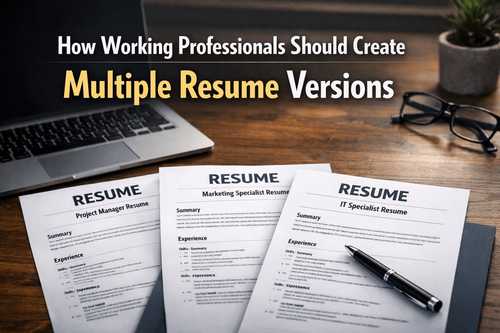
Creating multiple versions of your resume is a smarter and more effective strategy. Instead of rewriting your resume from scratch each time, you build a flexible foundation that can be customised for different roles, industries, or career paths.
This guide explains how professionals can create structured resume variations that highlight the most relevant skills and experiences for each opportunity.
Who Is This Blog For?
This blog and guidebook are particularly useful for:
- Job seekers applying to multiple roles in the same field
- Professionals exploring opportunities across different industries
- Candidates targeting both leadership and specialist positions
- Employees transitioning into new career domains
- Professionals seeking to improve resume success rates
Anyone who wants to increase interview opportunities by presenting a more targeted professional profile will benefit from this approach.
Why This Topic Matters Today?
Recruitment processes have evolved significantly over the past decade. Today, many organisations rely on Applicant Tracking Systems (ATS) to filter resumes before a human recruiter reviews them.
These systems scan resumes for specific keywords, job-related skills, and relevant experiences that match the job description.
If your resume does not include those signals — even if you are highly qualified — it may never reach a hiring manager.
At the same time, recruiters spend only a few seconds scanning each resume. They look for immediate evidence that the candidate aligns with the role’s requirements.
A tailored resume solves both challenges. By aligning your language, achievements, and emphasis with each role, you increase the likelihood that your application will pass automated filters and capture recruiter attention.
Core Concept or Framework Explained
Creating multiple resume versions does not mean writing entirely new resumes each time. Instead, it involves building a modular resume structure.
A modular resume contains core information that remains consistent across versions, combined with adaptable sections that can be customised for specific opportunities.
These adaptable elements typically include:
- Professional summary
- Key skills section
- Achievement bullet points
- Project descriptions
- Keywords aligned with the job description
By adjusting these sections strategically, professionals can highlight the experiences most relevant to a particular role.
For example, a marketing professional applying for both brand management and digital marketing roles may emphasise different achievements in each version of the resume.
This targeted approach ensures that recruiters immediately see the strongest alignment with their requirements.
How This Blog and Guidebook Help You?
By following the framework in this guide, professionals can:
- Create a flexible resume structure that supports multiple career paths
- Adapt resumes efficiently for different job applications
- Improve alignment with job descriptions and ATS systems
- Highlight the most relevant experiences for each role
- Increase the likelihood of being shortlisted for interviews
Instead of sending the same generic resume repeatedly, you build a strategic system for targeted applications.
Step-by-Step Breakdown
Step 1: Build a Strong Master Resume
The first step is creating a comprehensive master resume that includes all of your relevant professional experiences, achievements, skills, and projects.
This master version acts as a repository of your career accomplishments. It may be longer than a typical resume and should include detailed information about your work history.
The purpose of the master resume is to ensure that you do not forget or overlook important achievements when creating tailored versions.
From this central document, you can easily select the most relevant content for each application.
Step 2: Identify Your Target Role Categories
Most professionals apply to several variations of roles within their broader field.
For example:
- Marketing Manager
- Digital Marketing Specialist
- Brand Strategist
Each role emphasises different capabilities, even if the overall field is similar.
Group the roles you plan to apply for into two or three categories. Each category will eventually have its own customised resume version.
This step helps ensure that your resume variations remain focused and consistent.
Step 3: Analyse Job Descriptions Carefully
Job descriptions contain valuable clues about what employers prioritise.
Look for patterns such as:
- Repeated keywords and skill requirements
- Core responsibilities mentioned across multiple listings
- Preferred qualifications and certifications
- Leadership or collaboration expectations
Highlight these patterns and note which skills or achievements from your experience align most strongly with them.
This analysis will guide how you customise your resume for each role category.
Step 4: Adjust Key Resume Sections
Once you understand the expectations of each role category, begin adapting the most visible sections of your resume.
Professional Summary
Your summary should clearly reflect the specific role you are targeting.
Key Skills Section
Reorder or prioritise skills that align with the job description.
Achievement Bullet Points
Highlight accomplishments that demonstrate relevant impact for that role.
Project Experience
If applicable, emphasise projects that showcase skills valued in that specific job category.
These adjustments allow recruiters to quickly recognise your relevance to the position.
Step 5: Maintain Consistency and Accuracy
While customising resumes is important, consistency across versions is equally critical.
Your employment history, job titles, and timelines must remain accurate and unchanged. Tailoring should focus on emphasis and language rather than altering factual information.
Maintain a clear naming system for different resume versions so that you always submit the correct document for each application.
A simple approach might include file names such as:
- Resume_Marketing_Manager
- Resume_Digital_Marketing
- Resume_Brand_Strategy
This organisation prevents confusion and keeps your application process efficient.
Common Mistakes or Pitfalls to Avoid
When creating multiple resume versions, professionals often encounter several challenges.
Common mistakes include:
- Creating too many resume variations and losing focus
- Making drastic changes that create inconsistencies across versions
- Ignoring keyword alignment with job descriptions
- Overloading resumes with irrelevant achievements
- Forgetting to update all versions when new experiences are added
A disciplined, structured approach helps prevent these issues.
How Should You Use This Guidebook Effectively?
To maximise the value of this guide:
- Start by building a detailed master resume
- Limit role categories to two or three clear targets
- Analyse job descriptions carefully before tailoring resumes
- Maintain consistency in employment history across all versions
- Update your master resume regularly with new achievements
This system allows you to customise resumes efficiently while maintaining accuracy and professionalism.
Key Takeaways
- A single generic resume is rarely effective for modern job applications
- Creating targeted resume versions increases alignment with job descriptions
- A master resume helps organise all professional achievements
- Job description analysis reveals the most relevant skills to highlight
- Customising summaries, skills, and achievements improves recruiter engagement
- Structured resume variations improve interview success rates
Your Next Step: Accelerate Your Career with PlanetSpark
Creating an impact-driven resume is not just about landing your next job—it’s about owning your professional story and presenting it with clarity, confidence, and credibility. When your resume clearly communicates value, results, and impact, opportunities follow naturally.
At PlanetSpark, we are committed to empowering working professionals with practical, outcome-focused resources that drive real career growth. From resume building and workplace communication to leadership presence and professional writing, our programs are designed to help you succeed in today’s fast-evolving job market.
Visit https://www.planetspark.in/resources to explore:
- Career and resume-building guides
- Workplace communication and professional writing resources
- Skill-development tools curated for working professionals
Want a deeper, hands-on experience?
You can also book a free trial session to learn more about PlanetSpark’s Working Professional Courses, designed to accelerate your career through personalised coaching, real-world practice, and expert guidance.
Your career deserves more than generic advice.
It deserves clarity, confidence, and measurable impact.
Start building that advantage today—with PlanetSpark.