
Identifying Thinking Biases: A Key to Better Decision-Making
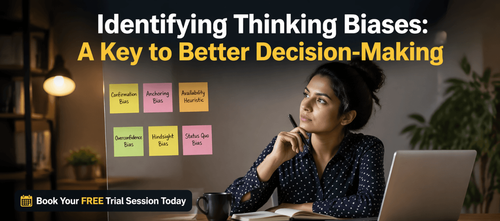

Identifying Thinking Biases: A Self-Assessment Tool for Improved Professional Decision-Making
In every professional decision, from hiring to strategy to navigating difficult meetings, cognitive biases play an invisible role. These biases, often developed over years of experience, culture, and repetition, can shape decisions in ways that undermine clarity, accuracy, and long-term outcomes. The challenge is that these biases operate silently, often becoming most apparent in high-pressure situations when clear thinking is most critical.
The "Thinking Bias Identification Worksheet" is designed to help professionals identify and overcome these biases, providing practical tools to enhance decision-making and improve outcomes. This resource offers a structured, actionable approach to understanding your biases, recognizing their triggers, and applying de-biasing strategies in real-time.
Download these resources and apply them alongside your daily work for improved clarity, productivity, and professional growth. You can also book a free trial to gain expert guidance and enhance your communication, problem-solving, and decision-making skills. The materials are designed in a clear, structured format to help professionals learn efficiently and implement insights with confidence.
Who Is This Blog For?
1. Working professionals seeking to improve their decision-making processes
2. Managers and team leaders navigating high-stakes decisions
3. Job seekers and consultants looking to make sound, unbiased choices
4. Professionals in industries where strategy, hiring, and performance reviews are frequent
5. Anyone looking to increase awareness of their cognitive biases and reduce their impact
Why This Topic Matters Today?
In today’s fast-paced professional environment, biases are a major obstacle to sound decision-making. According to research, companies that apply structured de-biasing techniques outperform their peers by up to 20%. Yet, biases—like confirmation bias, overconfidence, and groupthink—often remain unaddressed, leading to poor decisions, missed opportunities, and damaged relationships.
Professionals often face pressure in high-stakes situations like hiring decisions, project planning, or team evaluations, making it easy for biases to slip in unnoticed. The problem is compounded by the fact that biases tend to increase in such scenarios, affecting outcomes when clear, unbiased thinking is needed most. This is why addressing and managing biases is more important than ever.
Core Concept or Framework Explained
The core concept of this guide is identifying and mitigating cognitive biases in decision-making. The resource is structured into key modules that equip you with both awareness and tools to counteract these biases:
The Big 8 Biases: The guide focuses on eight key biases that are most impactful in professional settings:
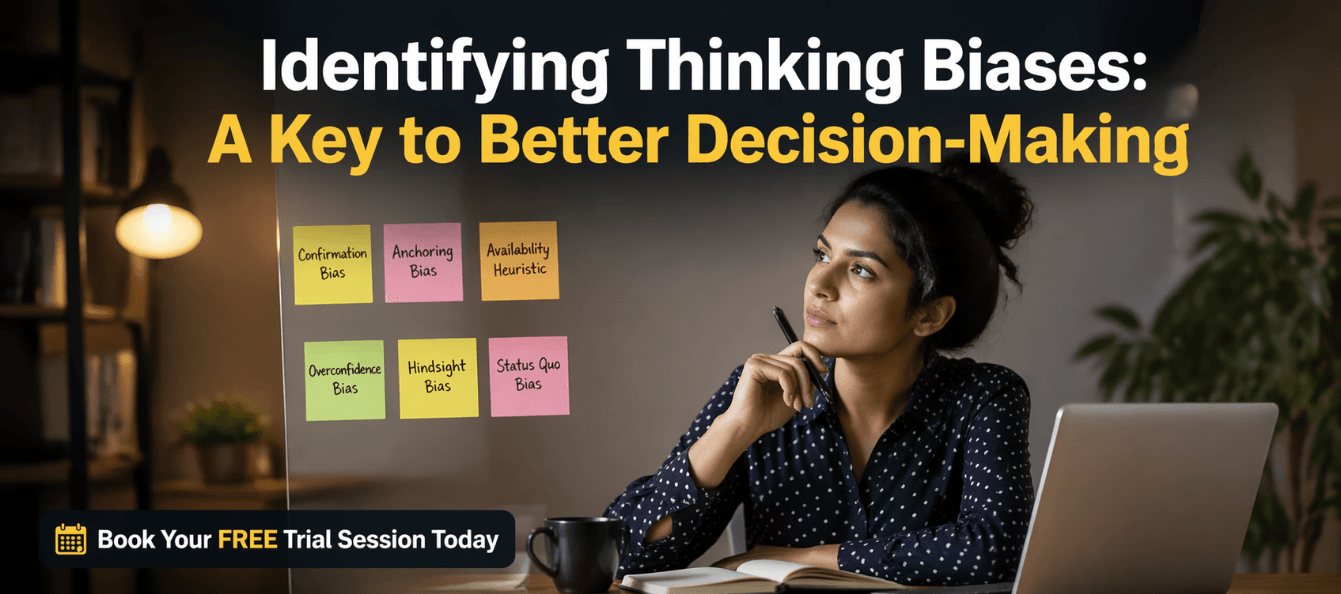
Confirmation Bias: Focusing on information that confirms your preconceptions and ignoring contradictory evidence.
Anchoring Bias: Overrelying on the first piece of information encountered, often skewing judgments.
Halo Effect: Allowing one positive trait to overshadow the overall evaluation.
Groupthink: Conforming to team consensus to avoid conflict, even when you have better information.
Overconfidence Bias: Overestimating your abilities or the accuracy of your predictions.
Loss Aversion: Overvaluing losses over equivalent gains, leading to risk-avoidance behaviors.
Availability Heuristic: Overweighting recent or emotionally vivid examples.
Fundamental Attribution Error: Attributing others’ failures to their character while excusing your own.
Bias Identification Scorecard: A self-assessment tool to help you score your tendencies toward each of these biases. By reflecting on specific decisions or interactions, you can identify which biases affect you most often and which need your attention.
Trigger Mapping: Understanding where and when these biases are activated in your professional environment—whether it’s under pressure, during group decisions, or in high-stakes evaluations—ensures you can prepare for these triggers.
How This Blog and Guidebook Help You?
The "Thinking Bias Identification Worksheet" provides a practical, structured approach for professionals to understand and manage their cognitive biases. It will help you:
1. Recognize when biases are influencing your decisions
2. Understand the impact these biases have on your work and relationships
3. Build habits to reduce bias-driven errors and make clearer, more rational choices
4. Increase self-awareness, leading to better outcomes in hiring, strategy, and leadership
5. Improve team dynamics by identifying and addressing groupthink or the halo effect in decision-making
By using this resource, you will gain a deeper understanding of your own thinking patterns and how they can shape your decisions—ultimately leading to better, more confident career choices.
Step-by-Step Breakdown
Step 1: Read & Reflect
Begin by reading through each bias category and reflecting on how they might show up in your own decision-making process. This initial phase is about understanding the biases that are most likely influencing your behavior.
Step 2: Self-Score
Rate your tendency for each bias using a scale from 1 (Rarely) to 5 (Very Frequently). Think of recent decisions or interactions that can help you assess your bias tendencies accurately.
Step 3: Identify Triggers
Identify where and when these biases appear most often. This could be in high-pressure meetings, during performance reviews, or when you’re making financial or strategic decisions. Noting these triggers helps you prepare and counteract them in real-time.
Step 4: Commit to Action
Choose one intervention for each high-risk bias you’ve identified. By committing to these actions, you’ll begin to develop habits that reduce bias-driven mistakes and improve your professional judgment.
Common Mistakes or Pitfalls to Avoid
Even when professionals are aware of their biases, they still often fall into certain traps:
1. Eliminating Biases Instead of Managing Them: It’s important to accept that biases cannot be eliminated. Instead, design systems and processes that catch them before they influence decisions.
2. Focusing on Too Many Biases: Trying to tackle all biases at once is overwhelming. Focus on your top two or three Priority Bias Zones for the most effective change.
3. Using Strategies in Low-Stakes Moments Only: Biases show up most powerfully when the stakes are high. Make sure you apply your de-biasing strategies in these situations.
4. Working Alone: It’s essential to share your findings with your team and create a culture that encourages open discussion of biases.
How Should You Use This Guidebook Effectively?
To get the most value from this worksheet, follow these practical instructions:
Time Investment: Set aside 30–45 minutes to complete the worksheet, reflecting on recent professional decisions and scoring your biases.
Review and Revisit: Use this guide regularly, especially when facing high-stakes decisions or challenging professional scenarios.
Collaborate: Consider doing the self-assessment with a trusted colleague or mentor to get additional insights.
Consistent application of these strategies will help you manage your biases and improve your decision-making over time.
Key Takeaways
1. Cognitive biases affect every professional decision
2. Self-awareness is the first step toward better decision-making
3. Recognizing bias triggers and applying strategies can drastically improve outcomes
4. Consistent practice is essential for long-term bias management
5. Bias management benefits both individual and team performance
Your Next Step: Accelerate Your Career with PlanetSpark
Creating an impact-driven resume is not just about landing your next job—it’s about owning your professional story and presenting it with clarity, confidence, and credibility. When your resume clearly communicates value, results, and impact, opportunities follow naturally.
At PlanetSpark, we are committed to empowering working professionals with practical, outcome-focused resources that drive real career growth. From resume building and workplace communication to leadership presence and professional writing, our programs are designed to help you succeed in today’s fast-evolving job market.
Visit https://www.planetspark.in/resources to explore:
1. Career and resume-building guides
2. Workplace communication and professional writing resources
3. Skill-development tools curated for working professionals
Want a deeper, hands-on experience?
You can also book a free trial session to learn more about PlanetSpark’s Working Professional Courses, designed to accelerate your career through personalised coaching, real-world practice, and expert guidance.
Your career deserves more than generic advice.
It deserves clarity, confidence, and measurable impact.
Personalized Communication Roadmaps
Record a video to get a AI generated personalized communication reports