
Leadership Communication Planning Guide for Managers 2026
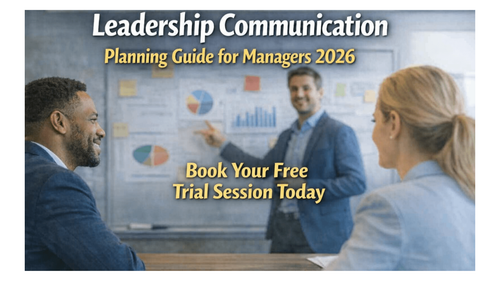

Leadership Communication Planning Worksheet: A Practical Guide for Career Acceleration
Leadership is as much about communication as it is about decision-making. Yet, many professionals struggle with clarity, alignment, and impact when delivering important messages. Miscommunication leads to confusion, wasted effort, and eroded trust.
The PlanetSpark guidebook “Leadership Communication Planning Worksheet” provides a structured, practical tool to help leaders prepare for high-stakes presentations, difficult conversations, and team-wide announcements. By following this worksheet, leaders can ensure every communication is intentional, audience-specific, and outcome-driven.
Book your free trial session today with Planetspark.
Download for more details or PDF file.
Who Is This Blog For?
- Mid-to-senior level professionals preparing for
executive presentations
- Managers addressing organisational change or sensitive topics
- Leaders delivering performance feedback or team updates
- Professionals launching new initiatives or projects
- Anyone seeking to improve clarity and impact in communication
Why This Topic Matters Today?
In today’s fast-paced environment, poor communication is one of the most common leadership failures. According to the guidebook, clarity before content is the foundation of effective communication. Without structured planning, even well-written messages can fail to resonate, leaving audiences confused or disengaged.
Core Concept or Framework Explained
The worksheet is built around seven structured steps:
1. Define your communication goal
2. Know your audience
3. Structure your message
4. Choose the right channel and timing
5. Anticipate questions and objections
6. Prepare for delivery
7. Plan follow-up and feedback
This system ensures communication is intentional, audience-focused, and complete—from preparation to follow-through.
How This Blog and Guidebook Help You?
By applying the worksheet, leaders can:
- Craft clear, outcome-driven messages
- Tailor communication to diverse audiences
- Deliver with confidence and emotional intelligence
- Anticipate objections and prepare responses
- Close the loop with follow-up and feedback
Step-by-Step Breakdown
Step 1: Define Your Communication Goal
- Identify the primary objective: Inform, Persuade, Inspire, Align, or Request Action
- Write your core one-sentence message
- Define success indicators to measure impact
Step 2: Know Your Audience
- Segment stakeholders by role, seniority, or department
- Assess their level of context
- Identify priorities and likely concerns
- Frame the message to resonate with their needs
Step 3: Structure Your Message
- Choose a framework: BLUF, STAR, Problem-Solution-Benefit, or What-So What-Now What
- Build message architecture: opening hook, context, core message, supporting points, call to action, closing
Step 4: Choose Channel and Timing
- Match channel to message type: synchronous (meetings), asynchronous (email), visual (decks), informal (1:1)
- Consider timing based on workload, news cycle, or prior events
- Pre-brief stakeholders if necessary
Step 5: Anticipate Questions and Objections
- Prepare responses to common objections: “Why now?”, “What about cost?”, “Has this been tried before?”, “What does this mean for me?”
- Use supporting data and examples to reinforce credibility
Step 6: Delivery Preparation
- Set tone and register (calm, assertive, inspirational, serious)
- Check emotional intelligence—acknowledge audience emotions
- Rehearse delivery, confirm logistics, and remove jargon
- Speak plainly and keep communication concise
Step 7: Follow-Up and Feedback
- Send recap and confirm next steps immediately after
- Track actions and report outcomes within 48 hours
- Close the loop on commitments to build credibility
- Ask for feedback: “What could I have said more clearly?”
Common Mistakes or Pitfalls to Avoid
- Leading with information instead of insight
- No clear call to action
- Using one message for all audiences
- Burying the lead
- Overloading with content
- Avoiding difficult truths
- Skipping follow-up
- Choosing the wrong channel
- Neglecting emotional tone
- Never seeking feedback
How Should You Use This Guidebook Effectively?
- Complete the worksheet before every major communication event
- Allocate 15–30 minutes for preparation
- Use prompts and templates to structure your plan
- Revisit the worksheet quarterly to refine habits
- Apply lessons from real-world scenarios to your own context
Key Takeaways
- Clarity before content—define your goal first
- Audience first—frame messages around their priorities
- Structure earns attention—reduce cognitive load with clear frameworks
- Channel and timing are strategic choices—match delivery to context
- Follow-up closes the loop—communication is incomplete without action tracking
Your Next Step: Accelerate Your Career with PlanetSpark
Creating an impact-driven resume is not just about landing your next job—it’s about owning your professional story and presenting it with clarity, confidence, and credibility. When your resume clearly communicates value, results, and impact, opportunities follow naturally.
At PlanetSpark, we are committed to empowering working professionals with practical, outcome-focused resources that drive real career growth. From resume building and workplace communication to leadership presence and professional writing, our programs are designed to help you succeed in today’s fast-evolving job market.
Visit https://www.planetspark.in/resources to explore:
- Career and resume-building guides
- Workplace communication and professional writing resources
- Skill-development tools curated for working professionals
Want a deeper, hands-on experience?
You can also book a free trial session to learn more about PlanetSpark’s Working Professional Courses, designed to accelerate your career through personalised coaching, real-world practice, and expert guidance.
Your career deserves more than generic advice.
It deserves clarity, confidence, and measurable impact.
Start building that advantage today—with PlanetSpark.
Personalized Communication Roadmaps
Record a video to get a AI generated personalized communication reports