
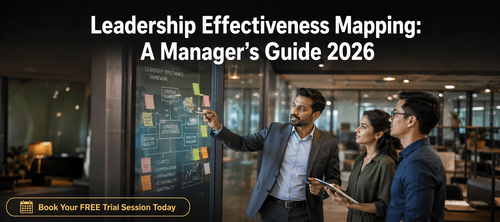
Leadership Effectiveness Mapping: A Manager’s Guide 2026

Leadership Scorecards Explained: How to Measure and Improve Your Effectiveness Across Real-World Situations
Leadership is often judged by outcomes—but outcomes alone don’t tell the full story. A leader who performs exceptionally well in one situation may struggle in another. You might excel in team development but falter during crisis management, or lead effectively in stable conditions but lose clarity during change. Without a structured way to evaluate leadership across different contexts, these gaps remain hidden—and unaddressed.
This is where leadership scorecards become essential. Instead of relying on subjective impressions, you gain a systematic, scenario-based approach to assess, document, and improve your leadership effectiveness. The resource “Mapping Leadership Effectiveness Across Different Situations” introduces a powerful framework of scorecards designed to evaluate leadership performance across real-world scenarios—from crisis response to cross-functional collaboration.
Download these resources and apply them alongside your daily work for improved clarity, productivity, and professional growth. You can also book a free trial to gain expert guidance and enhance your communication, problem-solving, and decision-making skills. The materials are designed in a clear, structured format to help professionals learn efficiently and implement insights with confidence.
Who Is This Blog For?
- Managers and team leads seeking structured leadership evaluation tools
- Senior professionals preparing for performance reviews or promotions
- HR professionals and coaches conducting leadership assessments
- Consultants and cross-functional leaders managing complex scenarios
- Job seekers aiming to demonstrate leadership impact with evidence
Why This Topic Matters Today?
Leadership today is situational, not static. As highlighted on page 2 of the guide, leadership effectiveness varies depending on context—what works in a calm environment may fail during a crisis.
However, most organisations still rely on:
- Generic leadership frameworks that ignore situational context
- Annual reviews that miss real-time performance signals
- Outcome-focused evaluations that overlook behaviour and decision-making
This creates blind spots in leadership development. Without structured evaluation, professionals cannot clearly identify strengths, gaps, or improvement areas. Scorecards solve this by introducing measurable, context-specific evaluation.
Core Concept or Framework Explained
The core framework is built around scenario-specific leadership scorecards. Instead of a one-size-fits-all evaluation, the guide provides 10 distinct templates—each designed for a specific leadership situation.
As shown in the template directory on page 3, these include:
- Crisis leadership
- Remote team management
- Cross-functional collaboration
- Change management
- Strategic decision-making
- Conflict resolution and more
Each scorecard evaluates leadership across key dimensions such as:
- Communication clarity
- Decision-making quality
- Emotional intelligence
- Stakeholder management
- Accountability
This ensures a holistic, evidence-based assessment of leadership performance.
How This Blog and Guidebook Help You?
Using these scorecards transforms how you evaluate and communicate leadership:
- Provides objective, structured feedback instead of vague opinions
- Helps identify situational strengths and weaknesses
- Supports performance reviews with concrete evidence
- Improves coaching and development conversations
- Enables self-assessment and continuous improvement
Most importantly, it helps you move from perception-based leadership evaluation to data-driven insights.
Step-by-Step Breakdown
Step 1: Select the Right Leadership Scenario
Start by choosing the scorecard that matches your situation. The guide includes templates for scenarios like crisis management, remote leadership, and strategic decision-making.
As illustrated in the process flow on page 2:
- Select template based on context
- Fill placeholders with real observations
- Score honestly
- Act on results
Step 2: Capture Real Observations and Evidence
Each scorecard requires specific examples, not assumptions. For instance, the Crisis Leadership Scorecard evaluates:
- Communication under pressure
- Decision-making speed and quality
- Team stabilisation efforts
This ensures evaluations are grounded in real behaviour.
Step 3: Score Leadership Across Key Dimensions
Each dimension is rated on a scale of 1 to 5, with clear definitions:
- 5 indicates exceptional performance
- 1 indicates ineffective leadership
This standardised scoring system ensures consistency and comparability across evaluations.
Step 4: Analyse Strengths and Gaps
Once scored, identify:
- High-performing dimensions to replicate
- Low-scoring areas needing improvement
For example, the Remote Leadership Scorecard evaluates factors like:
- Clarity of goals
- Inclusion across time zones
- Response to disengagement signals
These insights highlight where leaders need to adapt.
Step 5: Translate Scores into Action
The appendix on page 14 provides clear guidance:
- Scores 28–35 indicate role-model leadership
- Scores 21–27 suggest developing strengths
- Scores below 20 highlight need for structured support
This ensures evaluation leads to actionable development plans.
Step 6: Apply Across Different Leadership Situations
Each template focuses on a unique leadership challenge. For example:
- Crisis Leadership Scorecard (page 4) evaluates performance during high-pressure events
- Cross-Functional Collaboration Scorecard (page 6) assesses influence without authority
- Strategic Decision-Making Scorecard (page 11) measures judgment and risk awareness
Using multiple scorecards gives a complete picture of leadership capability.
Step 7: Use Scorecards for Professional Growth
These scorecards are especially valuable for:
- Performance reviews
- Coaching sessions
- Promotion readiness
- Job applications
They help articulate leadership impact with clarity and evidence.
Common Mistakes or Pitfalls to Avoid
The guide highlights several common errors:
- Using generic leadership frameworks that ignore context
- Evaluating leadership only during formal review cycles
- Focusing only on results, not behaviour and process
- Confusing personality traits with leadership skills
- Failing to document observations with examples
Avoiding these mistakes ensures accurate and meaningful evaluation.
How Should You Use This Guidebook Effectively?
To maximise results, follow a disciplined approach:
- Use scorecards immediately after key events
- Capture specific, detailed observations
- Score honestly without bias
- Review results with a coach, manager, or mentor
- Translate insights into clear development actions
Recommended workflow:
- 15–30 minutes post-event for documentation
- 30–60 minutes for scoring and reflection
- Quarterly reviews for trend analysis
Consistency is critical—one scorecard provides insight, but multiple scorecards reveal patterns.
Key Takeaways
- Leadership effectiveness is situational, not fixed
- Scorecards provide structured, objective evaluation
- Real-world scenarios reveal true leadership capability
- Data-driven insights improve performance and growth
- Regular evaluation builds stronger, more adaptable leaders
- Actionable feedback is the key to leadership development
Your Next Step: Accelerate Your Career with PlanetSpark
Creating an impact-driven resume is not just about landing your next job—it’s about owning your professional story and presenting it with clarity, confidence, and credibility. When your resume clearly communicates value, results, and impact, opportunities follow naturally.
At PlanetSpark, we are committed to empowering working professionals with practical, outcome-focused resources that drive real career growth. From resume building and workplace communication to leadership presence and professional writing, our programs are designed to help you succeed in today’s fast-evolving job market.
Visit https://www.planetspark.in/resources to explore:
- Career and resume-building guides
- Workplace communication and professional writing resources
- Skill-development tools curated for working professionals
Want a deeper, hands-on experience?
You can also book a free trial session to learn more about PlanetSpark’s Working Professional Courses, designed to accelerate your career through personalised coaching, real-world practice, and expert guidance.
Your career deserves more than generic advice.
It deserves clarity, confidence, and measurable impact.
Personalized Communication Roadmaps
Record a video to get a AI generated personalized communication reports