
Leadership Feedback Systems: Growth Guide for Managers
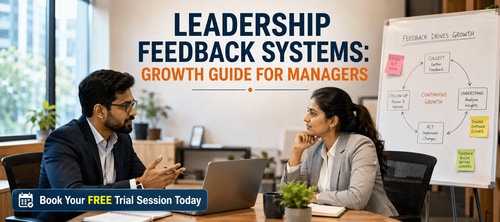

Build a Personal Leadership Feedback System for Continuous Growth and Career Acceleration
Most professionals believe they are improving as leaders simply because they are gaining experience. But experience without structured reflection and feedback often leads to repeated mistakes, blind spots, and stalled growth. The reality is that many professionals receive feedback only once or twice a year, often in vague, high-level performance reviews that fail to drive meaningful change.
This passive approach to feedback leaves enormous untapped potential. Leadership growth doesn’t happen by chance—it happens when you actively design a system to collect, analyze, and act on feedback consistently. A structured personal leadership feedback system gives you control over your development, helping you turn everyday experiences into measurable progress.
Download these resources and apply them alongside your daily work for improved clarity, productivity, and professional growth. You can also book a free trial to gain expert guidance and enhance your communication, problem-solving, and decision-making skills. The materials are designed in a clear, structured format to help professionals learn efficiently and implement insights with confidence.
Who Is This Blog For?
- Managers and team leaders looking to improve leadership effectiveness
- Consultants and professionals working in dynamic, client-facing roles
- Emerging leaders preparing for promotions or new responsibilities
- Career switchers aiming to build strong leadership foundations
- Professionals committed to continuous self-improvement and growth
Why This Topic Matters Today?
In today’s fast-paced and feedback-driven work environment, relying solely on formal performance reviews is no longer enough. Professionals who actively seek and use feedback outperform those who don’t.
Without a structured system:
- Feedback becomes inconsistent and forgettable
- Growth becomes reactive rather than intentional
- Blind spots remain unaddressed
- Leadership effectiveness stagnates
As highlighted in the guidebook, leadership growth requires a repeatable system that captures 360-degree perspectives, identifies patterns, and translates insights into action.
Core Concept or Framework Explained
The guide introduces a Personal Leadership Feedback System—a structured, repeatable framework that professionals can own and operate independently of formal HR processes.
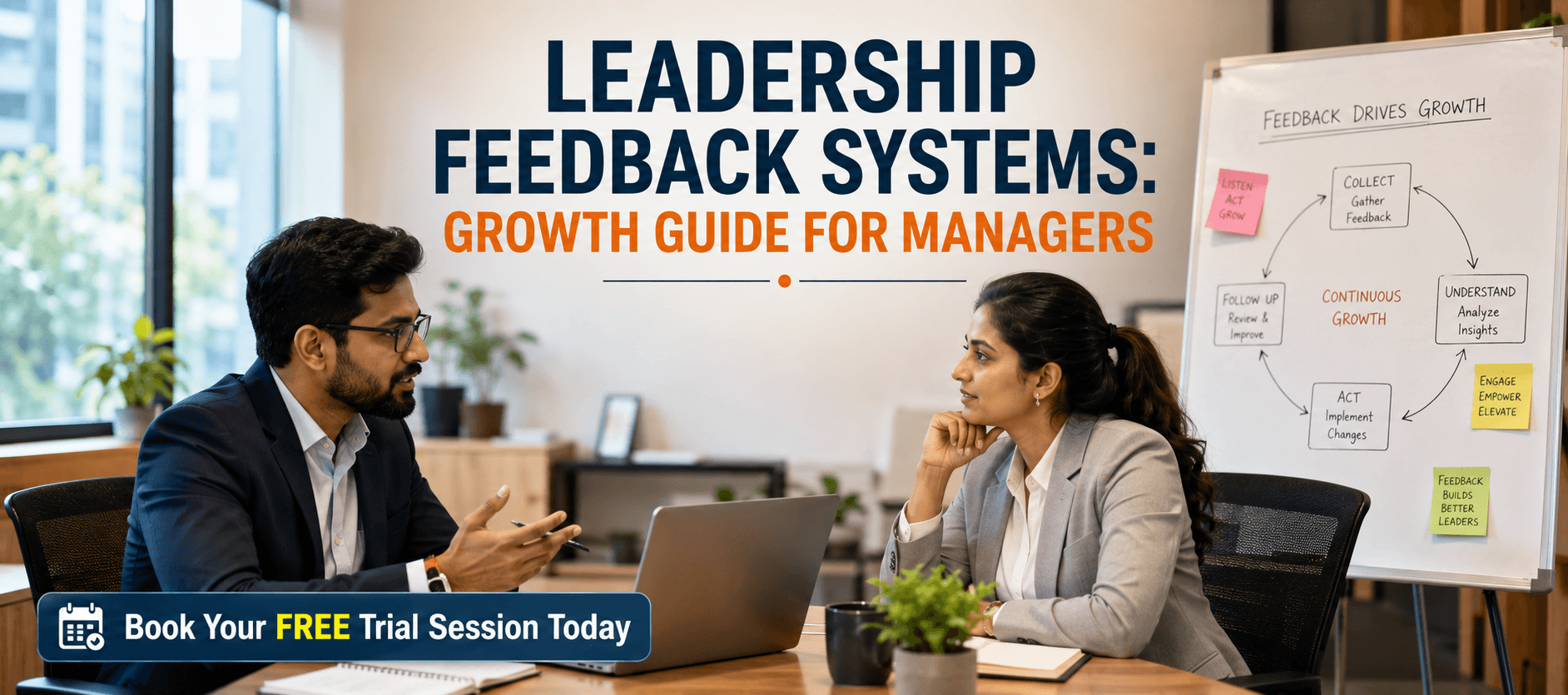
This system follows a complete feedback lifecycle:
- Request: Proactively seek structured feedback from multiple sources
- Collect: Gather insights from peers, managers, and direct reports
- Reflect: Conduct self-assessment alongside external input
- Analyse: Identify patterns, strengths, and blind spots
- Act: Convert insights into actionable behaviour changes
- Review: Track progress and refine the system quarterly
The key idea is simple but powerful: leadership growth becomes systematic when feedback is continuous, structured, and action-oriented.
How This Blog and Guidebook Help You?
By implementing this system, you can:
- Gain consistent, high-quality feedback from multiple perspectives
- Identify recurring strengths and hidden blind spots
- Build a clear, actionable leadership growth plan
- Improve decision-making, communication, and team impact
- Track measurable progress over time
This approach transforms feedback from a one-time event into a continuous growth engine.
Step-by-Step Breakdown
Step 1: Request Structured Feedback
Start by proactively asking for feedback using a formal, well-crafted request.
Focus on:
- Specific projects or timeframes
- Clear leadership behaviours
- Defined response formats and timelines
Personalized requests lead to more thoughtful and actionable responses.
Step 2: Design Effective Feedback Questions
Avoid vague questions that produce generic answers.
Instead:
- Ask behaviour-specific questions
- Include rating scales and examples
- Add open-ended prompts for detailed insights
Well-designed questions are the foundation of meaningful feedback.
Step 3: Collect Feedback from Multiple Sources
Gather input from:
- Peers who collaborate with you
- Managers who evaluate your performance
- Direct reports who experience your leadership firsthand
This 360-degree approach ensures a balanced perspective.
Step 4: Conduct Self-Reflection Before External Feedback
Before reviewing others’ feedback, reflect on your own performance:
- Identify key leadership moments
- Assess strengths and gaps
- Form hypotheses about how others perceive you
This builds self-awareness and prepares you for external insights.
Step 5: Synthesize Feedback and Identify Patterns
Once feedback is collected:
- Group similar observations
- Identify recurring strengths
- Highlight consistent development areas
The *pattern tracker on page 8* clearly shows how multiple feedback sources can reveal trends that individual comments may not.
Step 6: Identify Leadership Blind Spots
Blind spots are behaviours others notice but you don’t.
To address them:
- Define the behaviour clearly
- Understand its root cause
- Assess its impact on your team and goals
This step is critical for deep leadership growth.
Step 7: Create a 90-Day Action Plan
Convert insights into action by:
- Selecting 1–3 key behaviour changes
- Defining measurable success indicators
- Setting 30, 60, and 90-day milestones
Focused action leads to meaningful transformation.
Step 8: Prepare for Feedback Conversations
When discussing feedback with mentors or managers:
- Prepare specific questions
- Capture examples and insights
- Clarify next steps
Structured conversations maximize learning outcomes.
Step 9: Review Progress Quarterly
At the end of each cycle:
- Evaluate progress against your goals
- Assess feedback quality and coverage
- Identify gaps in your system
Quarterly reviews ensure continuous improvement.
Step 10: Build a Repeatable Feedback System
The ultimate goal is to create a system you can use consistently:
- After projects
- During career transitions
- As part of regular development cycles
Consistency is what turns feedback into long-term growth.
Common Mistakes or Pitfalls to Avoid
- Waiting only for annual reviews to gather feedback
- Asking vague questions that yield unclear responses
- Ignoring feedback from peers or direct reports
- Collecting feedback but not acting on it
- Treating all feedback as equally important
- Failing to track progress across multiple cycles
These mistakes prevent professionals from unlocking the full value of feedback.
How Should You Use This Guidebook Effectively?
To get the most out of this system:
- Use templates as a complete lifecycle, not in isolation
- Collect feedback immediately after key projects
- Limit your focus to 2–3 growth areas per cycle
- Revisit your action plan every 30 days
- Track progress across multiple feedback cycles
The templates are designed to work together as a structured system, ensuring no step in the feedback process is missed.
Key Takeaways
- Leadership growth requires a structured and proactive feedback system
- 360-degree feedback provides a complete view of your leadership impact
- Self-reflection enhances the quality of external feedback
- Pattern recognition is key to identifying strengths and blind spots
- Action plans turn insights into measurable progress
- Consistency and repetition drive long-term leadership development
- Feedback is most powerful when it is continuous and intentional
Your Next Step: Accelerate Your Career with PlanetSpark
Creating an impact-driven resume is not just about landing your next job—it’s about owning your professional story and presenting it with clarity, confidence, and credibility. When your resume clearly communicates value, results, and impact, opportunities follow naturally.
At PlanetSpark, we are committed to empowering working professionals with practical, outcome-focused resources that drive real career growth. From resume building and workplace communication to leadership presence and professional writing, our programs are designed to help you succeed in today’s fast-evolving job market.
Visit https://www.planetspark.in/resources to explore:
- Career and resume-building guides
- Workplace communication and professional writing resources
- Skill-development tools curated for working professionals
Want a deeper, hands-on experience?
You can also book a free trial session to learn more about PlanetSpark’s Working Professional Courses, designed to accelerate your career through personalised coaching, real-world practice, and expert guidance.
Your career deserves more than generic advice.
It deserves clarity, confidence, and measurable impact.
Personalized Communication Roadmaps
Record a video to get a AI generated personalized communication reports