
Manager to Individual Contributor- Career Shift Guide (2026)
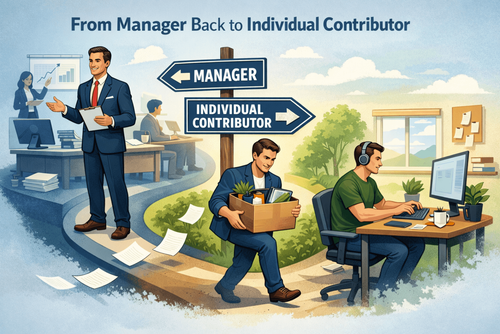

How to Transition from Manager Back to Individual Contributor: Your Complete Guide to Success
Transitioning from a manager back to an individual contributor (IC) role is often seen as a step back in one’s career, but for many professionals, it is a strategic and personal choice. Whether you are returning to the craft you love, escaping the exhaustion of managing others, or pivoting to a different industry, this shift can be deeply fulfilling. However, this transition presents unique challenges that aren’t typically addressed in career development resources, as most advice focuses on how to climb up the corporate ladder, not how to step down with purpose and confidence.
This guide is designed specifically for those making the move back to an IC role. It provides frameworks, scripts, and reflection prompts to help you navigate the process effectively and thrive in your new role.
Who Is This Blog For?
* Professionals returning to an IC role after management
* Directors stepping back to become senior individual contributors
* Consultants moving into in-house roles without direct reports
* Individuals considering the transition back to doing hands-on work
If you're making the transition from manager to IC, this blog will help you understand the key challenges and equip you with the tools to succeed in your new role.
Why This Topic Matters Today?
The shift from management to IC is not widely discussed, but it is becoming increasingly common. Many professionals find themselves burned out by the pressures of people management or are looking to regain a sense of purpose in their technical craft. While it may seem like a "simpler" role, the transition can be riddled with identity shifts, imposter syndrome, and changed workplace dynamics. By addressing these challenges head-on, you can ensure a smoother, more successful transition.
Core Concept or Framework Explained
This guide is structured around several key phases to help you make a successful transition from manager to IC:
* Phase 1: Before You Make the Move – Focus on mindset, narrative, and skills
* Phase 2: The First 90 Days as an IC – Establish your identity, build trust, and start contributing
* Phase 3: Rebuilding the IC Muscle – Master the craft, focus, and deep work
* Phase 4: Managing Up – Build strong relationships with your new manager
* Phase 5: Long-Term Strategy – Create a thriving IC career path
These phases will guide you through the challenges of adjusting to your new role, re-establishing your identity, and setting up for long-term success.
How This Blog and Guidebook Help You?
This blog will help you navigate the mindset shifts and practical challenges that come with returning to an IC role. From preparing for the transition to mastering new skills and creating a long-term career plan, this blog offers concrete advice and tools for making the transition seamless and sustainable. Each section includes worksheets and actionable steps to help you implement the strategies right away.
Step-by-Step Breakdown
Phase 1 — Before You Make the Move: Prepare Mentally and Strategically
The most successful IC transitions begin with intentional preparation. Before stepping into the new role, focus on three critical areas: your mindset, your narrative, and your skill inventory.
* Mindset Reset: Let go of your manager identity and embrace a new focus on your craft.
* Skill Audit: Identify the skills you have and those you need to rebuild, such as independent time management, hands-on execution, and comfort with reduced decision authority.
* Craft Your Narrative: Your story is crucial in communicating your transition. Prepare a clear, confident narrative that explains why you made the move and what value you bring to the IC role.
Phase 2 — The First 90 Days as an IC: Build Trust and Contribute
The first 90 days are crucial for establishing your new role as an IC. These early months are all about building trust, understanding your team dynamics, and starting to deliver high-quality work.
* Days 1-30: Focus on listening, mapping the organizational structure, and building trust.
* Days 31-60: Start contributing and diagnosing issues, proposing improvements.
* Days 61-90: Own projects, optimize processes, and set clear goals for the next quarter.
Phase 3 — Rebuilding the IC Muscle: Craft, Focus, and Deep Work
Transitioning from a managerial mindset to an IC mindset requires a significant shift. As a manager, you were constantly moving between tasks and responding to interruptions, but as an IC, you will need to rebuild your deep work muscle, requiring sustained focus and iterative improvement.
* Time Block Ruthlessly: Protect 2–3 hour blocks for focused IC work. Treat these blocks as meetings—honor them consistently.
* Define Done Clearly: Set a clear definition of "done" for each task to regain the satisfaction of completion.
* Make Your Thinking Visible: Share your thinking through documentation and deliverables to make your expertise visible to others.
* Embrace Iteration: IC work requires drafts and revisions, so learn to embrace the iterative process rather than seeking perfection from the outset.
Phase 4 — Managing Up: Build Strong Relationships with Your New Manager
One of the most challenging aspects of this transition is reporting to someone who may be younger or less experienced than you. The key is to maintain respect for your new manager and leverage your experience in a way that supports their goals, not undermines their authority.
* Behaviors That Build Trust: Ask what your manager needs from you, share your opinions clearly, and offer your management experience as context rather than credentials.
* Behaviors That Erode Trust: Avoid referencing your past title, going around your manager to influence decisions, or comparing this role unfavorably to your previous one.
Phase 5 — Long-Term Strategy: Build a Thriving IC Career
Your goal is not just to survive but to thrive as an IC. There are three career trajectories you can pursue:
* The Craft Expert Path: Become a recognized authority in your domain.
* The Staff/Principal IC Path: Work at the intersection of execution and organizational influence, driving high-impact projects.
* The Hybrid Path: Move between IC and management roles depending on your motivation and organizational needs.
To succeed, focus on visible work, building a peer network, and creating a personal development plan that you revisit quarterly.
Common Mistakes and How to Avoid Them
Many new ICs make predictable mistakes during the transition. Here are some of the most common pitfalls and how to avoid them:
* Over-Managing Peers: Contribute first, wait to be asked for direction.
* Credentials Over-Crafting: Let your current work speak for itself, not your past roles.
* Resisting Feedback: Treat feedback as data, not as a judgment.
* Waiting for Validation: Contribute early and often, even if your contributions aren’t perfect.
* Comparing Roles Constantly: Avoid comparing your IC role to your previous management role. Judge this role on its own terms.
Key Takeaways
* Your manager-to-IC transition is a deliberate choice, not a demotion.
* Identity shifts are critical—embrace them to succeed in your new role.
* Your management experience is a genuine advantage—use it in your IC role by focusing on expertise and collaboration.
* The first 90 days are key—build trust, contribute strategically, and define your IC identity.
* Influence without authority is a skill that can be developed.
* Choose your long-term IC career path intentionally and invest in continuous growth.
Your Next Step: Start This Week
* Day 1-2: Complete the Skill Audit worksheet and begin your transition narrative.
* Day 3-4: Start scheduling 1:1s with your peers and manager, asking thoughtful questions.
* Day 5-7: Set up your time blocks for focused work and begin making your thinking visible through documentation.
Start these actions today to set yourself up for a successful and fulfilling IC career!