
Managing Multi-Channel Communication Effectively at Work
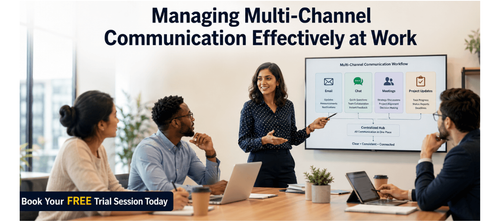

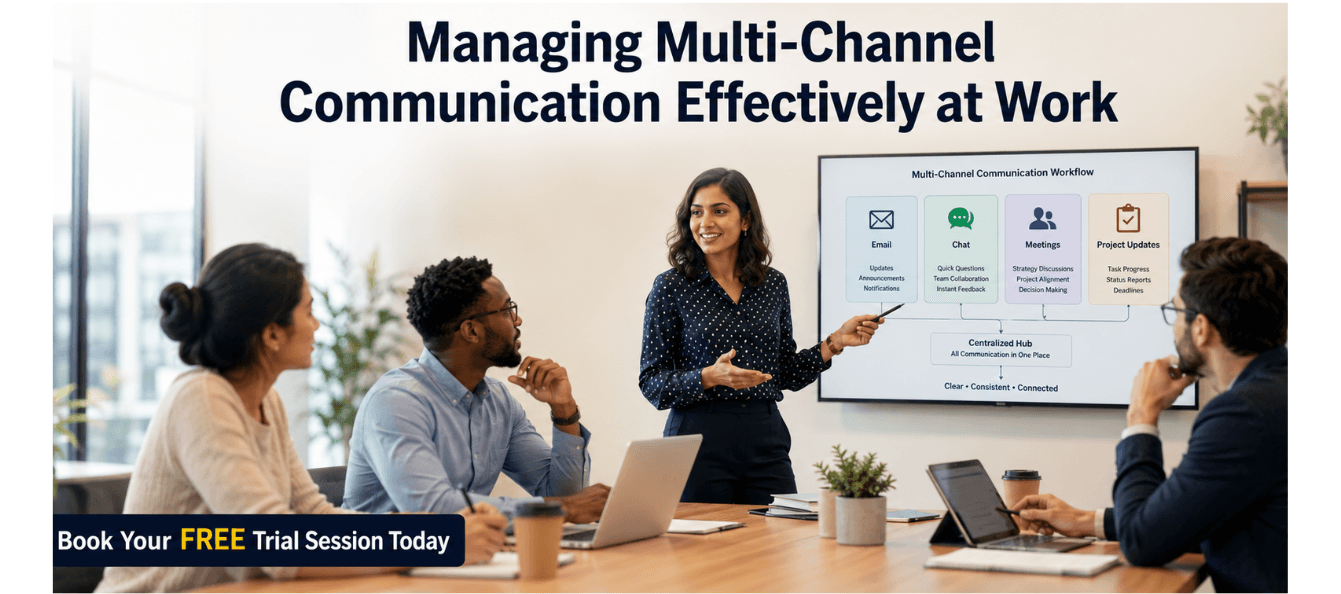
Handling Communication Across Multiple Channels Effectively
Today’s professionals communicate across multiple platforms: email, Slack, video calls, social media, and more. While these channels offer various benefits, they can easily become overwhelming without a clear strategy. Professionals who struggle with managing communication across these channels often find themselves overwhelmed by constant notifications, missed messages, and mixed signals.
To stand out and thrive, professionals need a repeatable, structured system to manage communication across channels with clarity, consistency, and confidence. This blog will walk you through a system that can transform how you manage communication, ensuring you’re always reaching your audience effectively.
Download these resources and apply them alongside your daily work for improved clarity, productivity, and professional growth. You can also book a free trial to gain expert guidance and enhance your communication, problem-solving, and decision-making skills. The materials are designed in a clear, structured format to help professionals learn efficiently and implement insights with confidence.
Who Is This Blog For?
- Managers coordinating across teams and stakeholders
- Consultants juggling multiple client relationships
- Professionals navigating various communication channels in fast-paced environments
- Anyone seeking more control and clarity in their communication across platforms
Why This Topic Matters Today?
Communication has become decentralized. In the past, you may have had one or two communication channels to manage. Today, however, professionals often juggle six or more—email, Slack, video calls, LinkedIn, phone calls, and in-person meetings—sometimes within the same hour. This constant switching between platforms and managing varying expectations for each can lead to confusion, delays, and missed opportunities.
This guide provides you with a framework for managing communication across multiple channels, improving efficiency, and maintaining professionalism in every interaction. By understanding the rules of each platform and when to use them, you can avoid wasted time and increase the impact of your communication.
Core Concept or Framework Explained
Managing communication across multiple channels effectively boils down to three main steps:
Identify which channels you’re using, who you’re communicating with on each, and how effective your current habits are.
Understanding which platform serves your needs best is a skill that can be developed. Choose based on the urgency, complexity, emotional weight, and preferences of your audience.
Each communication channel has its own expectations for tone and format. Learning these conventions and when to break them is essential for communicating with impact.
How This Blog and Guidebook Help You?
This blog and the accompanying guide provide a clear framework for improving multi-channel communication. You’ll learn how to:
- Conduct a communication audit to understand where and how you’re communicating
- Choose the right channel for each message based on urgency, complexity, emotion, and audience preference
- Adjust tone and format for each platform, ensuring you’re understood and respected in all contexts
- Build a consistent personal communication system to streamline your processes and reduce stress
Step-by-Step Breakdown
Step 1: Audit Your Current Communication Landscape
The first step in improving your communication is understanding where you stand. Many professionals use multiple channels without a clear strategy, leading to duplication and missed messages.
List all the communication channels you use (email, Slack, video calls, etc.). Include informal channels like WhatsApp and in-person conversations.
For each channel, identify who you are communicating with (e.g., team members, clients, leadership) and how often you interact with them.
Identify which channels are most effective, which are under-utilized, and where communication overlaps. Use the worksheet provided to track your communication channels and rate their effectiveness.
Step 2: Choose the Right Channel for Every Message
One of the most common mistakes professionals make is choosing their preferred communication platform rather than the most appropriate one.
The right platform for your message depends on:
If the message is urgent, consider using Slack, a phone call, or instant messaging. For non-urgent messages, email or documents work better.
If the message is complex and needs a lot of explanation, a video call or in-person meeting is best. Emotional Weight: Sensitive topics, such as feedback or performance reviews, should always be handled synchronously (via video or phone), not through written channels.
The key is to apply a simple framework:
Slack/Phone Call
Video Call
Email
Document + Meeting
Step 3: Master Tone and Format Across Platforms
Each communication channel has its own expectations for tone and format. If you don’t adjust, your message can come across as out of place or inappropriate. Mastering this helps you build credibility and trust.
Here’s a quick reference guide for various platforms:
Clear, structured, professional; use a descriptive subject line and short paragraphs.
Concise, conversational; use threads to organize conversations and emojis when appropriate.
Always send an agenda in advance, use your camera to build trust, and summarize decisions in writing afterward.
Value-first, personable tone; keep your messages professional but not too formal.
Step 4: Build a Consistent Personal Communication System
Consistency in how you communicate across channels builds trust and reduces anxiety in those you communicate with. Here’s how to create your own system:
1. Set Response Time Norms: Decide on your response time expectations for each channel (e.g., email within 24 hours, Slack within 2 hours).
2. Organize Messages: Use folders, labels, or pinned messages to keep communication organized. Spend time daily organizing and following up on messages.
3. Set Channel Boundaries: Decide which channels are best for specific types of communication. For example, avoid using WhatsApp for project decisions and instead direct clients to email.
Real-World Application – Priya’s Journey
Priya, a senior consultant managing multiple client accounts, was overwhelmed by the constant barrage of messages across different channels. Clients were messaging her at all hours on WhatsApp, her Slack was a continuous stream of notifications, and emails were getting buried.
After applying a structured multi-channel communication system:
- She directed clients to email for all project-related communication.
- Slack became reserved for internal team communications, with clear channels.
- Video updates replaced multiple ad hoc messages.
- She set clear response windows and shared them in her email signature.
Within four weeks, Priya reported feeling less stressed, fewer missed messages, and received positive feedback from clients about her improved organization.
Key Takeaways
- Audit your communication channels to identify gaps and overlaps.
- Choose the right communication channel based on urgency, complexity, and emotional weight.
- Master tone and format for each channel to ensure your message lands with clarity and impact.
- Build a consistent communication system with clear response windows and channel boundaries.
- Use asynchronous communication strategically to protect focus and reduce stress.
Your Next Step: Accelerate Your Career with PlanetSpark
Creating an impact-driven resume is not just about landing your next job—it’s about owning your professional story and presenting it with clarity, confidence, and credibility. When your resume clearly communicates value, results, and impact, opportunities follow naturally.
At PlanetSpark, we are committed to empowering working professionals with practical, outcome-focused resources that drive real career growth. From resume building and workplace communication to leadership presence and professional writing, our programs are designed to help you succeed in today’s fast-evolving job market.
Visit https://www.planetspark.in/resources to explore:
- Career and resume-building guides
- Workplace communication and professional writing resources
- Skill-development tools curated for working professionals
Want a deeper, hands-on experience?
You can also book a free trial session to learn more about PlanetSpark’s Working Professional Courses, designed to accelerate your career through personalised coaching, real-world practice, and expert guidance.
Your career deserves more than generic advice.
It deserves clarity, confidence, and measurable impact.
Personalized Communication Roadmaps
Record a video to get a AI generated personalized communication reports