
Managing Pressure as a Manager: Practical Survival Guide
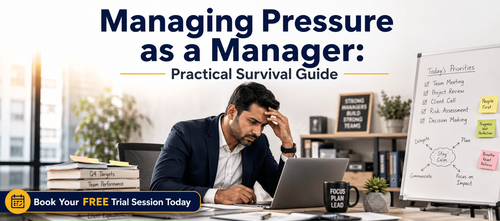

Handle Pressure From Both Team and Leadership: A Practical Communication Framework for Modern Managers
Being stuck between leadership expectations and team capacity is one of the toughest challenges professionals face today. Your manager is pushing for faster results, tighter deadlines, and higher output. At the same time, your team is overwhelmed, resisting additional work, or struggling to maintain morale.
In these moments, every email, meeting, and conversation becomes critical. Say the wrong thing, and you risk losing credibility with leadership. Stay silent, and you risk losing trust with your team. Many professionals feel trapped in this middle zone—forced to choose between being a passive messenger or an emotional buffer.
Neither approach works. One damages your authority, and the other leads to burnout.
What you need instead is structured communication—clear, confident, and strategically framed responses that allow you to manage pressure from both directions without losing control.
This guidebook provides exactly that: ready-to-use scripts, frameworks, and communication templates designed for real-world workplace pressure scenarios.
Download these resources and apply them alongside your daily work for improved clarity, productivity, and professional growth. You can also book a free trial to gain expert guidance and enhance your communication, problem-solving, and decision-making skills. The materials are designed in a clear, structured format to help professionals learn efficiently and implement insights with confidence.
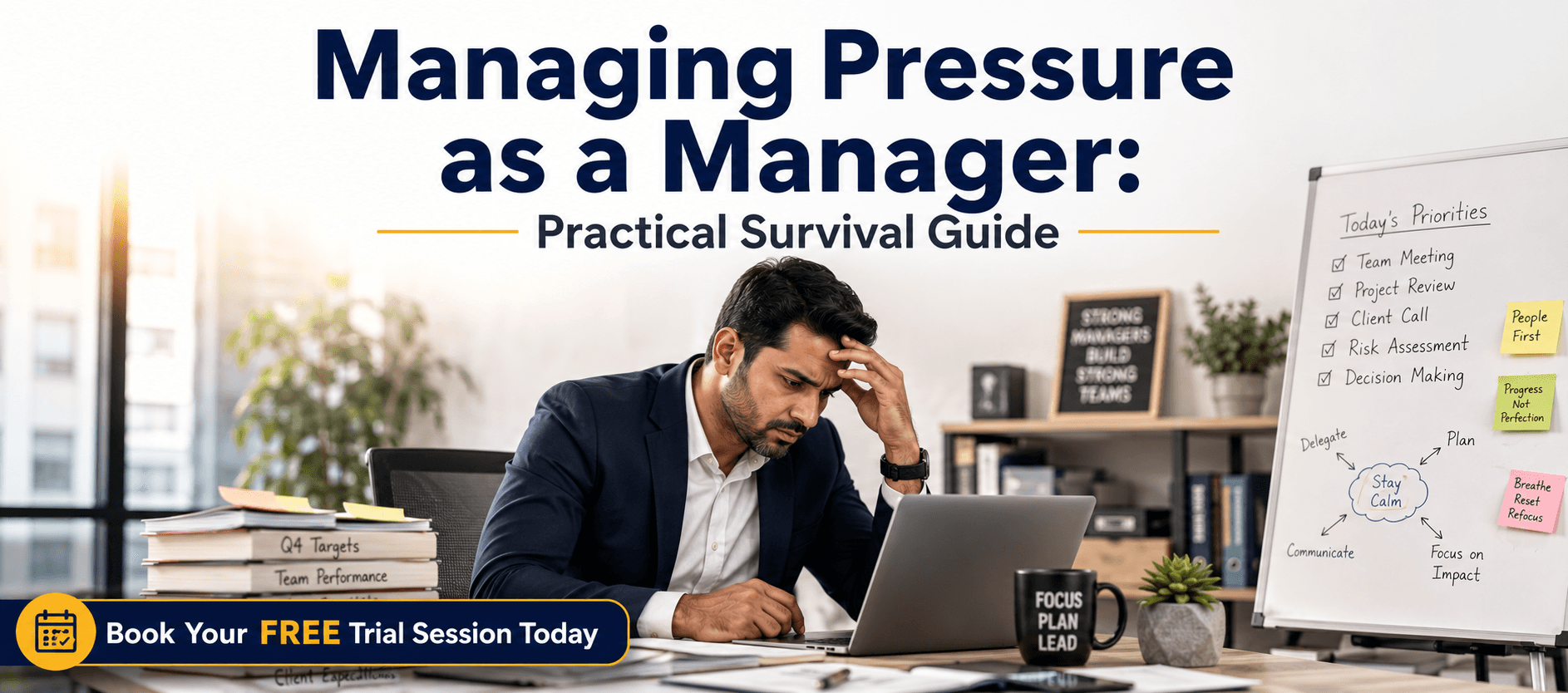
Who Is This Blog For?
- Managers handling expectations from both leadership and their teams
- Team leads navigating deadlines, capacity, and performance pressure
- Consultants balancing client demands and internal execution
- Mid-level professionals transitioning into leadership roles
- Anyone responsible for communicating upward and downward simultaneously
Why This Topic Matters Today?
Modern workplaces are faster, more demanding, and more complex than ever. Professionals are increasingly expected to:
- Deliver results under tight timelines
- Manage cross-functional stakeholders
- Maintain team morale despite pressure
The resource highlights a key reality: professionals often default to two ineffective behaviours:
- Becoming a passive messenger who simply relays instructions
- Acting as an emotional buffer who absorbs all pressure silently
Both approaches lead to long-term issues such as:
- Burnout
- Loss of credibility
- Poor team engagement
- Ineffective decision-making
The professionals who succeed are those who communicate with structure, clarity, and intent—every time.
Core Concept or Framework Explained
The core idea behind this guidebook is simple but powerful: pressure is not the problem—unstructured communication is.
Instead of reacting emotionally or improvising under stress, the framework provides:
- Scenario-based communication scripts
- Structured messaging formats
- Clear decision-oriented conversations
As shown in the template directory (page 3), the guidebook covers 10 real-world scenarios, each with a specific communication strategy.
These scenarios include:
- Negotiating unrealistic deadlines
- Handling team resistance
- Managing conflicting priorities
- Escalating risks without blame
- Protecting team members under scrutiny
Each template follows a consistent logic:
- Start with alignment and clarity
- Present facts instead of emotions
- Offer structured options
- Close with a decision or action
This ensures you remain professional, credible, and solution-focused—even under pressure.
How This Blog and Guidebook Help You?
This guidebook equips you with practical communication tools that directly impact your career growth.
It helps you:
- Navigate high-pressure situations without losing control
- Communicate confidently with senior leadership
- Advocate for your team without appearing defensive
- Make better decisions using structured frameworks
- Build trust both upward and downward
In real-world terms, this leads to:
- Stronger leadership presence
- Improved stakeholder relationships
- Higher team engagement
- Reduced stress and burnout
Step-by-Step Breakdown
The Deadline Negotiation Script
When leadership demands faster delivery, this script helps you respond without saying “no.”
It focuses on:
- Acknowledging urgency
- Presenting factual workload data
- Offering multiple options
For example:
- Reduce scope
- Add resources
- Phase delivery
This shifts the conversation from rejection to solution.
The Team Resistance Briefing
When your team pushes back, you need to communicate upward without damaging trust.
This template helps you:
- Present team concerns professionally
- Avoid emotional language
- Offer constructive alternatives
It ensures leadership sees feedback as insight—not resistance.
The Capacity Reality Check Email
Before accepting new work, you must document your team’s capacity.
This template includes:
- Current workload breakdown
- Capacity percentages
- Risk analysis
It protects both you and your team by creating a clear record.
The Escalation-Without-Blame Memo
Raising risks can be sensitive. This template ensures you:
- Highlight issues objectively
- Avoid blaming individuals
- Focus on impact and solutions
It maintains relationships while ensuring accountability.
The Conflicting Priorities Alignment Script
When two leaders give conflicting instructions, this script helps you:
- Facilitate alignment meetings
- Present conflicts neutrally
- Drive decision-making
Your role becomes a facilitator—not a decision-maker.
The Under-Pressure Team Check-In Script
When morale drops, communication becomes critical.
This template includes:
- Structured check-in questions
- Honest acknowledgment of pressure
- Clear commitments from you as a manager
It rebuilds trust and keeps the team engaged.
The Leadership Expectation Reset Email
When plans change, you must reset expectations early.
This template helps you:
- Take accountability
- Explain changes factually
- Present revised commitments
It ensures transparency and maintains credibility.
The Cross-Functional Pressure Deflection Script
When external teams bypass you, this script helps you:
- Redirect requests professionally
- Protect your team’s bandwidth
- Establish clear processes
It reinforces your authority as a team leader.
The Individual Performance Shield Script
When leadership questions a team member, this template helps you:
- Provide context
- Defend fairly
- Maintain credibility
It strengthens trust within your team.
The Post-Pressure Retrospective Script
After high-pressure periods, reflection is essential.
This template includes:
- What worked
- What didn’t
- What to improve
- Joint commitments
It ensures continuous improvement and stronger collaboration.
Common Mistakes or Pitfalls to Avoid
Professionals often struggle with pressure because of avoidable mistakes:
- Over-promising without consulting the team
- Failing to communicate capacity issues upward
- Using emotional instead of factual language
- Avoiding difficult conversations
- Not documenting decisions
- Taking pressure personally instead of professionally
These mistakes reduce effectiveness and increase stress over time.
How Should You Use This Guidebook Effectively?
To get the most value, follow a structured approach:
- Identify your current situation
- Select the relevant template
- Replace placeholders with real context
- Adjust tone to your workplace culture
- Use the script in real conversations
As outlined in the usage guide (page 2), consistency is key.
Treat these templates as:
- A communication system
- A decision-making framework
- A leadership development tool
Over time, these scripts become natural communication habits.
Key Takeaways
- Managing pressure requires structured communication, not emotional reactions
- You don’t need to choose between leadership and your team—you can support both
- Presenting options is more effective than saying “no”
- Clear, factual communication builds credibility
- Documentation protects you and your team
- Consistent frameworks lead to long-term leadership success
Your Next Step: Accelerate Your Career with PlanetSpark
Creating an impact-driven resume is not just about landing your next job—it’s about owning your professional story and presenting it with clarity, confidence, and credibility. When your resume clearly communicates value, results, and impact, opportunities follow naturally.
At PlanetSpark, we are committed to empowering working professionals with practical, outcome-focused resources that drive real career growth. From resume building and workplace communication to leadership presence and professional writing, our programs are designed to help you succeed in today’s fast-evolving job market.
Visit https://www.planetspark.in/resources to explore:
- Career and resume-building guides
- Workplace communication and professional writing resources
- Skill-development tools curated for working professionals
Want a deeper, hands-on experience?
You can also book a free trial session to learn more about PlanetSpark’s Working Professional Courses, designed to accelerate your career through personalised coaching, real-world practice, and expert guidance.
Your career deserves more than generic advice.
It deserves clarity, confidence, and measurable impact.
Personalized Communication Roadmaps
Record a video to get a AI generated personalized communication reports