
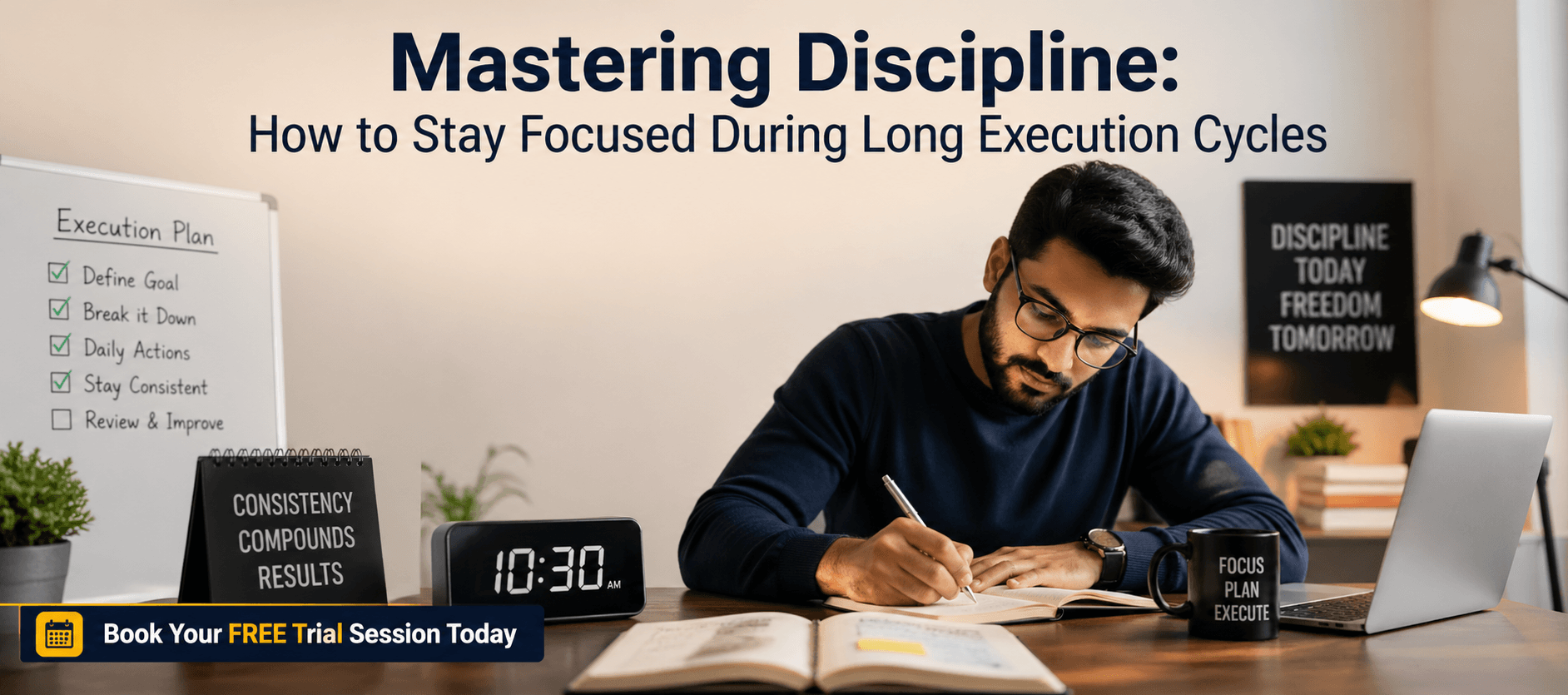
Mastering Discipline: How to Stay Focused During Long Execution Cycles
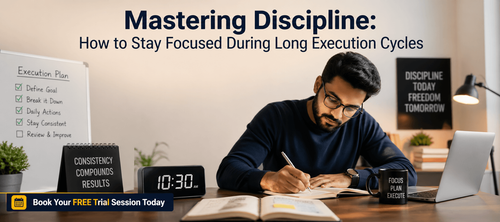

Complete guide to consistency in long execution cycles: A Practical System to Stay Focused, and Deliver Results
In every professional journey, there comes a moment when enthusiasm fades but the work must continue. You begin a project, a career transition, or a long-term goal with energy and clarity. But a few weeks in, priorities shift, fatigue sets in, and progress slows. What once felt exciting now feels heavy and distant.
This is where most professionals lose momentum—not because they lack ambition, but because they lack a system to sustain execution over time.
Long execution cycles—those lasting more than a few weeks—require a completely different approach. Motivation alone is unreliable. It comes in bursts, but disappears when you need it most. What truly separates high performers from everyone else is discipline—not as a personality trait, but as a structured system that can be designed, measured, and improved.
This guide transforms the concept of discipline into a practical, actionable framework. It shows you how to design your workflow, manage your energy, and build consistent habits that keep you moving forward—even when motivation fades. It also helps you understand how to recover quickly from lapses, recalibrate priorities without losing momentum, and maintain clarity during periods of uncertainty or low output.
Instead of relying on willpower, you learn to build an environment where execution becomes the default. Instead of reacting to fluctuating motivation, you operate through systems that ensure steady progress regardless of external conditions.
Download these resources and apply them alongside your daily work for improved clarity, productivity, and professional growth. You can also book a free trial to gain expert guidance and enhance your communication, problem-solving, and decision-making skills. The materials are designed in a clear, structured format to help professionals learn efficiently and implement insights with confidence, turning intention into sustained, measurable execution over time.
Who Is This Blog For?
- Working professionals managing long-term projects or initiatives
- Individuals planning career transitions or skill-building journeys
- Managers and leaders responsible for multi-phase execution
- Freelancers and consultants handling extended client engagements
- Anyone struggling with consistency, focus, or long-term productivity
Why This Topic Matters Today?
In today’s fast-paced work environment, professionals are expected to deliver results over longer timelines while juggling multiple responsibilities. However, most people approach long-term work with short-term strategies.
This creates a discipline gap.
Key challenges include:
- Loss of motivation after the initial phase
- Cognitive fatigue from sustained decision-making
- Over-reliance on bursts of effort instead of steady progress
- Lack of visibility into long-term progress
As highlighted in the guide, long execution cycles reward consistency—not intensity. Without a structured system, even highly capable professionals drift off track.
Discipline is no longer optional—it is a core career skill.
Core Concept or Framework Explained
At the heart of this guide is the PACE Framework—a practical operating system for sustained execution.
P — Plan in Phases
Break your long-term goal into 3–4 clearly defined phases, each with a specific deliverable.
A — Anchor to Keystone Habits
Identify one or two critical actions that drive the majority of your progress and commit to them consistently.
C — Calibrate Weekly
Use a structured weekly review to track progress, identify gaps, and adjust priorities.
E — Escalate Accountability
Increase external accountability as the project becomes more challenging.
This framework works because it shifts discipline from willpower to systems. Instead of relying on motivation, you create an environment where consistent execution becomes the default.
How This Blog and Guidebook Help You?
This blog and the underlying guide provide:
- A complete system for managing long-term projects
- Practical tools like worksheets, dashboards, and review rituals
- Proven strategies to maintain focus and consistency
- Techniques to align energy, time, and effort effectively
The result is:
- Reduced burnout and decision fatigue
- Improved execution consistency
- Higher probability of completing long-term goals
- Stronger professional credibility and outcomes
Step-by-Step Breakdown
Step 1: Design Your Execution Architecture
Before starting any long cycle, define:
- What success looks like in clear, measurable terms
- The phases required to reach that outcome
- Your keystone habit—the most important recurring action
- A recovery protocol for missed commitments
A strong start reduces the need for willpower later.
Step 2: Build Habits in the First 30 Days
The first month is about habit formation—not maximum output.
Focus on:
- Linking habits to existing routines
- Reducing friction in your environment
- Rewarding consistency, not results
Track metrics like:
- Habit completion rate
- Weekly reviews
- Accountability check-ins
Consistency here sets the foundation for the entire cycle.
Step 3: Use the Weekly Review Ritual
Set aside 20–30 minutes every week to:
- Measure progress
- Reflect on what worked and what didn’t
- Recommit to your keystone habit
- Adjust priorities for the next week
This ritual acts as your discipline anchor and prevents drift.
Step 4: Navigate the Middle Mile
The middle phase is the most dangerous.
To stay on track:
- Conduct a Re-Ignition Review at the midpoint
- Create visible progress trackers
- Break work into smaller milestones
- Increase accountability frequency
Recognise that this phase is naturally difficult—it’s not a failure, but a transition.
Step 5: Manage Your Energy, Not Just Time
Align your work with your energy levels:
- Peak energy: Deep work and critical tasks
- Secondary energy: Planning and communication
- Low energy: Administrative work
Also prioritise recovery:
- Sleep, movement, and rest
- Social connection
- Mental breaks
Sustainable performance requires sustainable energy.
Step 6: Build Accountability Structures
Create external accountability through:
- A weekly partner for progress updates
- A peer group for shared goals
- A mentor for strategic guidance
Regular updates improve consistency and reduce self-deception.
Step 7: Finish Strong with Intentional Closure
In the final phase:
- Reconfirm your definition of success
- Set a clear completion date
- Conduct a retrospective
- Define the next step or project
Finishing well builds momentum for future success.
Common Mistakes or Pitfalls to Avoid
- Planning too far ahead at the task level
- Treating missed weeks as failures instead of recovering quickly
- Keeping goals private and avoiding accountability
- Skipping weekly reviews during busy periods
- Ignoring energy management and recovery
A better approach is to:
- Focus on systems over motivation
- Maintain consistency over intensity
- Use structured reviews and accountability
How Should You Use This Guidebook Effectively?
Follow this workflow:
- Complete the execution worksheet before starting
- Identify your keystone habit and schedule it
- Run a weekly review ritual consistently
- Track progress using simple metrics
- Adjust your system based on feedback
Time investment:
- 20–30 minutes weekly for review
- 5–10 minutes for accountability updates
- Initial setup time for planning
Treat this guide as a living system, not a one-time read.
Key Takeaways
- Discipline is a system, not a personality trait
- Long-term success depends on consistency, not intensity
- The PACE framework provides a complete execution system
- Weekly reviews are essential for maintaining direction
- Energy management is as important as time management
- Accountability significantly increases follow-through
- Finishing strong is as important as starting well
Your Next Step: Accelerate Your Career with PlanetSpark
Creating an impact-driven resume is not just about landing your next job—it’s about owning your professional story and presenting it with clarity, confidence, and credibility. When your resume clearly communicates value, results, and impact, opportunities follow naturally.
At PlanetSpark, we are committed to empowering working professionals with practical, outcome-focused resources that drive real career growth. From resume building and workplace communication to leadership presence and professional writing, our programs are designed to help you succeed in today’s fast-evolving job market.
Visit https://www.planetspark.in/resources to explore:
- Career and resume-building guides
- Workplace communication and professional writing resources
- Skill-development tools curated for working professionals
Want a deeper, hands-on experience?
You can also book a free trial session to learn more about PlanetSpark’s Working Professional Courses, designed to accelerate your career through personalised coaching, real-world practice, and expert guidance.
Your career deserves more than generic advice.
It deserves clarity, confidence, and measurable impact.
Start building that advantage today—with PlanetSpark.
Personalized Communication Roadmaps
Record a video to get a AI generated personalized communication reports