
Mastering Strategic Decision-Making for Success in Business
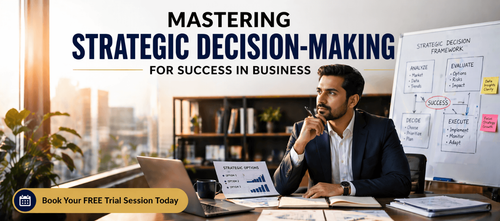

Master the Making of Strategic Decision: A Proven Framework for Professionals
In today’s competitive and fast-paced professional world, decision-making can make or break your career. Whether you’re navigating a critical business strategy, deciding on a career pivot, or choosing between multiple job offers, the pressure to make the right choice is immense. But too many professionals are making decisions without a clear, structured approach, leading to confusion, missed opportunities, and uncertainty.
The good news? There is a solution. The “Strategic Decision-Making Framework” offers a structured, step-by-step process that helps professionals navigate complex decisions with confidence and clarity. By applying this proven methodology, you can make smarter decisions faster and with more significant impact—without the usual stress or second-guessing.
Download these resources and apply them alongside your daily work for improved clarity, productivity, and professional growth. You can also book a free trial to gain expert guidance and enhance your communication, problem-solving, and decision-making skills. The materials are designed in a clear, structured format to help professionals learn efficiently and implement insights with confidence.
Who Is This Blog For?
- Career changers looking to make high-impact decisions during pivotal moments
- Consultants, managers, and professionals who need to assess complex options and act decisively
- Mid-career professionals eager to strengthen their decision-making for career growth
- Any professional seeking a more structured, efficient approach to making critical decisions
Why This Topic Matters Today?
In a world where decisions need to be made quickly, many professionals feel overwhelmed and underprepared. According to research, professionals spend an average of 10 hours a week on decision-making but are often unsure whether they’re making the best choices. This lack of clarity results in poor outcomes, missed opportunities, and even burnout.
The “Strategic Decision-Making Framework” solves this by offering a structured approach that guides you from defining the problem to committing to action, ensuring you can make decisions confidently and effectively. With the ever-increasing demand for quick, accurate decision-making in today’s work environment, mastering this skill is more critical than ever.
Core Concept or Framework Explained
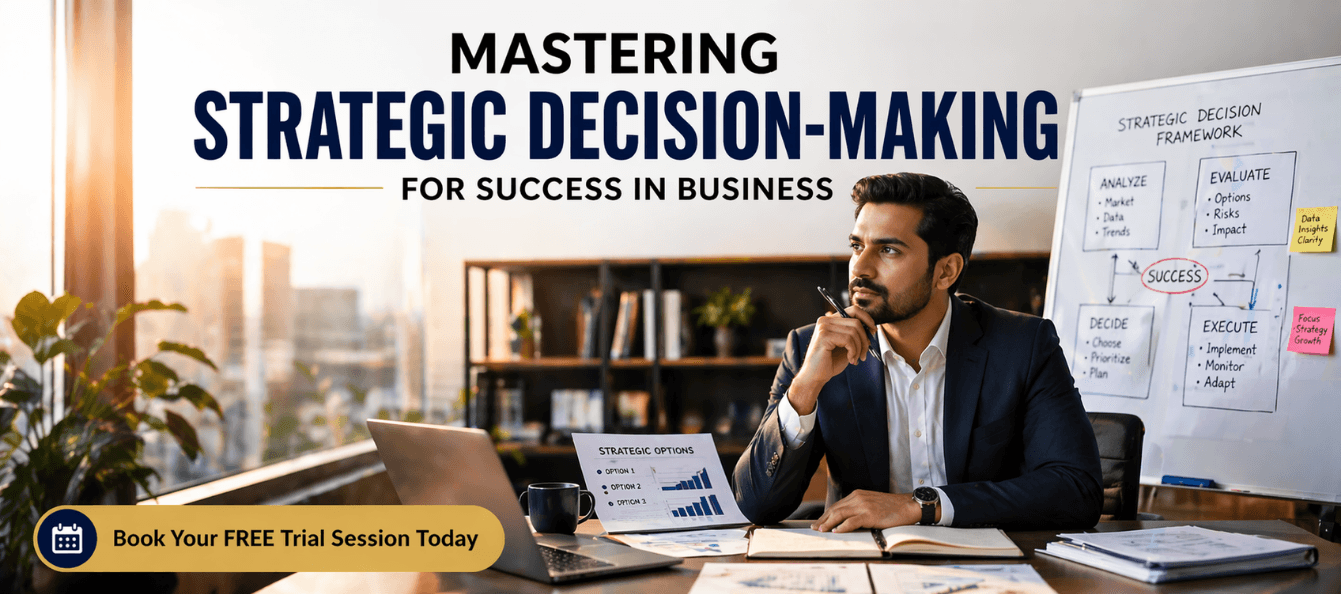
The “Strategic Decision-Making Framework” is built on five key stages that ensure your decision-making process is not just structured but also actionable and flexible. Here's a breakdown of the stages:
1. Define the Decision
The foundation of good decision-making lies in defining the problem clearly. Instead of rushing into solutions, you’ll first identify the real issue, establish clear decision criteria, and set boundaries for the decision at hand. This helps you avoid the trap of solving the wrong problem.
2. Gather Information
In this stage, you’ll focus on collecting the right information, not an exhaustive list of all possible data. By identifying what information is critical to your decision, you reduce analysis paralysis and increase the speed of your decision-making.
3. Evaluate Options
Once you have a clear definition of the problem and have gathered the necessary data, it's time to evaluate your options. This stage emphasizes generating multiple options and evaluating them systematically using tools like the Decision Matrix, ensuring that you select the most viable option without emotional bias.
4. Commit & Act
The most common mistake professionals make is over-analyzing without taking action. In this stage, you’ll commit to a decision and implement it quickly, keeping the momentum going by breaking down your decision into actionable steps that can be executed immediately.
5. Review, Learn, and Close the Loop
After a decision is made and implemented, it’s crucial to review the outcomes. This stage emphasizes learning from each decision, understanding what worked, and improving the decision-making process for future choices. Keeping a personal Decision Log helps you track your progress and fine-tune your decision-making skills over time.
How This Blog and Guidebook Help You?
This blog and the underlying “Strategic Decision-Making Framework” guide you in making better, more informed decisions that lead to real results. The key benefits include:
- Clear Decision-Making Process: This framework provides you with a repeatable process to follow, ensuring consistency and confidence in every decision you make.
- Better Information Gathering: With structured guidance on gathering only relevant data, you avoid the trap of information overload and make quicker, more informed decisions.
- Actionable Outcomes: The framework doesn’t just provide theory—it offers practical tools like worksheets and checklists to help you apply what you’ve learned and take real action.
- Stronger Stakeholder Trust: The framework makes your decision-making process visible and transparent, which builds trust among team members and stakeholders, even when the outcome is uncertain.
Step-by-Step Breakdown
- Stage 1: Define the Decision
Start by writing a clear, concise decision statement. Identify the criteria that will define success, and assign ownership to a decision-maker. This clarity will guide you through the subsequent stages.
- Stage 2: Gather the Right Information
Use the framework to focus on gathering data that directly impacts your decision. Avoid information overload by targeting only what will help you meet your decision criteria.
- Stage 3: Evaluate Your Options Systematically
Generate multiple options and use tools like the Decision Matrix to evaluate each option objectively. This ensures you’re not swayed by biases or emotions but instead choose the best possible course of action.
- Stage 4: Commit & Act
Once you’ve evaluated your options, it’s time to commit. Make a firm decision, take the first concrete action within 48 hours, and communicate it clearly to all relevant stakeholders.
- Stage 5: Review, Learn, and Close the Loop
Reflect on the outcomes of your decision. Was it successful? What can you learn for next time? Keep a Decision Log to track and learn from each decision you make.
Common Mistakes or Pitfalls to Avoid
Even with the best framework in place, it’s easy to fall into certain traps. Here are some common mistakes professionals make when it comes to decision-making:
- Skipping the Definition Step: Not clearly defining the decision is one of the most common mistakes. Without this, you risk solving the wrong problem.
- Overloading on Information: Gathering too much data can overwhelm you, leading to analysis paralysis. Focus only on the information that directly impacts your decision.
- Skipping Commitment: Many professionals analyze too much without committing to a decision. Once you’ve done the work, take action without second-guessing.
- Failure to Review: Not reviewing your decision after implementation means you miss opportunities to learn and improve for the future.
How Should You Use This Guidebook Effectively?
To get the best results from this guidebook, follow these practical steps:
1. Start by reviewing the entire framework to understand its flow and structure.
2. Begin with Stage 1: Define the Decision. Write your decision statement and criteria.
3. Move on to Stage 2: Gather Information. Use the tools provided to collect only relevant data.
4. Evaluate your options using the Decision Matrix in Stage 3.
5. Commit to your decision and take action in Stage 4, then review your decision and learn from it in Stage 5.
Time investment:
- 30 minutes to 1 hour for the initial read-through and framework overview
- 1–2 hours for completing each stage’s worksheets and gathering data
- Ongoing: Continuous use of the Decision Log for review and improvement
Key Takeaways
- A structured decision-making process can dramatically improve the quality and speed of your decisions
- Clear definition and commitment to a decision are crucial for success
- Information gathering should be targeted to avoid overwhelm
- Review your decisions regularly to track progress and learn from experience
- Using the Decision Matrix and Decision Log will sharpen your decision-making skills over time
Your Next Step: Accelerate Your Career with PlanetSpark
Creating an impact-driven resume is not just about landing your next job—it’s about owning your professional story and presenting it with clarity, confidence, and credibility. When your resume clearly communicates value, results, and impact, opportunities follow naturally.
At PlanetSpark, we are committed to empowering working professionals with practical, outcome-focused resources that drive real career growth. From resume building and workplace communication to leadership presence and professional writing, our programs are designed to help you succeed in today’s fast-evolving job market.
Visit https://www.planetspark.in/resources to explore:
- Career and resume-building guides
- Workplace communication and professional writing resources
- Skill-development tools curated for working professionals
Want a deeper, hands-on experience?
You can also book a free trial session to learn more about PlanetSpark’s Working Professional Courses, designed to accelerate your career through personalised coaching, real-world practice, and expert guidance.
Your career deserves more than generic advice.
It deserves clarity, confidence, and measurable impact.
Personalized Communication Roadmaps
Record a video to get a AI generated personalized communication reports