
Measuring Skill Development in a Career Change: 2026 Guide


Evaluating Skill Acquisition Progress During Career Shifts: A Structured Approach
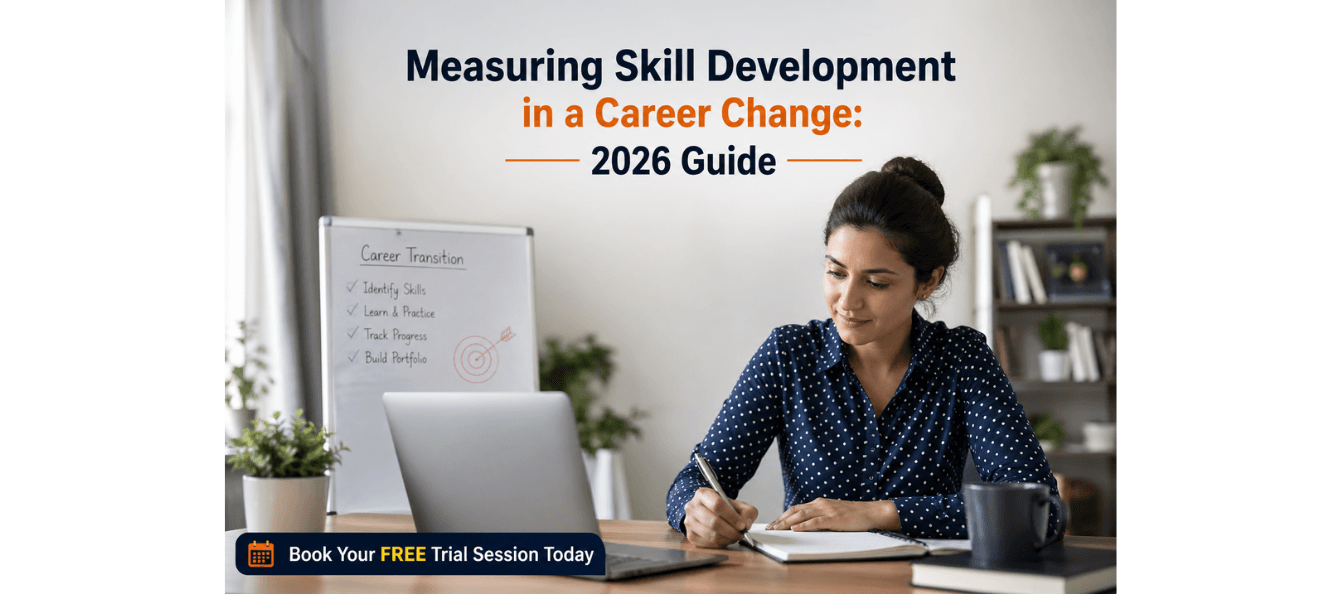
Navigating a career shift is no easy feat. Professionals often find themselves unlearning old habits, acquiring new skills, and stepping into unfamiliar roles, all while juggling high-stakes projects and new expectations. However, one key aspect that many overlook during this transition is tracking their learning journey effectively. Without a clear system to track skill acquisition, it's easy to feel overwhelmed or misjudge progress, leading to burnout or imposter syndrome.
This playbook provides a step-by-step guide to help professionals measure and track their skill development during career transitions, ensuring that the skills they acquire are applied effectively and lead to tangible career growth. By using the structured approach outlined here, you'll gain clarity and confidence in your career shift.
Download these resources and apply them alongside your daily work for improved clarity, productivity, and professional growth. You can also book a free trial to gain expert guidance and enhance your communication, problem-solving, and decision-making skills. The materials are designed in a clear, structured format to help professionals learn efficiently and implement insights with confidence.
Who Is This Blog For?
This blog is designed for professionals navigating career transitions, including:
- Individuals shifting to a new industry or field
- Employees seeking to step into a higher role or function
- Career changers looking to upskill and gain confidence in their new domain
Why This Topic Matters Today?
Career transitions are increasingly common in today's fast-evolving job market. According to recent studies, almost 40% of professionals experience a major career shift in their lifetime. However, despite investing significant time and resources into learning new skills, many professionals struggle to measure whether their learning is translating into real-world capability.
Tracking skill acquisition provides a clear roadmap for career success, helping professionals stay on track, demonstrate growth to potential employers, and avoid common pitfalls like overestimating surface-level exposure or underestimating actual progress. This is especially crucial when switching industries or job functions, where demonstrating competence quickly is key.
Core Concept
The guidebook introduces a Three-Phase Skill Acquisition Model designed to help professionals track their progress effectively during a career shift. These three phases — Awareness, Application, and Mastery — represent the different stages of learning, each with specific indicators of progress.
Phase 1 — Awareness: In this phase, you're familiarizing yourself with new concepts and skills. Your progress is measured by reduced confusion and the growing ability to ask informed questions.
Phase 2 — Application: Here, you begin applying your skills in real-world contexts, such as in projects or assignments. The key indicators of progress include recovering quickly from mistakes and refining your approach based on feedback.
Phase 3 — Mastery: By this stage, you are proficient in your skills and can innovate within your field. Progress looks like autonomy in decision-making and being recognized as an expert.
The playbook provides a systematic approach to track learning at each stage, ensuring that professionals can see measurable improvements and understand where further development is needed.
How This Blog and Guidebook Help You?
This blog, alongside the guidebook, offers a practical system to track skill acquisition. By using tools like the Skills Baseline Audit and the SMART-E Milestone Framework, you'll be able to:
- Identify transferable skills and target skills specific to your new role
- Set clear, measurable milestones that are tied to real tasks and outcomes
- Track progress weekly to create a compelling narrative of growth and readiness
- Avoid common mistakes like focusing on learning inputs (hours studied) rather than outputs (skills demonstrated)
The structured approach ensures that you are always moving forward, whether you are gaining awareness, applying your skills, or mastering them.
Step-by-Step Breakdown
1. Your Skills Baseline Audit
Before tracking your progress, it’s crucial to understand where you currently stand. The Skills Baseline Audit helps you assess your transferable skills (e.g., communication, leadership) and compare them with the target skills required for your desired role. This 20-minute audit will save you from wasting time on irrelevant learning and help focus efforts on high-leverage areas.
2. Setting Learning Milestones
The key to tracking skill acquisition effectively is setting SMART-E milestones:
- Specific
- Measurable
- Applied
- Realistic
- Time-bound
- Evidenced
For instance, instead of vague goals like “Improve my data analysis,” set concrete milestones such as “Complete a data analysis report using Python and present it to my team by Week 6.” These milestones help you stay focused and aligned with real-world outcomes.
3. The Weekly Skill Progress Tracker
Consistency is key. The Weekly Skill Progress Tracker allows you to log weekly wins, blockers, and the next week’s focus in just 10-15 minutes. This simple but effective system provides valuable insights into what’s working and where you need to pivot. The focus should always be on learning outputs — real-world skills demonstrated or problems solved, not just hours spent studying.
4. Real-World Application
As you move through the phases, you'll start applying your new skills in real-world scenarios. A case study, like that of Arjun, who successfully transitioned from a Finance Manager to a Product Strategist, showcases the power of the skill-tracking system. Arjun used the tracker to identify gaps, set SMART-E milestones, and apply his learning in real-world projects, leading to a successful job change in just 6 months.
Common Mistakes
- Measuring Inputs, Not Outputs: Track actions and evidence of learning, not just time spent on activities.
- Skipping the Baseline: Always start with a clear picture of your current skills and knowledge.
- Setting Too Many Priorities: Focus on a few critical skills at any time instead of trying to master everything at once.
- Abandoning the System During Plateaus: Understand that plateaus are part of the learning process — they provide valuable insights into your growth.
How Should You Use This Guidebook Effectively?
To make the most of this guidebook:
- Time Investment: Spend 20 minutes on the Skills Baseline Audit to assess your current skills, followed by 10-15 minutes weekly to track progress.
- Suggested Workflow: Use the guide as a reference throughout your career transition. Revisit and update the audit and progress tracker every 30 days to stay aligned with your goals.
Key Takeaways
Start with a clear baseline — know where you stand before diving into learning.
Set SMART-E milestones that result in tangible outputs, not just abstract goals.
Track weekly to create an ongoing narrative of your progress.
Focus on real-world applications of your learning to build a strong portfolio.
Your Next Step: Accelerate Your Career with PlanetSpark
Creating an impact-driven resume is not just about landing your next job—it’s about owning your professional story and presenting it with clarity, confidence, and credibility. When your resume clearly communicates value, results, and impact, opportunities follow naturally.
At PlanetSpark, we are committed to empowering working professionals with practical, outcome-focused resources that drive real career growth. From resume building and workplace communication to leadership presence and professional writing, our programs are designed to help you succeed in today’s fast-evolving job market.
Visit https://www.planetspark.in/resources to explore:
- Career and resume-building guides
- Workplace communication and professional writing resources
- Skill-development tools curated for working professionals
Want a deeper, hands-on experience?
You can also book a free trial session to learn more about PlanetSpark’s Working Professional Courses, designed to accelerate your career through personalised coaching, real-world practice, and expert guidance.
Your career deserves more than generic advice.
It deserves clarity, confidence, and measurable impact.
Personalized Communication Roadmaps
Record a video to get a AI generated personalized communication reports