
Moving From Survival Mode to Growth Mode in Your Career
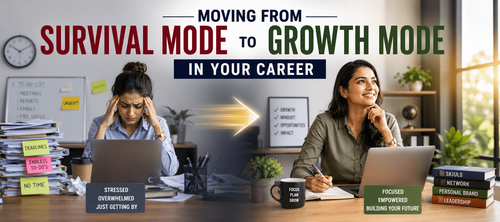

From Stabilizing to Scaling: A Step-by-Step Strategic Transition Guide
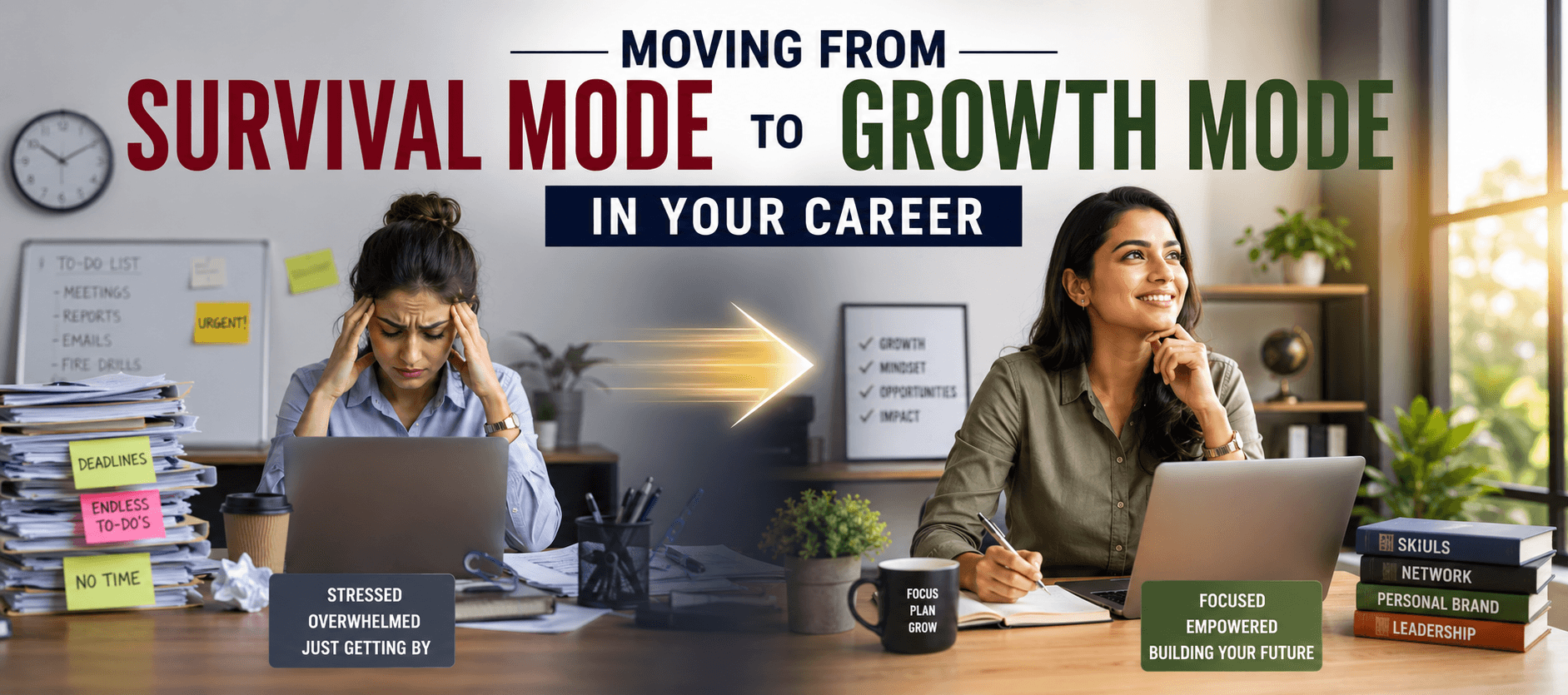
In today’s fast-paced professional landscape, it’s easy to get stuck in survival mode after facing a career setback—whether it’s job loss, burnout, or a period of stagnation. Recovery is an essential phase that allows you to regain stability, rebuild confidence, and regain control of your direction. However, remaining in recovery mode for too long can quietly limit your progress. When the focus stays only on stability, opportunities for advancement, innovation, and leadership often remain unexplored.
The real transformation happens when you deliberately shift from recovery to growth. This transition requires clarity about where you want to go next, the discipline to build new systems that support progress, and the confidence to pursue higher-impact opportunities. Instead of reacting to circumstances, you begin making intentional decisions that expand your skills, strengthen your professional reputation, and move you toward long-term goals.
This guide offers a strategic roadmap to help professionals move beyond recovery and enter a sustained growth phase. You will learn how to reassess your professional strengths, refine your positioning in the market, and identify opportunities that align with both your capabilities and industry demand. By implementing structured habits, building visible proof of your expertise, and maintaining consistent momentum, you can transform a difficult period into a powerful launchpad for career advancement.
To support your progress, you can download the accompanying resources and apply them alongside your daily work. These tools are designed to provide practical frameworks for decision-making, productivity improvement, and clearer professional positioning. By integrating them into your routine, you can accelerate learning while maintaining focus on meaningful outcomes.
You may also choose to book a free trial session to receive expert guidance on strengthening critical professional capabilities such as communication, problem-solving, and strategic thinking. With structured materials and practical exercises, the program helps professionals develop confidence, apply insights effectively, and navigate complex career decisions with greater clarity.
When used consistently, these resources can help you move beyond simply recovering from setbacks and begin building a career defined by progress, purpose, and long-term impact.
Download these resources and apply them alongside your daily work for improved clarity, productivity, and professional growth. You can also book a free trial to gain expert guidance and enhance your communication, problem-solving, and decision-making skills. The materials are designed in a clear, structured format to help professionals learn efficiently and implement insights with confidence.
Who Is This Blog For?
- Professionals recovering from a job loss, career stagnation, or burnout
- Those looking to reignite their careers after a difficult phase
- Career switchers ready to embrace growth opportunities
- Managers or leaders who need to shift their mindset for better team development
- Freelancers or consultants needing to adapt and innovate for long-term success
Why This Topic Matters Today?
In a volatile job market, standing still isn’t an option. Professionals often find themselves caught in a cycle of recovery without realizing that this temporary phase could become a long-term limitation. Without a plan to transition from recovery mode to growth mode, you risk missing out on key opportunities for advancement.
Recent studies show that over 60% of professionals who don't make a conscious effort to shift from recovery mode to growth mode stagnate in their careers, facing challenges like lack of motivation, missed opportunities, and even burnout. The key to overcoming these obstacles is understanding the importance of this transition and how it can unlock new career possibilities.
Core Concept or Framework Explained
The main framework behind this transition centers on three core principles:
- **Self-Assessment and Reflection:** It’s crucial to evaluate where you stand in your recovery phase and identify what’s holding you back from progressing. This includes acknowledging the protective behaviors that have served you well but may now be stalling your growth.
- **Strategic Risk-Taking:** In growth mode, playing it safe isn’t enough. You need to embrace calculated risks and make decisions that push you out of your comfort zone. This includes taking on new challenges, setting more ambitious goals, and stepping up as a leader.
- **Purposeful Action:** Transitioning from recovery mode to growth mode requires a clear action plan. This means setting specific career goals, outlining steps to reach them, and executing with intention. The goal is to continuously evolve in your career rather than simply return to a baseline of stability.
How This Blog and Guidebook Help You?
This blog and the accompanying guidebook will help you:
- Build a clear, actionable plan for moving from recovery to growth
- Gain practical insights on overcoming the mindset limitations of recovery mode
- Develop a forward-thinking approach that prioritizes career advancement
- Master the art of setting and achieving ambitious career goals
By the end of this blog, you’ll have a roadmap for shifting your professional mindset and actions to accelerate your career in meaningful ways.
Step-by-Step Breakdown
Step 1: Assess Your Current State
Begin by evaluating where you stand in your recovery journey. Are you still in survival mode, or have you regained some stability? Reflect on the past period to understand which behaviors (like avoiding risk or seeking stability) helped you cope, but might be holding you back now.
Step 2: Identify Key Growth Areas
Once you know your starting point, identify the areas that will drive your growth. This could be skill development, leadership opportunities, or pursuing new projects. Focus on areas that will move you beyond survival and push you into a thriving phase.
Step 3: Set Clear, Ambitious Goals
Growth mode is about clarity and ambition. Set specific, measurable, achievable, relevant, and time-bound (SMART) goals that align with your newfound career vision. Ensure these goals are challenging enough to stimulate progress but realistic enough to keep you motivated.
Step 4: Embrace Risk and Innovation
Transitioning to growth mode requires embracing new challenges. Start by stepping out of your comfort zone and seeking opportunities that stretch your abilities. Consider taking on projects that involve learning new skills, collaborating with different teams, or stepping into leadership roles.
Step 5: Take Consistent Action
Growth comes from consistent, purposeful action. Break down your goals into smaller tasks, and tackle them systematically. Ensure that every step you take aligns with your overall career vision. Don’t wait for the “perfect” moment—take action now, and adjust as needed.
Common Mistakes or Pitfalls to Avoid
During the transition, many professionals fall into these traps:
- **Avoiding Risk:** Playing it safe may feel comfortable, but it can prevent growth. Growth mode requires embracing challenges and risks that can open up new opportunities.
- **Setting Vague Goals:** Without clear, actionable goals, you risk drifting without direction. Ensure that every goal is specific and measurable.
- **Not Celebrating Small Wins:** In the pursuit of bigger goals, it’s easy to overlook small achievements. Recognize and celebrate each step forward, as this builds momentum.
How Should You Use This Guidebook Effectively?
To make the most out of this guidebook, follow this simple workflow:
- Assess your current situation and where you stand in your recovery journey.
- Identify the key growth areas where you need to focus.
- Set ambitious yet realistic career goals.
- Embrace calculated risks that challenge you to grow.
- Take consistent, measurable action toward your goals.
Time investment:
- Spend 10-15 minutes reflecting on your current state and growth areas.
- Regularly allocate 1-2 hours per week to work on your growth goals.
Consistency is essential. Make transitioning from recovery to growth a habit that you revisit regularly.
Key Takeaways
- Transitioning from recovery mode to growth mode is essential for long-term career success.
- Self-assessment helps identify the behaviors holding you back.
- Set SMART goals that align with your growth aspirations.
- Take calculated risks and embrace new challenges.
- Small wins build momentum toward larger achievements.
- Consistency and purposeful action are key to success.
Your Next Step: Accelerate Your Career with PlanetSpark
Creating an impact-driven resume is not just about landing your next job—it’s about owning your professional story and presenting it with clarity, confidence, and credibility. When your resume clearly communicates value, results, and impact, opportunities follow naturally.
At PlanetSpark, we are committed to empowering working professionals with practical, outcome-focused resources that drive real career growth. From resume building and workplace communication to leadership presence and professional writing, our programs are designed to help you succeed in today’s fast-evolving job market.
Visit https://www.planetspark.in/resources to explore:
- Career and resume-building guides
- Workplace communication and professional writing resources
- Skill-development tools curated for working professionals
Want a deeper, hands-on experience?
You can also book a free trial session to learn more about PlanetSpark’s Working Professional Courses, designed to accelerate your career through personalised coaching, real-world practice, and expert guidance.
Your career deserves more than generic advice.
It deserves clarity, confidence, and measurable impact.
Start building that advantage today—with PlanetSpark.
Personalized Communication Roadmaps
Record a video to get a AI generated personalized communication reports