
Operational Transformation Initiatives Resume Guide 2026

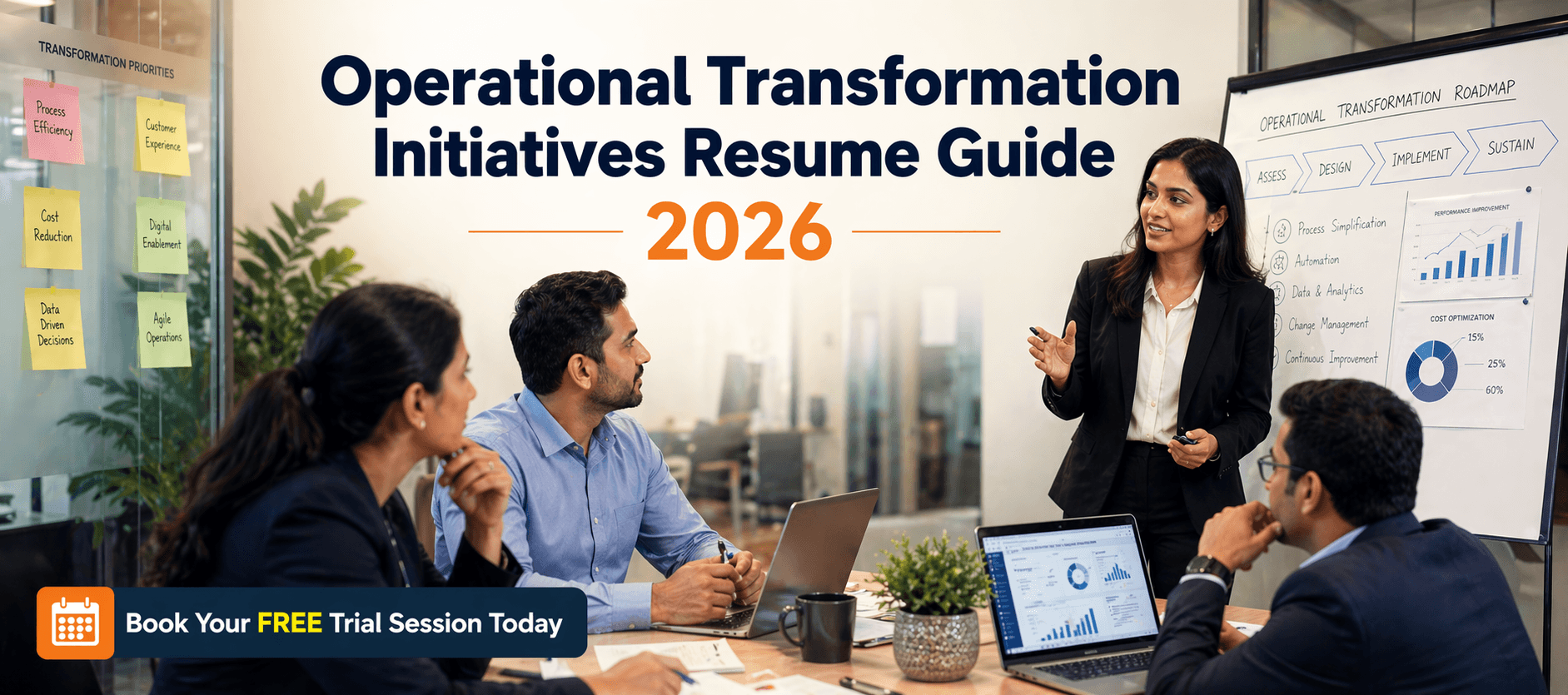
Operational Transformation Resume Templates: How to Showcase Impact, Efficiency, and Measurable Results
In today’s performance-driven workplace, operational transformation is at the heart of organisational success. From cost optimisation and process re-engineering to digital transformation and large-scale change management, professionals in this space play a critical role in driving efficiency and business growth. Yet, despite delivering high-impact results, many struggle to communicate their true value effectively on their resumes.
The problem isn’t lack of experience—it’s lack of structured storytelling. Most professionals describe responsibilities instead of outcomes, fail to quantify their contributions, and use generic formats that do not reflect the scale or complexity of transformation initiatives.
To stand out in a competitive job market, your resume must do more than list tasks—it must demonstrate measurable impact, leadership scope, and transformation expertise. This is where a scenario-driven resume framework becomes essential.
Download these resources and apply them alongside your daily work for improved clarity, productivity, and professional growth. You can also book a free trial to gain expert guidance and enhance your communication, problem-solving, and decision-making skills. The materials are designed in a clear, structured format to help professionals learn efficiently and implement insights with confidence.
Who Is This Blog For?
- Operations professionals leading or supporting transformation initiatives
- Lean, Six Sigma, and continuous improvement practitioners
- Consultants transitioning into in-house operational leadership roles
- Mid-level managers building a track record of operational improvements
- Senior leaders targeting roles such as Head of Transformation or COO
Why This Topic Matters Today?
Operational transformation is one of the most visible and high-impact functions within any organisation. Whether it involves cost reduction, digital adoption, or organisational restructuring, transformation initiatives directly influence business performance and competitiveness.
However, professionals in this field often fail to reflect this impact effectively in their resumes. As highlighted in the resource:
- Many list responsibilities instead of quantified outcomes
- Generic resume sections dilute transformation-specific achievements
- The scale of initiatives—such as budgets, teams, and geographies—is often buried
- Professionals do not clearly differentiate between leading and supporting transformation efforts
- Methodologies like Lean, Six Sigma, and Agile are often omitted, reducing credibility
These gaps can significantly weaken your profile, even if your experience is strong.
Core Concept or Framework Explained
The guidebook introduces a scenario-based resume framework tailored specifically for operational transformation professionals.
Instead of a generic resume structure, it provides 10 templates aligned with real-world transformation scenarios. Each template is designed to:
- Highlight measurable outcomes and efficiency improvements
- Emphasise leadership roles and cross-functional impact
- Showcase methodologies and tools used
- Present achievements in a structured, outcome-first format
As outlined in the template directory on page 3, these scenarios include roles such as transformation programme lead, Lean practitioner, digital transformation specialist, supply chain leader, and turnaround expert.
This structured approach ensures your resume reflects both the depth and scale of your transformation work.
How This Blog and Guidebook Help You?
This guidebook helps you reposition your resume as a results-driven document that clearly communicates your impact.
By applying its frameworks, you can:
- Quantify your contributions with clear metrics
- Demonstrate leadership in transformation initiatives
- Align your resume with recruiter expectations
- Highlight methodologies that signal expertise
- Position yourself for higher-impact roles in operations and transformation
Ultimately, it enables you to showcase not just what you did—but the value you delivered.
Step-by-Step Breakdown
Step 1: Identify Your Transformation Scenario
The resource provides 10 templates tailored to specific career contexts, including:
- Transformation programme lead
- Lean or Six Sigma practitioner
- First-time operations manager
- Digital transformation specialist
- Consultant transitioning to in-house role
- Supply chain transformation leader
- Cost optimisation expert
- Change management specialist
- Post-merger integration leader
- Turnaround and recovery expert
Selecting the right template ensures alignment with your career goals.
Step 2: Craft a Results-Driven Professional Summary
Your summary should highlight:
- Years of experience
- Type of transformation initiatives led
- Methodologies used (Lean, Agile, Six Sigma)
- Measurable outcomes such as cost savings or efficiency gains
Example:
Instead of “Operations professional,” write:
“Transformation leader with 10 years of experience delivering enterprise-wide programmes generating $20M in cost savings and 30% efficiency gains.”
Step 3: Emphasise Transformation Scope
Clearly define the scale of your work:
- Programme budgets
- Number of teams or business units impacted
- Geographic scope
- Stakeholder level (C-suite, board, cross-functional teams)
This demonstrates the complexity and importance of your role.
Step 4: Highlight Key Transformation Initiatives
Focus on major initiatives you led or contributed to.
For example:
- Process re-engineering projects
- ERP or automation implementations
- Supply chain redesign initiatives
- Cost optimisation programmes
Each initiative should include:
- Scope
- Actions taken
- Measurable outcomes
Step 5: Quantify Impact with Metrics
The templates emphasise metrics such as:
- Percentage reduction in cycle time or defects
- Cost savings achieved
- Productivity improvements
- Revenue protection or growth
- Adoption rates of new systems
Metrics make your achievements credible and compelling.
Step 6: Showcase Methodologies and Tools
Highlight frameworks and tools that validate your expertise:
- Lean, Six Sigma, Agile, Kaizen
- DMAIC, value stream mapping, process redesign
- ERP systems, RPA tools, analytics platforms
This signals technical and strategic capability.
Step 7: Tailor Sections to Your Role
Each template includes specialised sections, such as:
- Change leadership portfolios for culture transformation roles
- Integration records for post-merger professionals
- Cost transformation scorecards for efficiency leaders
- Turnaround mandates for recovery specialists
These sections strengthen relevance and clarity.
Common Mistakes or Pitfalls to Avoid
Avoid these common errors:
- Describing tasks without measurable outcomes
- Using generic resume structures
- Hiding the scale of transformation initiatives
- Failing to highlight methodologies and tools
- Not differentiating between leadership and support roles
Correcting these mistakes can significantly improve your resume’s effectiveness.
How Should You Use This Guidebook Effectively?
To maximise the value of this resource:
- Select the template that best matches your scenario and target role
- Replace all placeholders with real data and achievements
- Lead every bullet point with action verbs and measurable results
- Customise your resume for each job application
- Keep your resume concise and professionally formatted
Suggested workflow:
- Spend 2–3 hours drafting your first version
- Refine metrics and language for clarity
- Seek feedback before final submission
Key Takeaways
- Operational transformation resumes must highlight measurable impact and efficiency gains
- Scenario-based templates improve alignment with career goals
- Quantified outcomes are essential for credibility
- Methodologies and tools strengthen your expertise profile
- Avoid generic language and focus on results and leadership
- A structured resume can significantly enhance your career opportunities
Your Next Step: Accelerate Your Career with PlanetSpark
Creating an impact-driven resume is not just about landing your next job—it’s about owning your professional story and presenting it with clarity, confidence, and credibility. When your resume clearly communicates value, results, and impact, opportunities follow naturally.
At PlanetSpark, we are committed to empowering working professionals with practical, outcome-focused resources that drive real career growth. From resume building and workplace communication to leadership presence and professional writing, our programs are designed to help you succeed in today’s fast-evolving job market.
Visit https://www.planetspark.in/resources to explore:
- Career and resume-building guides
- Workplace communication and professional writing resources
- Skill-development tools curated for working professionals
Want a deeper, hands-on experience?
You can also book a free trial session to learn more about PlanetSpark’s Working Professional Courses, designed to accelerate your career through personalised coaching, real-world practice, and expert guidance.
Your career deserves more than generic advice.
It deserves clarity, confidence, and measurable impact.
Personalized Communication Roadmaps
Record a video to get a AI generated personalized communication reports