
Operational Transformation Resume Guide for Professionals
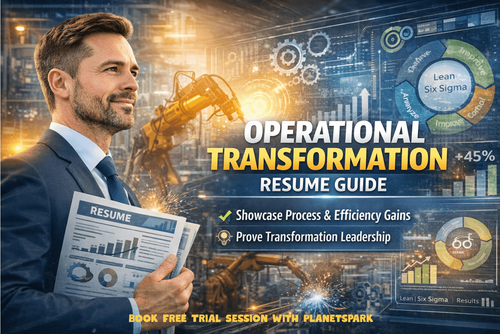

Operational Transformation Resume Guide: How to Showcase Process Impact, Efficiency Gains, and Transformation Leadership
In today’s business environment, operational transformation is no longer optional—it’s a strategic necessity. Whether companies are undergoing digital transformation, post-merger integration, or large-scale process redesign, they rely on professionals who can deliver measurable change.
Book your free trial session today with Planetspark.
Download for more details or PDF file.
Yet, most resumes fail to reflect this reality.
Many professionals describe their roles using vague phrases like “improved processes” or “supported transformation initiatives.” But in high-stakes transformation roles, this is not enough. Hiring managers expect clear evidence of structured methodologies, quantified results, and cross-functional leadership.
The Resume Template Focused on Operational Transformation Initiatives is designed to bridge this gap—helping you present your transformation experience with precision, credibility, and measurable impact.
Who Is This Blog For?
- Transformation leads and change managers targeting new roles
- Operations consultants and continuous improvement specialists
- Business analysts transitioning into transformation roles
- Functional managers pivoting into transformation-focused careers
- Freelancers or consultants seeking interim transformation projects
- Senior leaders aiming for COO, VP Operations, or transformation mandates
Why This Topic Matters Today?
Operational transformation sits at the core of modern business strategy. Organisations are continuously redesigning processes, integrating systems, and improving efficiency to stay competitive.
However, expectations from transformation professionals are significantly higher than traditional roles.
Recruiters now look for:
- Evidence of structured methodologies like Lean, Six Sigma, or Agile
- Quantified business impact such as cost reduction or efficiency gains
- Cross-functional leadership across departments and geographies
- Ability to manage ambiguity and deliver results at scale
As highlighted in the guide, generic resumes that say “managed teams” or “improved processes” rarely pass ATS filters or hiring manager scrutiny.
This makes it essential to craft a resume that clearly demonstrates transformation impact—not just participation.
Core Concept or Framework Explained
The guide is built around a scenario-based, outcome-driven resume framework specifically tailored for operational transformation roles.
Three core principles define this approach:
Methodology-Driven Positioning
Transformation roles require structured approaches. Your resume must explicitly mention frameworks such as Lean, Six Sigma, Agile, or change management models like ADKAR.
Outcome Quantification
Every initiative must show measurable results—cost savings, efficiency improvements, cycle time reduction, or productivity gains.
Before-and-After Impact Framing
Transformation resumes must highlight change. This means clearly showing what the situation was before, what actions you took, and what measurable improvement followed.
This structured approach ensures your resume aligns with how transformation professionals are evaluated in real-world hiring scenarios.
How This Blog and Guidebook Help You?
This blog and the template pack help you:
- Convert vague operational experience into measurable transformation impact
- Position yourself as a structured, methodology-driven professional
- Align your resume with ATS requirements for transformation roles
- Communicate scale, complexity, and results effectively
- Build a resume tailored to specific transformation scenarios
The result is a resume that reflects not just what you did—but what changed because of you.
Step-by-Step Breakdown
1. Understanding Transformation Scenarios
The template pack includes 10 scenario-specific templates designed around real-world transformation roles, such as:
- Enterprise-wide process redesign leadership
- Post-merger integration operations
- Lean or Six Sigma transformation practitioner roles
- Digital operations transformation management
- Change management leadership
- Supply chain transformation
- Interim consulting engagements
- Early-career transformation roles
- Senior executive transformation mandates
- Career switching into transformation roles
Each scenario ensures your resume directly matches your career context and target role.
2. Crafting a High-Impact Professional Summary
Your summary should immediately establish your transformation credentials.
It should include:
- Years of experience in transformation or operations
- Key methodologies used (Lean, Agile, Six Sigma, etc.)
- Quantified impact (cost savings, efficiency gains)
- Scale of transformation (teams, sites, geographies)
For example, templates highlight outcomes like:
- Reduced operational costs by a specific percentage
- Delivered enterprise-wide process redesign
- Managed cross-functional transformation programmes
3. Showcasing Transformation Metrics
Metrics are central to transformation resumes.
You should include:
- Cost savings achieved
- Efficiency improvements
- Reduction in cycle time or errors
- Number of processes redesigned
- Scale of operations impacted (teams, locations, systems)
Without metrics, your transformation work lacks credibility.
4. Structuring Transformation Experience
The experience section is designed to demonstrate structured delivery.
Each bullet point should:
- Begin with a strong action verb such as “Led,” “Redesigned,” or “Delivered”
- Include the transformation initiative or scope
- Highlight measurable outcomes
For example:
- Led enterprise-wide process redesign reducing cycle time
- Delivered transformation programme across multiple functions
- Established governance models and transformation frameworks
This ensures your contributions are clear and impactful.
5. Highlighting Methodologies and Tools
A key differentiator in transformation resumes is methodology.
Templates encourage you to explicitly include:
- Lean / Six Sigma frameworks
- Agile delivery methods
- Process mapping and reengineering tools
- ERP or automation platforms
- Change management frameworks like ADKAR
This signals structured thinking and professional maturity.
6. Aligning with Career Scenarios
Each template is tailored for a specific professional context:
-Enterprise Transformation Leaders
Focus on large-scale impact, governance, and cross-functional leadership.
-Methodology Specialists
Highlight certifications, frameworks, and structured improvement delivery.
-Consultants and Freelancers
Emphasise project-based impact and rapid deployment capability.
-Early-Career Professionals
Show analytical contributions, project support, and measurable insights.
-Career Switchers
Reframe transferable skills into transformation capabilities.
This ensures your resume feels highly relevant to your target role.
Common Mistakes or Pitfalls to Avoid
The guide identifies several common mistakes:
- Using vague language like “helped” or “supported”
- Not mentioning transformation methodologies
- Failing to quantify scale (team size, budget, sites)
- Describing activities without showing outcomes
- Writing generic summaries that lack specificity
- Hiding transformation achievements within job descriptions
Avoiding these mistakes can significantly improve your resume effectiveness.
How Should You Use This Guidebook Effectively?
Select the Right Template
Choose the template that aligns with your current role or career goal.
Replace All Placeholders
Every placeholder must be replaced with real data—metrics, outcomes, and examples.
Tailor for Each Application
Customise your summary and keywords based on the job description to improve ATS matching.
Quantify Everything
Include percentages, cost savings, timelines, and scale to strengthen credibility.
Follow ATS Best Practices
Ensure your resume uses standard formatting, avoids text boxes, and uses simple layouts for better parsing.
Time Investment Tip
- Initial resume build: 3–4 hours
- Customisation per role: 20–30 minutes
Key Takeaways
- Transformation resumes must focus on measurable change, not tasks
- Methodologies like Lean, Agile, and Six Sigma must be explicitly mentioned
- Quantification of impact is critical for credibility
- Scenario-based templates improve relevance and clarity
- Strong action verbs and structured storytelling enhance impact
- ATS-friendly formatting ensures visibility in hiring systems
Your Next Step: Accelerate Your Career with PlanetSpark
Creating an impact-driven resume is not just about landing your next job—it’s about owning your professional story and presenting it with clarity, confidence, and credibility. When your resume clearly communicates value, results, and impact, opportunities follow naturally.
At PlanetSpark, we are committed to empowering working professionals with practical, outcome-focused resources that drive real career growth. From resume building and workplace communication to leadership presence and professional writing, our programs are designed to help you succeed in today’s fast-evolving job market.
Visit https://www.planetspark.in/resources to explore:
- Career and resume-building guides
- Workplace communication and professional writing resources
- Skill-development tools curated for working professionals
Want a deeper, hands-on experience?
You can also book a free trial session to learn more about PlanetSpark’s Working Professional Courses, designed to accelerate your career through personalised coaching, real-world practice, and expert guidance.
Your career deserves more than generic advice.
It deserves clarity, confidence, and measurable impact.
Personalized Communication Roadmaps
Record a video to get a AI generated personalized communication reports