
Plan Your Career Transition with This Comprehensive Template
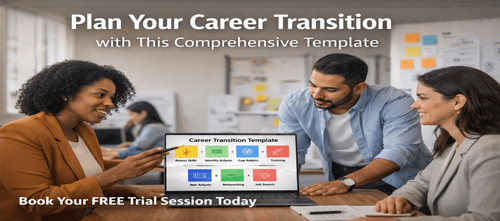

Transition Planning Template: A Structured Approach to Navigating Career Change
Career transitions can be some of the most challenging and rewarding moves professionals can make in their careers. Whether you’re pivoting industries, transitioning from an employee to a consultant, or moving into a leadership role, having a clear and structured transition plan is essential for a smooth and successful career shift. The Transition Planning Template is your step-by-step guide to navigating this change with confidence and clarity.
Download these resources and apply them alongside your daily work for improved clarity, productivity, and professional growth. You can also book a free trial to gain expert guidance and enhance your communication, problem-solving, and decision-making skills. The materials are designed in a clear, structured format to help professionals learn efficiently and implement insights with confidence.
Who Is This Blog For?
This blog is for professionals who
are:
Looking to transition into a new industry or career path
Moving from a technical role to a managerial or leadership position
Transitioning into a consulting career or starting a business
Returning to the workforce after a break
Shifting from one functional area to another (e.g., from operations to marketing)
Whether you’re at the start of your transition or already deep in the process, this planning template will provide you with the structure and clarity you need to succeed.
Why This Topic Matters Today?
Career transitions are becoming more frequent as industries evolve and professionals seek new opportunities that align better with their personal and professional goals. A smooth transition, however, requires more than just updating your resume and applying for jobs. Without a clear plan, your transition may become chaotic, overwhelming, or directionless.
The Transition Planning Template solves this problem by breaking down the process into manageable, actionable steps. This guide helps you create a personalized roadmap for your career shift, reducing the uncertainty and stress that often accompany such significant changes.
Core Concept or Framework Explained
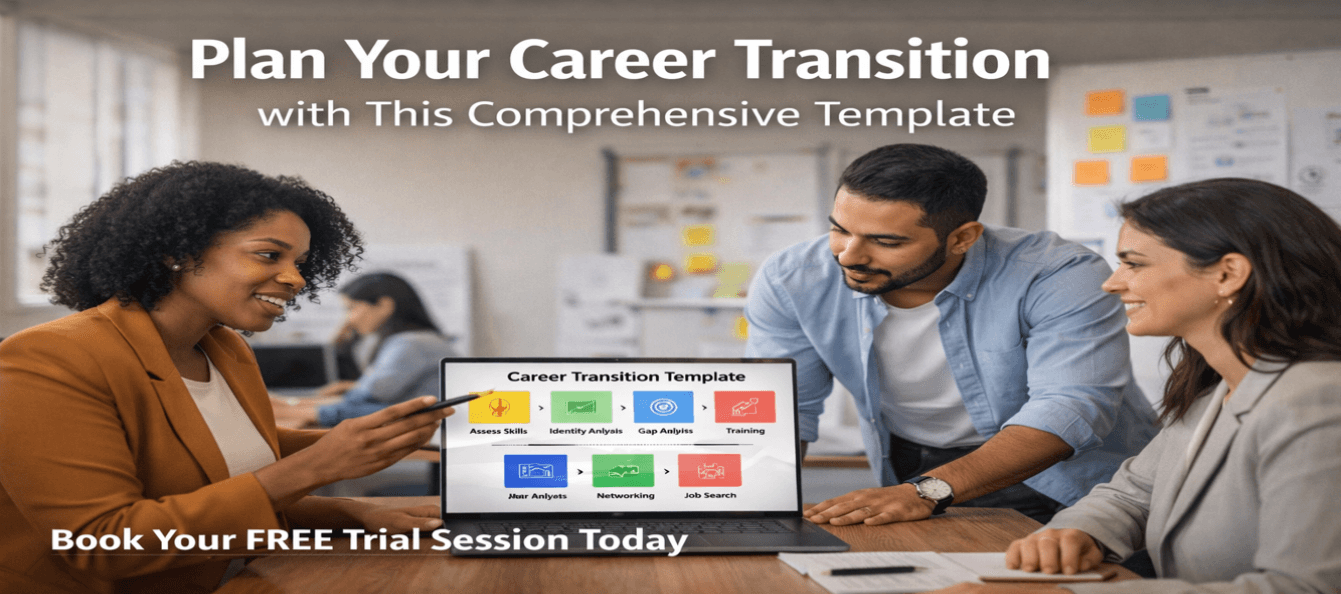
The Transition Planning Template provides a comprehensive, step-by-step process designed to ensure that you transition from one role to another with confidence, efficiency, and effectiveness. The template is modular and consists of several key phases:
Self-Assessment: Understand where you are right now in your career. Reflect on your skills, strengths, and motivations.
Target Role Definition: Define your target role clearly, including your ideal industry, job function, and career goals.
Skills Gap Analysis: Identify any gaps in your current skills that need to be addressed to make you competitive in your target role.
Networking Strategy: Build relationships in your target industry or role through networking, mentorship, and informational interviews.
Action Plan: Create a 90-day action plan with clear weekly milestones and goals to keep you focused and on track.
Execution: Put your plan into action by applying to roles, preparing for interviews, and positioning yourself effectively.
How This Blog and Template Help You?
The Transition Planning Template helps you:
Organize your transition: Break down the transition process into clear, manageable phases so that you don’t feel overwhelmed by the complexity of the shift.
Align your strengths with your goals: Self-assessment exercises help you understand what you bring to the table and how to position it effectively for the new role.
Address skill gaps strategically: Use the skills gap analysis to focus on the most relevant competencies that will increase your competitiveness in your new role.
Build a professional network: Networking is a key part of the transition, and the template provides clear guidance on how to connect with the right people in your target industry.
Stay on track: With a 90-day action plan, you can track your progress and make sure you stay focused and proactive throughout your transition.
Step-by-Step Breakdown
Self-Assessment: Know Exactly Where You Stand
The first step is to understand where you are in your career. Reflect on your current role, the skills you’ve developed, and the areas where you excel. Consider:
What do you enjoy most about your current role?
What skills are you most proud of?
What drives you to make this transition?
The self-assessment section helps you gain a clearer picture of your strengths and motivations, providing a solid foundation for the next steps in your transition.
Target Role Definition: Define Your Next Move
Once you understand your starting point, the next step is to define your target role. This involves identifying:
The type of role you want (e.g., managerial, technical, creative)
The industry or sector you’re targeting
The work culture and environment that suits your personality
Your compensation expectations and work-life balance priorities
Be specific. The more defined your goals are, the easier it will be to plan and execute your transition.
Skills Gap Analysis: Bridge the Gaps
Identify the skills required for your target role and compare them to your current skills. Use job descriptions, informational interviews, and industry research to pinpoint where you need to upskill or gain experience. Focus on:
Hard skills (e.g., technical proficiency, industry-specific knowledge)
Soft skills (e.g., leadership, communication, strategic thinking)
Transferable skills (e.g., project management, team collaboration)
Fill in your skills gap with relevant courses, certifications, or side projects. This ensures you’re well-prepared for the new role.
Networking Strategy: Build Key Connections
Networking is critical to any career transition. In this phase, you’ll develop a strategy for connecting with professionals in your target industry.
This includes:
Identifying key individuals for mentorship or advice
Engaging with professionals on LinkedIn and at industry events
Conducting informational interviews to learn more about the roles you're pursuing
Asking for referrals or introductions to hiring managers in your target industry
Action Plan: Create Your 90-Day Roadmap
Set a clear action plan with weekly milestones and goals. This helps you stay organized and motivated. Break your 90-day plan into phases:
Phase 1 (Clarity and Foundation): Complete your self-assessment and define your target role. Start networking and engaging with key industry contacts.
Phase 2 (Skill-Building and Application): Address the top 2–3 skills gaps identified and begin applying to roles. Tailor your resume and LinkedIn to reflect your target role.
Phase 3 (Execution and Integration): Apply to your top target roles, prepare for interviews, and solidify your networking relationships.
Regularly review and update your action plan to track your progress.
Execution: Putting the Plan into Action
The final phase is where you execute the plan. Start applying to roles, attending interviews, and using your network to uncover opportunities.
Focus on:
Customizing each application to the company and role
Preparing for interviews by practicing your transition narrative
Following up with your network regularly to maintain momentum
Common Mistakes or Pitfalls to Avoid
Skipping the self-assessment phase: It’s tempting to dive straight into job applications, but without clarity on your strengths and motivations, you may miss opportunities that align with your true goals.
Not addressing skill gaps early enough: Don’t wait until you’ve applied to roles to realize you’re underqualified for certain key skills. Start bridging gaps early.
Overlooking the power of networking: A lot of opportunities are never advertised. Networking helps you uncover these hidden opportunities and gain valuable insights from people in the industry.
Focusing too much on credentials over experience: While certifications and courses can help, real-world experience (such as portfolio projects or freelance work) is often more valuable.
How Should You Use This Template Effectively?
Complete each phase thoughtfully: Don’t rush through any step. Each phase builds on the last, so take your time to reflect and research thoroughly.
Revise your plan regularly: Career transitions are dynamic processes. Keep your plan flexible and adjust it as you gain new insights and experiences.
Stay organized and accountable: Use the 90-day action plan as a roadmap to guide your transition. Regularly review your progress and make adjustments as needed.
Key Takeaways
Career transitions require structure: This template gives you a clear, step-by-step approach to managing your transition.
Self-awareness is crucial: Understand your strengths and motivations to ensure you’re targeting the right role.
Networking is key: Build meaningful relationships early on to uncover opportunities.
Stay patient and persistent: Career transitions take time, but with a solid plan and consistent effort, you’ll succeed.
Your Next Step: Accelerate Your Career with PlanetSpark
Creating an impact-driven resume is not just about landing your next job—it’s about owning your professional story and presenting it with clarity, confidence, and credibility. When your resume clearly communicates value, results, and impact, opportunities follow naturally.
At PlanetSpark, we are committed to empowering working professionals with practical, outcome-focused resources that drive real career growth. From resume building and workplace communication to leadership presence and professional writing, our programs are designed to help you succeed in today’s fast-evolving job market.
Visit https://www.planetspark.in/resources
to explore:
Career and resume-building guides
Workplace communication and professional writing resources
Skill-development tools curated for working professionals
Want a deeper, hands-on experience?
You can also book a free trial session to learn more about PlanetSpark’s Working Professional Courses, designed to accelerate your career through personalised coaching, real-world practice, and expert guidance.
Your career deserves more than generic advice.
It deserves clarity, confidence, and measurable impact.
Start building that advantage today—with PlanetSpark.
Personalized Communication Roadmaps
Record a video to get a AI generated personalized communication reports