
Police Recruitment Biodata Guide for Aspirants 2026
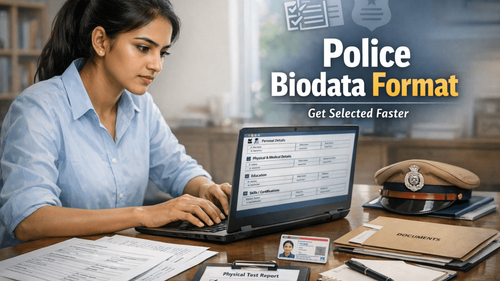

Best Biodata Format for Police Recruitment Applications: 10 Proven Templates to Get Selected Faster
If you are applying for a police job, your biodata is not just a formality — it is a critical screening document that can determine whether you move forward or get rejected within seconds.
Recruitment panels often spend just a few seconds reviewing each application. In that short window, clarity, structure, and completeness matter more than anything else.
Many candidates miss opportunities not because they lack qualifications, but because their biodata is poorly structured, incomplete, or misaligned with official expectations.
The PlanetSpark Biodata Template Pack for Police Recruitment Applications solves this problem by offering 10 professionally structured formats tailored for different roles, from constables to senior officers.
Who Is This Blog For?
- First-time applicants preparing for police constable recruitment
- Graduates applying for Sub-Inspector or officer-level roles
- Candidates applying for paramilitary or public sector security jobs
- Ex-military personnel transitioning into police services
- Professionals switching careers into law enforcement
- Athletes applying through sports quota recruitment
- IT professionals targeting cyber police or technical units
Why This Topic Matters Today?
Police recruitment in India is highly competitive and structured. Unlike private sector hiring, it requires detailed documentation that goes beyond a resume.
A biodata for police recruitment includes:
- Personal identity and family background
- Educational qualifications
- Physical and medical fitness details
- Skills, certifications, and references
This level of detail is mandatory because law enforcement roles demand both professional competence and personal credibility.
Additionally, biodata is the most commonly accepted format in government and police recruitment processes, making it essential for serious applicants.
Using the wrong format or leaving sections incomplete can immediately disqualify you.
Core Concept or Framework Explained
The template pack is built on a scenario-based approach, recognising that different police roles require different biodata structures.
Instead of a one-size-fits-all format, it provides 10 unique templates, each aligned with a specific recruitment context.
These templates follow three key principles:
- Complete profile representation: Includes personal, physical, educational, and professional details
- Role-specific customisation: Tailored sections based on the position applied for
- Recruiter-friendly structure: Clear, scannable layout designed for quick evaluation
For example:
- Entry-level templates focus on education, physical fitness, and basic details
- Officer-level templates emphasise leadership, experience, and competencies
- Technical templates highlight domain expertise such as cybersecurity
This ensures your biodata is aligned with expectations from the very beginning.
How This Blog and Guidebook Help You?
This guide helps you:
- Select the correct biodata format based on your target role
- Understand what information police recruiters prioritise
- Structure your application for maximum clarity and impact
- Avoid disqualification due to formatting or missing details
- Build a professional, submission-ready biodata quickly
Most importantly, it helps you present yourself as a disciplined, organised, and credible candidate — qualities that are essential in law enforcement.
Step-by-Step Breakdown
Step 1: Choose the Right Template for Your Role
The pack includes 10 templates covering all major police recruitment scenarios:
- Standard Police Biodata for general applications
- Physical and Medical Profile Biodata for fitness-focused roles
- Entry-Level Constable Biodata for freshers
- Sub-Inspector and Officer-Grade Biodata for graduates
- Career Switch Biodata for professionals transitioning roles
- Ex-Military Biodata for defence personnel
- Female Candidate Biodata for women applicants
- Sports Quota Biodata for athletes
- Cyber Police Biodata for IT professionals
- Senior and Lateral Entry Biodata for experienced candidates
Selecting the right template ensures your application is relevant and complete.
Step 2: Fill Personal and Contact Details Accurately
Every police biodata begins with detailed personal information:
- Full name, date of birth, and age
- Category, nationality, and marital status
- Parent or guardian details
- Permanent and correspondence address
- Contact numbers and email
Accuracy here is critical, as these details are verified during recruitment.
Step 3: Include Educational Qualifications
Clearly list your academic background:
- Class 10 and 12 details
- Graduation or higher education (if applicable)
- Certifications and additional qualifications
Ensure consistency with official documents.
Step 4: Add Physical and Medical Details
Police recruitment uniquely requires physical standards such as:
- Height, weight, and chest measurements
- Eyesight and vision details
- Blood group and medical condition
- Physical fitness test results (running, jump, etc.)
Templates like the Physical & Medical Profile Biodata are specifically designed to highlight these details.
Step 5: Highlight Skills, Experience, and Achievements
Depending on your profile, include:
- Work experience or internships
- NCC, NSS, or volunteer participation
- Sports achievements at district, state, or national level
- Leadership roles or extracurricular activities
Officer-level templates emphasise leadership and decision-making abilities.
Step 6: Add Role-Specific Sections
Different templates include specialised sections:
- Cyber police roles require technical skills and certifications
- Ex-military templates highlight service history and medals
- Career switch templates focus on transferable skills
Customizing these sections strengthens your application.
Step 7: Include References and Supporting Information
References from credible individuals such as:
- Senior officers
- Coaches or trainers
- Employers or academic mentors
These add authenticity and credibility to your biodata.
Step 8: Add Declaration and Signature
Every biodata must end with a declaration confirming that all information is accurate.
Include:
- Date and place
- Signature
False information can lead to disqualification or termination.
Common Mistakes or Pitfalls to Avoid
- Using a generic resume instead of a police-specific biodata
- Leaving mandatory fields blank instead of marking them as not applicable
- Providing incorrect or inconsistent personal details
- Ignoring physical and medical requirements
- Not tailoring the biodata to the specific role
- Poor formatting that reduces readability
Even small errors can cost you the opportunity.
How Should You Use This Guidebook Effectively?
To maximise results:
- Spend time selecting the correct template based on your role
- Replace all placeholders with accurate information
- Keep formatting clean and consistent
- Do not remove sections, use “Not Applicable” where needed
- Convert the final document into PDF before submission
The templates are designed to be instant-ready and easily editable across formats, saving time while ensuring professionalism.
Key Takeaways
- A well-structured biodata is essential for police recruitment success
- Different roles require different biodata formats
- Accuracy and completeness are critical in government applications
- Physical and medical details are as important as qualifications
- Customised templates improve clarity and selection chances
- A strong biodata reflects discipline, professionalism, and readiness
Your Next Step: Accelerate Your Career with PlanetSpark
Creating an impact-driven resume is not just about landing your next job—it’s about owning your professional story and presenting it with clarity, confidence, and credibility. When your resume clearly communicates value, results, and impact, opportunities follow naturally.
At PlanetSpark, we are committed to empowering working professionals with practical, outcome-focused resources that drive real career growth. From resume building and workplace communication to leadership presence and professional writing, our programs are designed to help you succeed in today’s fast-evolving job market.
Visit https://www.planetspark.in/resources to explore:
- Career and resume-building guides
- Workplace communication and professional writing resources
- Skill-development tools curated for working professionals
Want a deeper, hands-on experience?
You can also book a free trial session to learn more about PlanetSpark’s Working Professional Courses, designed to accelerate your career through personalised coaching, real-world practice, and expert guidance.
Your career deserves more than generic advice.
It deserves clarity, confidence, and measurable impact.
Personalized Communication Roadmaps
Record a video to get a AI generated personalized communication reports