
Portfolio Resume Guide for Creative Professionals Seeking Better Roles
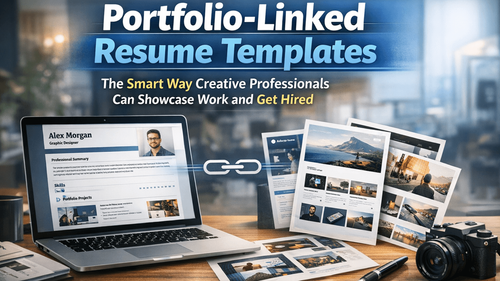

Portfolio-Linked Resume Templates: The Smart Way Creative Professionals Can Showcase Work and Get Hired
Many talented creative professionals struggle to translate their visual work and project experience into a resume that recruiters understand quickly. Designers, illustrators, photographers, and content creators often rely heavily on portfolios, but recruiters still expect a well-structured resume that explains the story behind the work.
The challenge is simple but critical. Recruiters spend only six to eight seconds scanning a resume before deciding whether to continue reading. In that brief window, clarity, structure, and visual hierarchy determine whether your application moves forward or gets overlooked.
This is exactly where portfolio-linked resume templates become powerful. Instead of forcing creative professionals to compress visual work into bullet points, these templates integrate portfolio links, project highlights, and measurable outcomes into a structured resume format that recruiters can scan quickly.
The Portfolio-Linked Resume Template Pack for Creative Professionals provides ten distinct resume structures designed for different professional situations. Each template helps you communicate your skills, achievements, and portfolio work in a way that is clear, modern, and recruiter-friendly.
Who Is This Blog For?
- Graphic designers, UX/UI designers, illustrators, photographers, and visual storytellers
- Creative professionals applying to agencies, startups, or design studios
- Freelancers and consultants building client-facing resumes
- Professionals with portfolios on platforms like Behance, Dribbble, or personal websites
- Mid-career creatives seeking better roles or leadership opportunities
- Early-career designers who need structured resume guidance
- Professionals transitioning into creative fields
Why This Topic Matters Today?
Creative careers are evolving rapidly. Designers and digital creators today work across platforms, tools, and project environments that were rare just a decade ago. Recruiters now evaluate not just experience but also real-world work output, creative thinking, and digital presence.
However, hiring processes have also become more structured. Many companies use Applicant Tracking Systems (ATS) and quick scanning techniques to evaluate resumes before reviewing portfolios.
This creates a unique challenge for creative professionals.
On one side, your portfolio demonstrates your craft and creativity. On the other side, your resume must communicate professional credibility, impact, and experience in a format that recruiters can read quickly.
The template pack solves this by combining both worlds. It provides structured resumes that remain ATS-friendly while allowing creative professionals to showcase portfolio work, featured projects, and measurable outcomes directly within the resume structure.
Each template addresses a different professional scenario, including career transitions, freelance consulting, remote work, entry-level roles, and portfolio-heavy creative careers.
Core Concept Behind Portfolio-Linked Resume Templates
The central idea behind portfolio-linked resumes is simple: your resume should act as both a professional summary and a gateway to your creative work.
Instead of treating a portfolio and resume as separate documents, this approach integrates them strategically.
A strong portfolio-linked resume includes three essential elements.
First, it highlights your creative discipline and design philosophy. This helps recruiters understand your area of expertise quickly.
Second, it provides structured examples of your work, including project scope, your role, and measurable outcomes.
Third, it directs recruiters to live portfolio links where they can explore the work in detail.
The flagship template in the pack is designed specifically for creative professionals such as graphic designers, UX designers, illustrators, photographers, art directors, and content creators.
It includes sections like:
- Creative title and specialization
- Portfolio links and digital platforms
- Design skills and software expertise
- Featured portfolio projects
- Professional experience
- Client collaborations and awards
By structuring your resume this way, recruiters can immediately understand both your capabilities and the work behind them.
How This Blog and Guidebook Help You?
The template pack helps creative professionals overcome some of the most common resume challenges.
First, it removes the formatting struggle. Many professionals spend hours adjusting layout, fonts, and alignment instead of focusing on content. These templates provide a professionally designed structure so you can focus on presenting your story effectively.
Second, the templates are designed for both human recruiters and automated systems. Some templates use clean single-column formats that work perfectly with ATS screening systems.
Third, the pack includes ten different templates tailored to specific professional situations. This allows you to choose the structure that best represents your career path.
Finally, the templates help translate creative work into measurable professional value. Instead of simply listing projects, they guide you to explain outcomes, tools used, and the impact of your work.
Step-by-Step Breakdown
Step 1: Choose the Right Template for Your Professional Situation
The template pack contains ten distinct resume structures, each built for a specific career scenario.
These include:
- Modern Professional Resume for mid-career professionals seeking a clean and contemporary layout
- ATS-Friendly Resume for candidates applying through online job portals
- Career Switch Resume for professionals transitioning into a new field
- One-Page Executive Resume for senior leaders who must communicate impact concisely
- Skills-Based Resume for freelancers and consultants
- Remote Job Resume for professionals targeting distributed teams
- Entry-Level Resume for fresh graduates
- Consulting Resume for professionals presenting client engagements
- Project-Based Resume for technology or product professionals
- Portfolio-Linked Resume for creative professionals
Selecting the right template ensures that your resume emphasizes the most relevant parts of your career.
Step 2: Replace All Placeholder Content with Your Professional Details
Each template is designed with placeholders that you simply replace with your information.
This typically includes:
- Name and professional headline
- Contact information and portfolio links
- Professional summary
- Skills and competencies
- Work experience or projects
- Education and certifications
The goal is to personalize the structure while preserving the template’s professional layout.
Step 3: Build a Strong Professional Summary
Your summary is often the first section recruiters read.
A strong creative professional summary should include:
- Your discipline or specialization
- Years of experience
- Core skills or tools
- A defining achievement or philosophy
For example, a brand designer might describe experience building visual identities for startups or leading end-to-end design projects.
This quickly communicates expertise and positioning.
Step 4: Highlight Skills and Tools Strategically
Creative professionals should clearly list both conceptual skills and technical tools.
Examples include:
- Brand identity design
- UI and UX design
- Motion graphics
- Typography and layout
- Illustration
- Figma, Adobe XD, Photoshop, Illustrator, After Effects
Separating skills and tools helps recruiters scan your capabilities quickly.
Step 5: Showcase Portfolio Highlights
This is the most powerful section for creative professionals.
Instead of simply linking your portfolio, highlight specific projects with context.
Each project should include:
- Project or client name
- Scope of work
- Your role in the project
- Measurable outcome or impact
- Link to the portfolio case study
For example, a branding project might mention improved brand recognition or increased campaign engagement.
Step 6: Present Professional Experience Clearly
Your work experience should still follow structured resume conventions.
Each role should include:
- Job title
- Company or studio
- Duration
- Key projects or contributions
- Results or recognition
This provides credibility and professional context behind your portfolio work.
Step 7: Add Clients, Collaborations, and Awards
Creative careers often include freelance work, collaborations, and client projects.
Including these elements demonstrates credibility and industry exposure.
Examples include:
- Client brands
- Agency collaborations
- Awards and recognitions
- Published campaigns or exhibitions
This strengthens your professional narrative and shows real-world impact.
Common Mistakes or Pitfalls to Avoid
Many creative professionals unintentionally weaken their resumes by making a few common mistakes.
One common mistake is relying entirely on a portfolio link without providing project context. Recruiters often want to understand your role before clicking external links.
Another mistake is over-designing the resume itself. While creativity is valuable, excessive visual elements can reduce readability and ATS compatibility.
Some professionals also forget to describe measurable outcomes. Instead of simply saying you designed a campaign, explain what impact it created.
Dead portfolio links are another critical issue. Every portfolio URL included in the resume must lead to a live, working page. Broken links damage credibility immediately.
Finally, avoid overly long resumes. Even creative professionals should aim for concise, structured resumes that highlight the most important work.
How Should You Use This Guidebook Effectively?
To use the template pack effectively, follow a simple workflow.
First, review the template directory and identify the template that best matches your career situation.
Next, open the template and replace each placeholder section with your own professional information.
Then review the document for clarity and consistency. Small adjustments to font size, margin width, or section order are acceptable, but major redesigns are unnecessary.
After completing your resume, export two versions:
- A PDF version for sharing with recruiters
- An editable version for future updates
It is also helpful to maintain a master resume containing your full career history. From this master file, you can create tailored versions for different roles or industries.
Key Takeaways
- Creative professionals need resumes that integrate portfolios and structured career narratives
- Recruiters scan resumes in seconds, making clarity and layout essential
- Portfolio-linked resumes allow you to showcase both work and professional credibility
- The template pack includes ten resume structures tailored to different career scenarios
- Highlighting project scope, role, tools, and outcomes strengthens your professional story
- Always include working portfolio links and measurable results
- Maintain both PDF and editable versions of your resume for flexibility
---
Your Next Step: Accelerate Your Career with PlanetSpark
Creating an impact-driven resume is not just about landing your next job—it’s about owning your professional story and presenting it with clarity, confidence, and credibility. When your resume clearly communicates value, results, and impact, opportunities follow naturally.
At PlanetSpark, we are committed to empowering working professionals with practical, outcome-focused resources that drive real career growth. From resume building and workplace communication to leadership presence and professional writing, our programs are designed to help you succeed in today’s fast-evolving job market.
Visit https://www.planetspark.in/resources to explore:
- Career and resume-building guides
- Workplace communication and professional writing resources
- Skill-development tools curated for working professionals
Want a deeper, hands-on experience?
You can also book a free trial session to learn more about PlanetSpark’s Working Professional Courses, designed to accelerate your career through personalised coaching, real-world practice, and expert guidance.
Your career deserves more than generic advice.
It deserves clarity, confidence, and measurable impact.
Personalized Communication Roadmaps
Record a video to get a AI generated personalized communication reports