
Prevent Burnout at Work with Strong Energy Awareness Systems
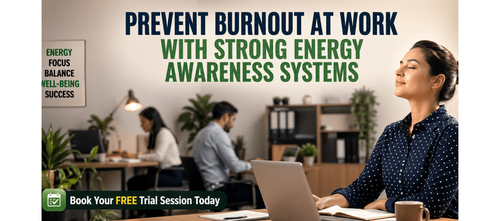

How to Build Energy Awareness and Prevent Burnout for Long-Term Career Success
In today’s high-performance work culture, most professionals are taught to manage their time, tasks, and deliverables—but very few are taught how to manage their energy. And yet, energy is the real driver of productivity, creativity, and long-term career growth. You can extend your work hours, but you cannot sustain performance when your energy is consistently depleted.
Burnout doesn’t happen overnight. It creeps in gradually—through constant fatigue, reduced motivation, emotional exhaustion, and a growing disconnect from work that once felt meaningful. Many professionals ignore these early warning signs, pushing harder instead of stepping back, until performance and wellbeing both start to decline.
This is where a structured approach to energy awareness becomes essential. Instead of reacting to exhaustion, you learn to proactively manage, protect, and renew your energy across different dimensions. The guidebook behind this blog provides a practical toolkit to help you identify your energy patterns, eliminate key drains, and build sustainable work habits—without sacrificing ambition.
Download these resources and apply them alongside your daily work for improved clarity, productivity, and professional growth. You can also book a free trial to gain expert guidance and enhance your communication, problem-solving, and decision-making skills. The materials are designed in a clear, structured format to help professionals learn efficiently and implement insights with confidence.
Who Is This Blog For?
- Working professionals experiencing constant fatigue or low motivation
- Managers and leaders handling high responsibility and team pressure
- Career switchers navigating new roles and learning curves
- Freelancers and consultants juggling multiple clients and deadlines
- Early-career professionals trying to sustain performance without burnout
Why This Topic Matters Today?
Modern work environments demand constant availability, rapid decision-making, and high output. However, most professionals are operating with low or inconsistent energy levels—leading to reduced productivity, poor decision-making, and long-term burnout.
Research highlighted in the guidebook shows that burnout is now recognised as an occupational phenomenon, not a personal weakness. Yet many professionals still treat it as something to “push through,” rather than something to manage strategically.
Common challenges include:
- Chronic exhaustion that feels “normal”
- Inability to mentally disconnect from work
- Declining motivation and engagement
- Guilt around taking breaks or resting
- Reactive work patterns instead of proactive planning
In this context, energy management is no longer optional—it is a core professional skill.
Core Concept or Framework Explained
The guidebook introduces a powerful framework built on the idea that energy is multidimensional—not a single resource.
The Four Dimensions of Professional Energy
Instead of treating energy as simply “high” or “low,” the framework breaks it into four distinct dimensions:
- Physical Energy: Driven by sleep, nutrition, movement, and rest cycles
- Mental Energy: Your ability to focus, make decisions, and solve problems
- Emotional Energy: Your capacity to manage relationships and emotional demands
- Purpose Energy: Your sense of meaning and alignment with your work
Burnout typically occurs when one or more of these dimensions are neglected over time.
For example, you might try to fix mental fatigue with caffeine, when the real issue is physical exhaustion or lack of purpose. Understanding this distinction allows you to take targeted action instead of applying generic solutions.
The Burnout Continuum
Another key concept is that burnout is not a sudden event—it is a gradual progression:
- Thriving
- Early warning stage
- Straining stage
- Burnout
- Breakdown
Most professionals remain stuck in the middle stages without recognising it. The goal is to identify early warning signs and intervene before reaching burnout.
How This Blog and Guidebook Help You?
This blog, along with the underlying toolkit, helps you move from reactive survival mode to proactive energy management.
You will learn how to:
- Identify your current energy levels across all dimensions
- Recognise early burnout signals before they escalate
- Apply structured systems to manage energy daily
- Eliminate key energy drains and increase energy sources
- Build sustainable work habits that improve performance
The outcome is not just reduced burnout—but improved focus, better decision-making, and long-term career sustainability.
Step-by-Step Breakdown
Step 1: Understand Your Energy Across Four Dimensions
Start by recognising that your energy is not just physical. Evaluate how you feel across:
- Physical health and rest
- Mental clarity and focus
- Emotional stability and relationships
- Sense of purpose in your work
This awareness is the foundation for all further action.
Step 2: Identify Your Position on the Burnout Continuum
Ask yourself key questions:
- Do you feel rested after sleep?
- Are you still finding joy in your work?
- Are you constantly tired but unable to switch off?
These signals help you identify whether you are thriving, struggling, or approaching burnout.
Step 3: Conduct a Personal Energy Audit
The guidebook introduces a 5-part audit:
- Physical Energy Audit
- Mental Energy Audit
- Emotional Energy Audit
- Purpose Energy Audit
- Recovery Audit
Rate each area honestly and identify your lowest-scoring dimension. This becomes your Primary Energy Gap—the first area you need to fix.
Step 4: Build an Energy Management System
Effective energy management happens across three phases:
Before Work: Design your day proactively
- Schedule deep work early
- Set clear priorities
- Avoid unnecessary meetings
During Work: Monitor energy in real-time
- Take breaks when focus drops
- Use structured work-rest cycles
- Step away from screens regularly
After Work: Focus on recovery
- Create a shutdown ritual
- Disconnect from work mentally
- Engage in restorative activities
This system ensures sustainable performance, not short bursts of productivity.
Step 5: Map Energy Drains vs Energy Sources
List what drains and restores your energy across:
- Work tasks
- Relationships
- Work environment
- Personal habits
For example:
- Drains: Unclear tasks, constant interruptions, poor sleep
- Sources: Deep work, supportive colleagues, structured routines
Then take two actions:
- Reduce one major drain
- Increase one key source
Small changes here create significant impact.
Step 6: Build Strong Professional Boundaries
Energy management requires structural changes, not just personal discipline.
Focus on:
- Time boundaries: Define work hours clearly
- Attention boundaries: Limit distractions and notifications
- Emotional boundaries: Avoid taking on unnecessary emotional load
- Workload boundaries: Assess capacity before accepting new tasks
Clear boundaries improve both performance and credibility.
Step 7: Practice Micro-Recovery Throughout the Day
Instead of waiting for long breaks, use short recovery practices:
- 2-minute breathing exercises to reset stress
- 5-minute physical movement breaks
- 15-minute screen-free disconnection
- End-of-day shutdown rituals
These small interventions can significantly restore focus and energy.
Step 8: Apply Lessons Through Real-Life Action
The guidebook shares a real-world case of a professional who improved performance by:
- Identifying energy drains
- Setting boundaries
- Reconnecting with purpose
- Making small, consistent changes
The key insight: sustainable success comes from intentional energy management, not working longer hours.
Common Mistakes or Pitfalls to Avoid
Many professionals unintentionally accelerate burnout through avoidable mistakes:
- Treating rest as something to earn instead of a necessity
- Using passive activities like scrolling as “recovery”
- Equating busyness with productivity
- Ignoring root causes and only managing symptoms
- Avoiding conversations about workload and boundaries
- Waiting until burnout becomes severe before taking action
A better approach is to act early, focus on root causes, and build consistent habits.
How Should You Use This Guidebook Effectively?
To get maximum value from the toolkit, follow a structured approach:
- Start with the Energy Audit to identify your biggest gap
- Focus on one area instead of trying to fix everything
- Apply one small change at a time
- Use daily and weekly reflection to track progress
- Reassess your energy levels every 30 days
Time investment:
- 15–20 minutes for the initial audit
- 5–10 minutes daily for reflection and adjustments
Consistency matters more than intensity. Small, repeated actions create long-term change.
Key Takeaways
- Energy management is more important than time management for long-term success
- Burnout develops gradually and can be prevented with early awareness
- Energy has four dimensions: physical, mental, emotional, and purpose
- Identifying your Primary Energy Gap helps you take targeted action
- Recovery is essential for sustained performance, not optional
- Boundaries are a critical professional skill
- Small, consistent changes are more effective than drastic short-term efforts
Your Next Step: Accelerate Your Career with PlanetSpark
Creating an impact-driven resume is not just about landing your next job—it’s about owning your professional story and presenting it with clarity, confidence, and credibility. When your resume clearly communicates value, results, and impact, opportunities follow naturally.
At PlanetSpark, we are committed to empowering working professionals with practical, outcome-focused resources that drive real career growth. From resume building and workplace communication to leadership presence and professional writing, our programs are designed to help you succeed in today’s fast-evolving job market.
Visit https://www.planetspark.in/resources to explore:
- Career and resume-building guides
- Workplace communication and professional writing resources
- Skill-development tools curated for working professionals
Want a deeper, hands-on experience?
You can also book a free trial session to learn more about PlanetSpark’s Working Professional Courses, designed to accelerate your career through personalised coaching, real-world practice, and expert guidance.
Your career deserves more than generic advice.
It deserves clarity, confidence, and measurable impact.
Start building that advantage today—with PlanetSpark.
Personalized Communication Roadmaps
Record a video to get a AI generated personalized communication reports