
Productivity Decision-Making Guide for Working Professionals

How to Reduce Decision Fatigue and Make Better Choices Faster
Every working professional faces a silent productivity killer—decision fatigue. From prioritising tasks to making high-stakes business calls, the sheer volume of decisions can drain mental energy and reduce effectiveness. Research suggests that adults make thousands of decisions daily, and without a structured approach, this leads to delays, poor choices, and burnout.
The real issue is not a lack of intelligence or capability—it is the absence of a reliable decision-making system. This is where a structured, checklist-driven approach transforms how professionals think, act, and deliver results.
Instead of repeatedly asking “What should I do next?” or second-guessing choices, a clear framework reduces cognitive load by creating predefined pathways for action. It allows you to reserve mental energy for truly complex, high-impact decisions while automating routine ones. Over time, this not only improves speed but also enhances the consistency and quality of your outcomes.
A structured approach also introduces objectivity into decision-making. Rather than relying on mood, pressure, or urgency, you evaluate options based on defined criteria—impact, effort, urgency, and alignment with goals. This shift helps eliminate impulsive decisions and replaces them with intentional, well-reasoned actions.
This blog breaks down a practical, field-tested decision-making framework that helps you move from confusion to clarity, from hesitation to action, and from reactive work to strategic execution. It will show you how to simplify choices, build repeatable systems, and make better decisions faster—without feeling mentally drained by the end of the day.
Book your free trial session today with Planetspark.
Download for more details or PDF file.
Who Is This Blog For?
- Working professionals with 0–15 years of experience aiming to improve productivity
- Managers and team leaders handling complex decisions daily
- Consultants juggling multiple projects and competing priorities
- Career switchers navigating high-stakes professional choices
- Professionals struggling with overthinking, delays, or inconsistent decision quality
Why This Topic Matters Today?
Modern workplaces demand faster decisions with higher accuracy. Deadlines are tighter, expectations are higher, and the cost of poor decisions is significant.
Without a structured system, professionals often face:
- Decision paralysis on critical tasks
- Wasted time on low-impact activities
- Reactive work patterns instead of proactive planning
- Inconsistent output quality under pressure
- Burnout caused by constant context-switching
The reality is simple: productivity today is not about working harder—it is about deciding smarter. Professionals who succeed are not necessarily more talented; they are more systematic in how they approach decisions.
Core Concept or Framework Explained
At the heart of effective decision-making is a simple yet powerful 3-phase framework: Before, During, and After the Decision.
This framework ensures that every decision is intentional, structured, and continuously improved over time.
Phase 1 focuses on preparation—clarifying the problem, constraints, and success criteria. Phase 2 focuses on execution—evaluating options using structured tools and making confident decisions.
Phase 3 focuses on improvement—reviewing outcomes and building a feedback loop for better future decisions.
A key tool within this framework is the PACE decision filter:
- Purpose: Does the decision align with your goal?
- Action: Can it be executed with available resources?
- Cost: What are the real trade-offs?
- Exit: Can you recover if it fails?
Combined with prioritisation tools like the 2×2 matrix, this framework turns decision-making into a repeatable, high-performance system.
How This Blog and Guidebook Help You?
This blog and framework help you:
- Eliminate overthinking and decision delays
- Prioritise high-impact work consistently
- Make confident decisions under pressure
- Reduce mental fatigue and cognitive overload
- Build a repeatable system for long-term productivity
The result is not just faster decisions—but better outcomes, improved focus, and stronger professional credibility.
Step-by-Step Breakdown
Step 1: Prepare Before You Decide
Most professionals skip preparation and jump straight into decision-making. This leads to confusion and poor outcomes.
Start by setting the right foundation:
- Clarify the real problem in one sentence
- Identify constraints such as time, budget, or resources
- Map stakeholders involved or impacted
- Define 2–3 measurable success criteria
This step ensures that you are solving the right problem—not just reacting to symptoms. A simple 5-minute written pause before major decisions can significantly improve clarity.
Step 2: Evaluate Options with Structure
Once the groundwork is clear, move to evaluating options systematically.
Follow this approach:
- List at least three possible options, including doing nothing
- Apply the PACE filter to each option
- Score options based on alignment, feasibility, cost, and flexibility
This removes emotional bias and replaces guesswork with structured thinking.
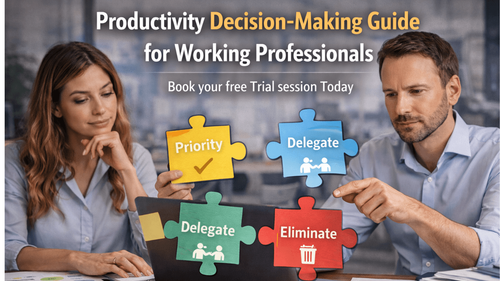
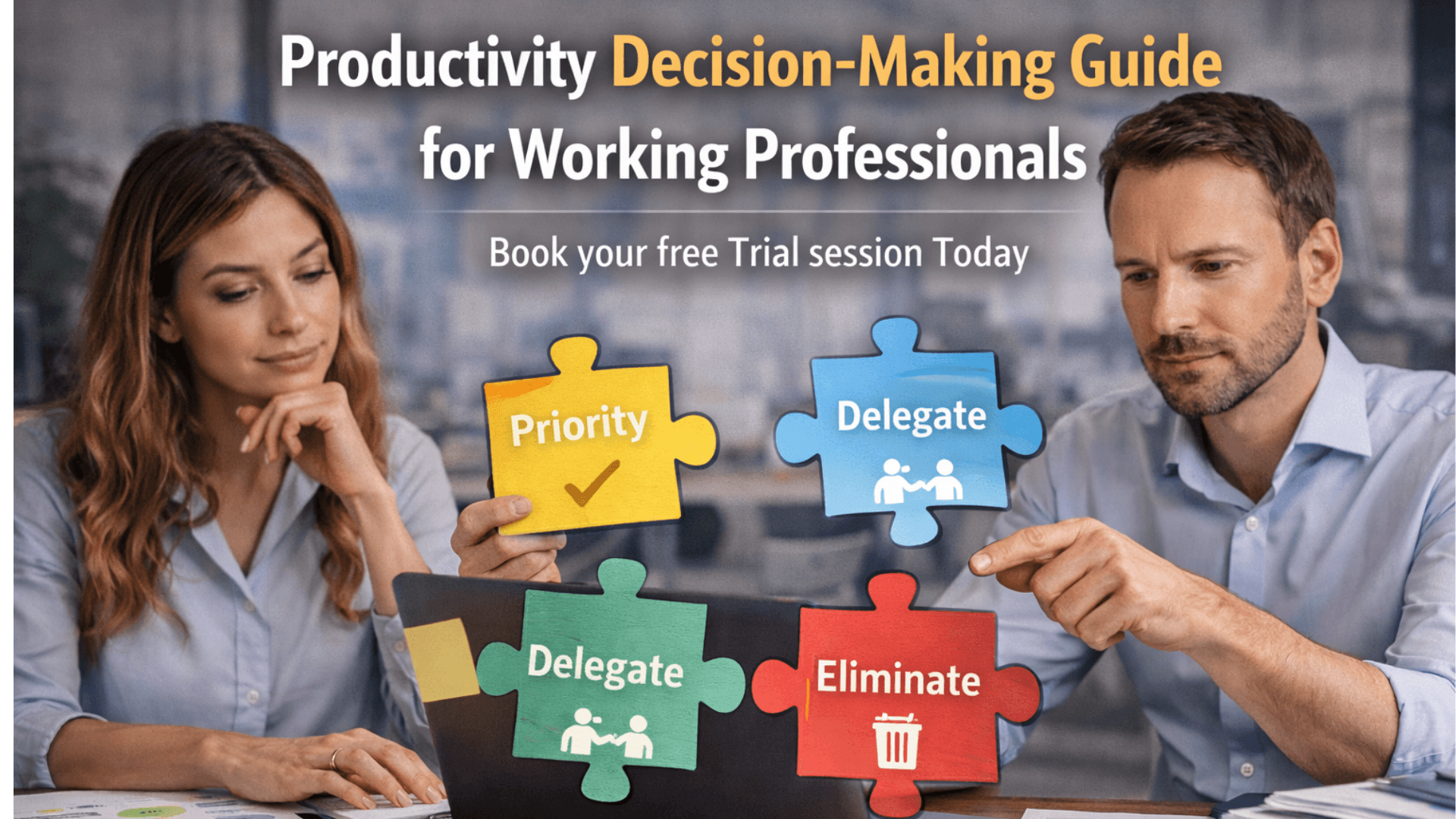
Additionally, use a prioritisation matrix:
- High impact and urgent → act immediately
- High impact and not urgent → schedule
- Low impact and urgent → delegate
- Low impact and not urgent → eliminate
This helps you focus only on what truly matters.
Step 3: Anticipate Risks Before Acting
Before finalising a decision, run a quick pre-mortem exercise.
Ask yourself:
- If this decision fails in six months, what caused it?
- What risks am I overlooking?
Identifying potential failures in advance allows you to mitigate risks early instead of reacting later.
Step 4: Commit and Document Decisions
A decision is only effective when it is clearly documented and actionable.
Ensure you:
- Write down the chosen option
- Record the reasoning behind it
- Assign ownership for next steps
- Set timelines for execution
This creates accountability and prevents confusion within teams.
Step 5: Follow Through After the Decision
The real advantage comes after the decision is made.
Use a simple follow-up system:
- Day 1: Communicate decision clearly to stakeholders
- Week 1: Check progress and identify early risks
- Month 1: Compare outcomes with expected results
- Quarterly: Review patterns across multiple decisions
This continuous feedback loop strengthens decision-making over time.
Step 6: Build a Personal Decision System
To achieve long-term improvement, maintain a decision log.
Track:
- What decision was made
- Expected vs actual outcomes
- Key learnings
- What you would change next time
Over time, this becomes a powerful personal database that improves accuracy, speed, and confidence.
Common Mistakes or Pitfalls to Avoid
- Making decisions under emotional pressure instead of clarity
- Skipping problem definition and jumping to solutions
- Seeking too many opinions, leading to confusion
- Failing to review past decisions and learn from them
- Confusing busyness with productivity instead of focusing on impact
Avoiding these mistakes can immediately improve both decision quality and efficiency.
How Should You Use This Guidebook Effectively?
To get maximum value from this framework:
- Read the full guide once to understand the system
- Start by applying Phase 1 to one real decision
- Use the prioritisation matrix daily for task management
- Allocate 10 minutes weekly for decision review
- Maintain a simple decision log for continuous improvement
You do not need to implement everything at once. Start small, stay consistent, and build the habit gradually.
Key Takeaways
- Decision-making is a skill that improves with structure, not guesswork
- Preparation before decisions leads to better outcomes
- The PACE framework simplifies complex choices
- Prioritisation is key to productivity and focus
- Documentation creates accountability and clarity
- Continuous review builds long-term decision intelligence
Your Next Step: Accelerate Your Career with PlanetSpark
Creating an impact-driven resume is not just about landing your next job—it’s about owning your professional story and presenting it with clarity, confidence, and credibility. When your resume clearly communicates value, results, and impact, opportunities follow naturally.
At PlanetSpark, we are committed to empowering working professionals with practical, outcome-focused resources that drive real career growth. From resume building and workplace communication to leadership presence and professional writing, our programs are designed to help you succeed in today’s fast-evolving job market.
Visit https://www.planetspark.in/resources to explore:
- Career and resume-building guides
- Workplace communication and professional writing resources
- Skill-development tools curated for working professionals
Want a deeper, hands-on experience?
You can also book a free trial session to learn more about PlanetSpark’s Working Professional Courses, designed to accelerate your career through personalised coaching, real-world practice, and expert guidance.
Your career deserves more than generic advice.
It deserves clarity, confidence, and measurable impact.
Start building that advantage today—with PlanetSpark.
Personalized Communication Roadmaps
Record a video to get a AI generated personalized communication reports