
Recruiter Communication Tracker for Faster Career Growth
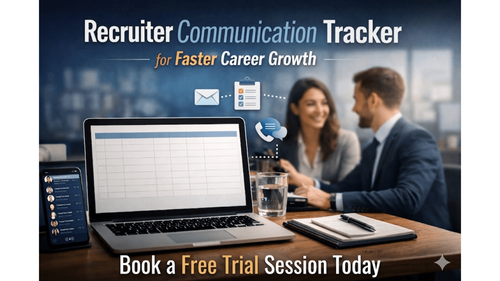

Recruiter Communication Tracking Planner: The Ultimate System to Manage Recruiter Relationships and Accelerate Your Job Search
You’ve sent messages to multiple recruiters, had a few promising conversations, and maybe even shared your resume—but then things start slipping. You forget who said what, miss a follow-up, or lose track of where you stand in the hiring process.
This isn’t a lack of effort—it’s a lack of system.
In today’s fast-paced hiring environment, recruiter communication is not just about what you say, but how consistently and strategically you manage every interaction. Without a structured approach, even highly qualified professionals lose opportunities simply because they appear disorganised or unresponsive.
This is where a recruiter communication tracking system becomes a game-changer. This blog, based on a practical planner, shows you how to take control of your job search by building a simple yet powerful system to track, manage, and optimise every recruiter interaction.
Book your free trial session today with Planetspark.
Download for more details.
Who Is This Blog For?
- Working professionals actively job searching
while managing full-time roles
- Early-career professionals juggling multiple applications and recruiter conversations
- Mid-level professionals exploring better opportunities or leadership roles
- Career switchers navigating unfamiliar industries and recruiter networks
- Job seekers struggling to keep track of recruiter conversations and follow-ups
Why This Topic Matters Today?
Modern recruitment is fast, competitive, and highly structured. Recruiters often manage dozens or even hundreds of candidates simultaneously, prioritising those who are responsive, organised, and easy to work with.
Many professionals focus heavily on building the perfect resume or LinkedIn profile but fail to manage what happens after outreach. This leads to:
- Missed follow-ups that cost real opportunities
- Forgotten recruiter conversations and role details
- Inconsistent communication across different interactions
- Lack of clarity on application status
- Reactive instead of proactive job search behaviour
In such an environment, organisation becomes a competitive advantage. A tracked conversation is a controlled conversation—and control leads to better outcomes.
Core Concept or Framework Explained
At the heart of this planner is a simple but powerful idea: recruiter communication should be treated like a pipeline, not a series of random interactions.
Instead of relying on memory, you build a centralised tracking system that captures every recruiter interaction with clarity and consistency. This system revolves around five essential data points:
- Who the recruiter is
- Where they work
- What roles they represent
- Your communication history
- Your next action step
This transforms your job search into a structured process where nothing slips through the cracks.
The framework also divides your recruiter communication journey into three clear phases:
- Before outreach: Setting up your tracking system
- During the search: Managing active conversations
- After each interaction: Updating, reflecting, and improving
This phased approach ensures that your communication is not just consistent, but continuously improving.
How This Blog and Guidebook Help You?
By following this system, you will:
- Gain complete visibility into your job search pipeline
- Never miss a follow-up or opportunity again
- Communicate with recruiters in a structured, professional manner
- Build stronger, long-term recruiter relationships
- Transition from reactive job searching to proactive career management
The result is simple but powerful—you become a candidate recruiters want to prioritise.
Step-by-Step Breakdown
Step 1: Set Up Your Tracking System Before Outreach
Before reaching out to any recruiter, you need a centralised system to log and manage interactions. This could be a spreadsheet or a digital planner.
Your tracker should include:
- Recruiter name
- Company or agency
- Roles discussed
- Last contact date
- Current status
- Notes and observations
- Next action step
This setup acts as your control centre, ensuring every conversation is recorded and actionable.
Step 2: Build and Maintain Your Recruiter Contact Log
Your contact log is the backbone of your system. Each recruiter entry should provide enough context for you to pick up the conversation at any time without confusion.
Adding notes such as recruiter tone, priorities, or personal details helps you personalise future interactions and build rapport.
Consistency is key—log every interaction immediately.
Step 3: Manage Recruiter Conversations Strategically
Once outreach begins, your focus shifts to communication quality and consistency. Every interaction should reinforce three things:
- Your qualifications
- Your professionalism
- Your genuine interest in the role
Key communication types include:
The first touch
- Reference a specific role or reason for outreach
- Mention one strong qualification
- Include a clear and simple call to action
The post-call follow-up
- Send within 24 hours
- Reference specific discussion points
- Attach requested materials
- Confirm next steps
The strategic check-in
- Follow up after 5–7 business days
- Add new value such as achievements or updates
- Maintain a professional and confident tone
The status update
- Inform recruiters about offer timelines or changes
- Demonstrate professionalism and transparency
Step 4: Follow a Clear Communication Cadence
Consistency in timing is critical. A structured communication schedule helps you stay visible without being overwhelming.
- Initial outreach on Day 1
- Follow-up if no response on Day 7
- Post-call email within 24 hours
- Check-ins every 5–7 days during active candidacy
- Notify recruiters within 48 hours if you receive an offer
This cadence signals reliability and professionalism.
Step 5: Update Your Tracker After Every Interaction
The biggest breakdown in job searches happens after conversations. Professionals move on without capturing key details.
After every interaction, update:
- Date and outcome
- Current status
- Feedback received
- Materials shared
- Next action and timeline
Also note qualitative insights such as communication style and alignment with your goals.
Step 6: Reflect and Improve Continuously
Tracking is not just about logging—it’s about learning. After each interaction, ask:
- Did I clearly communicate my value?
- What interested the recruiter most?
- Is this role aligned with my goals?
- What can I improve next time?
This reflection ensures each conversation is better than the last.
Step 7: Use Templates to Standardise Communication
Templates help maintain consistency and professionalism while saving time.
Use structured formats for:
- Cold outreach messages
- Post-call thank you emails
- Follow-up messages
The key is to personalise each template while maintaining a consistent structure.
Step 8: Implement a Weekly Review System
Set aside 15 minutes every week to review your tracker.
During this review:
- Move inactive conversations to closed
- Identify follow-ups needed
- Set outreach goals for the week
This habit alone can significantly improve your job search outcomes.
Common Mistakes or Pitfalls to Avoid
- Failing to follow up after initial conversations
- Relying on memory instead of tracking interactions
- Sending vague or generic messages
- Over-communicating or under-communicating
- Ignoring recruiter timelines and expectations
- Not updating tracker data consistently
These mistakes often lead to lost opportunities—not because of lack of skill, but lack of organisation.
How Should You Use This Guidebook Effectively?
To get the best results from this planner:
- Start by skimming templates and trackers
- Read the full framework before beginning outreach
- Use it as a live document throughout your job search
- Spend 30 minutes setting up your tracker initially
- Dedicate 15 minutes weekly for review and updates
Treat this as an operational system, not just a one-time read.
Key Takeaways
- A structured tracking system transforms your job search into a controlled process
- Consistent follow-ups significantly increase your chances of success
- Recruiters prioritise candidates who are organised and responsive
- Templates improve communication quality and speed
- Weekly reviews ensure continuous progress and improvement
- Strong recruiter relationships create long-term career opportunities
Your Next Step: Accelerate Your Career with PlanetSpark
Creating an impact-driven resume is not just about landing your next job—it’s about owning your professional story and presenting it with clarity, confidence, and credibility. When your resume clearly communicates value, results, and impact, opportunities follow naturally.
At PlanetSpark, we are committed to empowering working professionals with practical, outcome-focused resources that drive real career growth. From resume building and workplace communication to leadership presence and professional writing, our programs are designed to help you succeed in today’s fast-evolving job market.
Visit https://www.planetspark.in/resources to explore:
- Career and resume-building guides
- Workplace communication and professional writing resources
- Skill-development tools curated for working professionals
Want a deeper, hands-on experience?
You can also book a free trial session to learn more about PlanetSpark’s Working Professional Courses, designed to accelerate your career through personalised coaching, real-world practice, and expert guidance.
Your career deserves more than generic advice.
It deserves clarity, confidence, and measurable impact.
Start building that advantage today—with PlanetSpark.
Personalized Communication Roadmaps
Record a video to get a AI generated personalized communication reports