
Remote Work Risk Management Guide for Professionals 2026
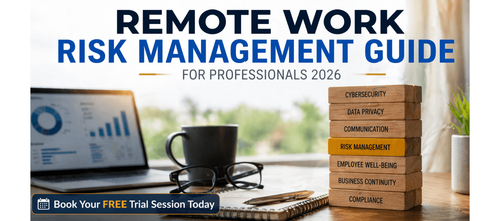

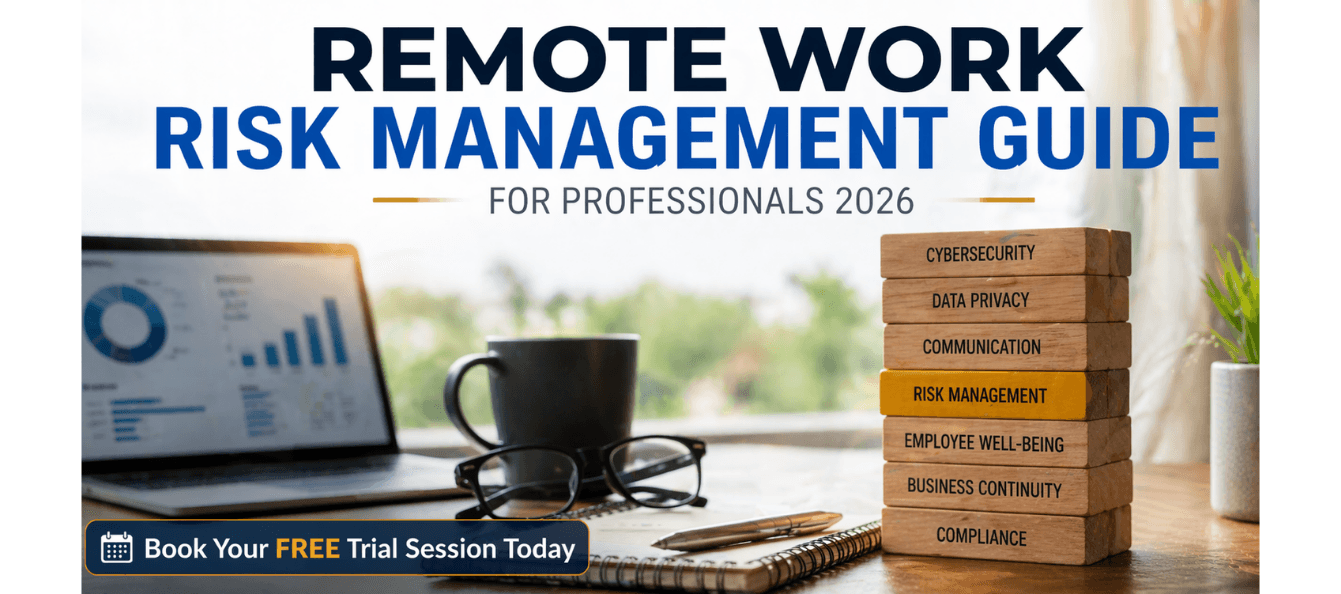
Remote Work Risk Management: A Practical Guide to Protect Productivity, Performance, and Career Growth
Remote work has quietly transformed how professionals operate—but not how they manage risk. You may be delivering results, attending meetings, and staying productive, yet still facing hidden challenges that impact your long-term career growth. Missed deadlines due to tech failures, miscommunication with teams, burnout from blurred boundaries, and lack of visibility with leadership are not random issues—they are predictable risks.
The problem is that most professionals were never trained to identify or manage these risks effectively. As a result, they react to problems instead of preventing them. Over time, this reactive approach leads to stalled growth, increased stress, and reduced professional credibility.
This is exactly where a structured Remote Work Risk Management framework becomes essential. Instead of guessing what might go wrong, you can proactively design systems that protect your productivity, reputation, and career trajectory.
Download these resources and apply them alongside your daily work for improved clarity, productivity, and professional growth. You can also book a free trial to gain expert guidance and enhance your communication, problem-solving, and decision-making skills. The materials are designed in a clear, structured format to help professionals learn efficiently and implement insights with confidence.
Who Is This Blog For?
- Working professionals operating in fully remote or hybrid roles
- Managers leading distributed or cross-functional teams
- Freelancers and consultants handling remote clients
- Career switchers transitioning into remote-first roles
- Professionals struggling with productivity, burnout, or visibility
Why This Topic Matters Today?
Remote work is no longer temporary—it is a permanent shift in how modern careers function. However, while flexibility has increased, so have risks that directly impact performance and growth.
Key challenges professionals face today include:
- Increased communication gaps due to asynchronous work
- Higher burnout rates caused by lack of boundaries
- Reduced visibility with leadership and decision-makers
- Dependency on technology without backup systems
- Growing data security and compliance risks
These challenges are interconnected. A communication failure can lead to missed deadlines, which affects visibility, which in turn impacts career growth. Without a structured approach, these risks compound over time.
This makes remote work risk management not just a productivity skill—but a critical career skill.
Core Concept or Framework Explained
The guide introduces a powerful system built around five core risk zones that every remote professional faces. These zones provide a complete map of where things can go wrong—and how to fix them.
The Five Risk Zones
- Security and Data Risk: Exposure to breaches due to weak systems or unsafe practices
- Communication Risk: Misalignment caused by unclear or incomplete messaging
- Wellbeing Risk: Burnout driven by poor boundaries and overwork
- Career Visibility Risk: Being overlooked despite delivering results
- Operational Continuity Risk: Productivity breakdowns due to tech or infrastructure failures
These risks do not operate independently. They interact and amplify each other. For example:
- Poor communication can lead to missed deliverables
- Missed deliverables affect visibility
- Reduced visibility impacts career growth
- Stress from all of this contributes to burnout
The key insight is simple: managing these risks as a system is far more effective than addressing them individually.
How This Blog and Guidebook Help You?
This blog and the underlying guidebook provide a complete, practical system to help you:
- Identify hidden risks in your daily remote work setup
- Prioritise high-impact improvements using self-assessment tools
- Build structured communication habits that reduce errors
- Create sustainable work routines that prevent burnout
- Improve visibility with stakeholders and leadership
- Ensure business continuity with backup systems
The outcome is not just better productivity—it is stronger professional credibility, consistent performance, and long-term career growth.
Step-by-Step Breakdown
Step 1: Identify Your Risk Zones
Start by understanding where you are most vulnerable.
Ask yourself:
- Are your systems secure and compliant?
- Do people clearly understand your communication?
- Are you consistently maintaining work-life boundaries?
- Is your work visible to the right stakeholders?
- Do you have backup systems for critical work situations?
This awareness is the foundation for improvement.
Step 2: Run a Personal Risk Audit
Use a quick self-assessment to evaluate your current state across key areas:
- Security practices
- Communication clarity
- Wellbeing habits
- Visibility efforts
- Operational readiness
Score yourself honestly and prioritise areas where improvement is most urgent.
Step 3: Strengthen Security and Data Practices
Remote professionals are responsible for their own digital safety.
Key actions:
- Use a VPN on all non-secure networks
- Enable two-factor authentication across accounts
- Use a password manager with unique credentials
- Encrypt sensitive files before sharing
- Review data handling clauses in your contracts
Consistency matters more than technical expertise.
Step 4: Improve Communication with the CLEAR Protocol
One of the most powerful frameworks in the guide is the CLEAR communication model:
- Context: Explain why you are communicating
- Lead with the ask: State the main point upfront
- Evidence: Provide relevant details or data
- Action: Specify who needs to do what and by when
- Reply path: Clarify how you expect a response
This structured approach reduces misunderstandings and improves response quality.
Step 5: Design Your Wellbeing Architecture
Sustainable performance requires intentional structure.
Build your day using:
- A fixed start routine to begin work with clarity
- Deep work blocks for focused output
- A dedicated lunch break away from screens
- A collaboration window for meetings and communication
- A shutdown ritual to end the workday cleanly
This is not about working less—it is about working sustainably.
Step 6: Build Career Visibility Proactively
In remote environments, visibility does not happen automatically.
Adopt these habits:
- Share weekly updates with key achievements
- Contribute actively in team discussions
- Document and communicate your wins
- Schedule regular check-ins with managers
- Participate in cross-team initiatives
Visibility is a system, not an accident.
Step 7: Ensure Operational Continuity
Your setup should never be a single point of failure.
Create backup systems for:
- Internet: Mobile hotspot as a backup
- Power: Charged devices and power banks
- Workspace: Alternate locations like cafés or co-working spaces
- Data: Cloud storage with auto-save enabled
Preparation prevents reputational damage.
Step 8: Implement a 30-Day Risk Reduction Plan
To avoid overwhelm, focus on one area each week:
- Week 1: Strengthen security systems
- Week 2: Improve communication structure
- Week 3: Build a sustainable daily routine
- Week 4: Enhance visibility and backup systems
This phased approach ensures consistent progress.
Common Mistakes or Pitfalls to Avoid
Many professionals struggle not due to lack of effort, but due to avoidable mistakes.
Common pitfalls include:
- Working without a clear start or end routine
- Responding instantly to every message and losing focus
- Failing to document important conversations
- Storing critical files only on local devices
- Assuming effort equals visibility
- Using unsecured networks without protection
- Never stepping away from the workspace
A better approach is to design systems that prevent these issues rather than reacting to them later.
How Should You Use This Guidebook Effectively?
To maximise results, follow a structured approach:
- First read: Go through the entire guide to understand the system
- Identify gaps: Use audits to prioritise your biggest risks
- Apply immediately: Implement small changes weekly
- Review regularly: Conduct monthly or quarterly reviews
- Use collaboratively: Share frameworks with your team
Time investment:
- Initial read: 30–45 minutes
- Weekly improvements: 1–2 hours
- Monthly review: 15 minutes
The key is consistency. Small, structured improvements lead to significant long-term results.
Key Takeaways
- Remote work introduces five critical risk zones that must be managed
- Communication clarity is one of the highest-impact improvements you can make
- Burnout is a performance risk, not just a personal issue
- Visibility must be intentionally created in remote environments
- Backup systems protect both productivity and professional reputation
- Structured frameworks simplify complex challenges
- Consistent review and improvement drive long-term success
Your Next Step: Accelerate Your Career with PlanetSpark
Creating an impact-driven resume is not just about landing your next job—it’s about owning your professional story and presenting it with clarity, confidence, and credibility. When your resume clearly communicates value, results, and impact, opportunities follow naturally.
At PlanetSpark, we are committed to empowering working professionals with practical, outcome-focused resources that drive real career growth. From resume building and workplace communication to leadership presence and professional writing, our programs are designed to help you succeed in today’s fast-evolving job market.
Visit https://www.planetspark.in/resources to explore:
- Career and resume-building guides
- Workplace communication and professional writing resources
- Skill-development tools curated for working professionals
Want a deeper, hands-on experience?
You can also book a free trial session to learn more about PlanetSpark’s Working Professional Courses, designed to accelerate your career through personalised coaching, real-world practice, and expert guidance.
Your career deserves more than generic advice.
It deserves clarity, confidence, and measurable impact.
Start building that advantage today—with PlanetSpark.
Personalized Communication Roadmaps
Record a video to get a AI generated personalized communication reports