
Repeatable Recovery Systems for Overcoming Career Setbacks

Why Repeatable Recovery Systems Matter More Than Motivation During Career Setbacks
Career setbacks rarely arrive with a warning. A sudden layoff, a missed promotion, a failed business venture, or an unexpected restructuring can disrupt not only your income but also your confidence, momentum, and sense of professional identity. Many professionals respond by immediately applying for jobs, making rushed decisions, or panicking about the future. Unfortunately, reactive actions often create even more confusion and frustration.
What separates professionals who recover quickly from those who remain stuck is not simply resilience—it is the presence of a structured recovery system. Professionals who successfully navigate setbacks understand how to stabilise emotionally, diagnose the real problem, relaunch strategically, and build repeatable systems that make future recoveries easier and faster.
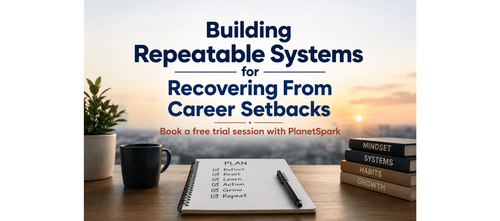
That is exactly what the resource “Building Repeatable Systems for Recovering From Career Setbacks” is designed to help you achieve. Instead of offering vague motivational advice, it provides a practical, actionable framework that working professionals can apply immediately to regain clarity, confidence, and direction after career disruption.
Download these resources and apply them alongside your daily work for improved clarity, productivity, and professional growth. You can also book a free trial to gain expert guidance and enhance your communication, problem-solving, and decision-making skills. The materials are designed in a clear, structured format to help professionals learn efficiently and implement insights with confidence.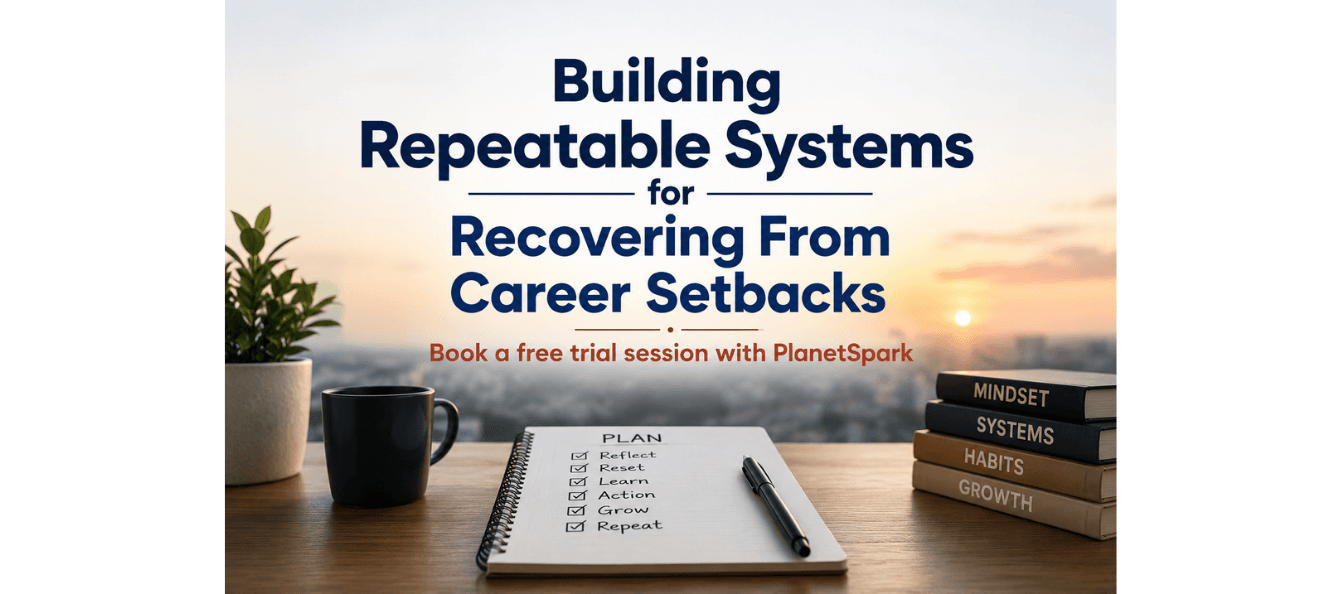
Who Is This Blog For?
- Working professionals navigating layoffs or redundancies
- Managers and leaders dealing with career uncertainty
- Career changers planning a professional pivot
- Freelancers and consultants recovering from project or client loss
- Entrepreneurs rebuilding after business setbacks
- Mid-career professionals seeking long-term career resilience
- Professionals aiming to create stronger recovery systems for future challenges
Why This Topic Matters Today?
The modern workplace is changing faster than ever before. Industries evolve rapidly, companies restructure frequently, and economic uncertainty affects professionals across every sector. Career stability is no longer guaranteed by experience alone.
The resource explains that setbacks are not rare exceptions—they are standard milestones in almost every meaningful career journey. Yet most professionals are completely unprepared when these moments arrive.
Today’s professionals face challenges such as:
- Sudden layoffs and organisational restructuring
- Increased competition in the job market
- Burnout and career dissatisfaction
- Constant pressure to upskill and adapt
- Fear of professional irrelevance
One of the most important insights from the guidebook is that resilience alone is not enough. During a setback, emotional pressure reduces decision-making quality. Without a system, professionals often react impulsively instead of strategically.
The toolkit reframes recovery as a learnable skill rather than an inborn personality trait. This shift is powerful because it gives professionals a practical roadmap for rebuilding momentum instead of relying solely on motivation or willpower.
Core Concept or Framework Explained
The central framework in the guidebook is the 4-Phase Career Recovery System:
- Stabilise
- Diagnose
- Relaunch
- Systemise
Each phase builds on the previous one and serves a distinct purpose in the recovery journey.
Recovery as a System Rather Than Emotion
One of the strongest concepts in the resource is the idea that recovery should function like an operating system rather than an emotional reaction. Professionals often attempt to solve problems immediately after setbacks without processing what actually happened.
This leads to:
- Poor decision-making
- Reactive career pivots
- Ineffective networking
- Emotional burnout
- Repeated professional patterns
The framework prevents this by introducing structure and sequence.
Why Sequence Matters?
The guidebook strongly emphasises that recovery has a logical order. Attempting to relaunch before stabilising or diagnosing the issue creates fragile recoveries.
The sequence works like this:
- Stabilise your emotions and routines first
- Diagnose the root causes and patterns second
- Relaunch with clarity and strategy third
- Systemise lessons to prepare for future setbacks fourth
Skipping steps may produce short-term movement but rarely creates long-term career resilience.
How This Blog and Guidebook Help You?
This blog and toolkit help professionals transform chaotic recovery into a structured, repeatable process.
Key benefits include:
- A practical framework for handling career setbacks calmly
- Step-by-step recovery systems instead of vague advice
- Tools for improving career clarity and strategic thinking
- Reflection exercises to identify recurring patterns
- Relaunch strategies that focus on intentional growth
- Long-term systems for future career resilience
The guidebook is especially valuable because it focuses on sustainable recovery rather than temporary motivation.
Step-by-Step Breakdown
Step 1: Stabilise — Halt the Freefall
The first phase focuses on preventing emotional chaos from driving poor decisions.
According to the guidebook, the first 48–72 hours after a major setback are the most dangerous because professionals often operate in panic mode. Instead of immediately applying for jobs or announcing the setback publicly, the framework recommends intentional stabilisation.
Important stabilisation actions include:
- Blocking 48 hours for intentional recovery
- Writing down the facts of the situation objectively
- Identifying trusted people for support
- Maintaining non-negotiable routines like sleep, meals, and exercise
- Creating a “no reactive decisions” rule for 72 hours
- Reviewing recent professional wins to restore confidence
The toolkit introduces a powerful stabilisation affirmation:
“This is data, not destiny. I am not behind. I am recalibrating.”
This phase is not about solving the problem immediately. It is about protecting mental clarity and energy.
Step 2: Diagnose — Understand What Actually Happened
Most professionals skip this stage because honest reflection is uncomfortable. However, the guidebook explains that diagnosis is where the real strategic value emerges.
The diagnosis framework includes three major tools:
The Facts Audit
This exercise requires professionals to separate facts from emotional interpretation.
Instead of saying:
“I failed because I’m not good enough.”
The framework encourages:
“The company restructured and eliminated my role.”
This creates analytical clarity.
The Control Matrix
Professionals categorise factors into:
- Fully within their control
- Partially within their control
- Completely external
This prevents both excessive self-blame and avoidance of responsibility.
The Pattern Scan
The guidebook asks professionals to identify recurring themes such as:
- Communication challenges
- Skill gaps
- Risk tolerance patterns
- Work environments where they thrive or struggle
These recurring patterns become the foundation for future improvement.
The diagnosis worksheet also includes reflective prompts such as:
- What skill gaps contributed to the setback?
- What would I do differently with complete information?
- What is the most important lesson here?
Step 3: Relaunch — Build Your Strategy With Intention
Once stabilisation and diagnosis are complete, the relaunch phase focuses on strategic action rather than desperate activity.
The guidebook introduces the Relaunch Strategy Canvas, which contains four pillars.
Target Clarity
Professionals must define exactly what type of opportunity they want.
Vague statements like:
“I’m open to anything.”
often weaken positioning and attract poor-fit opportunities.
Narrative Reconstruction
The toolkit teaches professionals how to create a clear 60-second explanation of the setback that focuses on:
- Lessons learned
- Growth achieved
- Future direction
This helps professionals communicate confidently during interviews and networking conversations.
Network Activation
Instead of mass messaging hundreds of contacts, the framework recommends:
- Curating 10–15 targeted conversations
- Reaching out with strategic intent
- Building meaningful discussions
This produces higher-quality opportunities.
Skill Signal
The guidebook emphasises demonstrating capability through visible actions such as:
- Publishing articles
- Building projects
- Sharing case studies
- Giving talks or presentations
The idea is simple: signal competence through evidence rather than claims.
The toolkit also includes a practical 30-day relaunch sprint that breaks recovery into manageable weekly actions.
Step 4: Systemise — Build Long-Term Recovery Infrastructure
This is the phase that transforms one-time recovery into permanent professional resilience.
The resource explains that professionals often recover successfully but fail to document what worked. As a result, they start from zero during future setbacks.
The framework recommends creating a Personal Recovery Playbook that includes:
- Stabilisation protocols
- Diagnosis worksheets
- Relaunch strategies
- Support contacts
- Pattern logs
- Achievement archives
The guidebook also recommends quarterly career reviews focused on:
- Network strength
- Skill visibility
- Market positioning
- Career energy levels
Another important concept is the “3-Person Resilience Board” consisting of:
- A mentor for strategic advice
- A peer for emotional support
- A sponsor for operational guidance
This support infrastructure dramatically improves recovery quality.
Real-World Application: Priya’s Career Recovery Story
The toolkit includes a powerful case study about Priya, a Senior Marketing Manager who lost her role during a company restructure.
Initially, Priya reacted emotionally by sending dozens of job applications with no results. However, after applying the recovery framework, she discovered an important pattern:
She consistently thrived in fast-moving startup environments but had been applying only to large corporations because they felt “safer.”
Once she clarified her target, refined her narrative, activated strategic networking, and showcased her expertise publicly, opportunities began appearing quickly.
Within six weeks, she had multiple offers.
Her story demonstrates that strategic clarity consistently outperforms reactive effort.
Common Mistakes or Pitfalls to Avoid
The guidebook highlights six major recovery mistakes that keep professionals stuck.
Skipping the Diagnosis
Jumping directly into job applications without understanding the setback often leads to repeated mistakes.
Reactive Networking
Sending desperate “I’m looking for opportunities” messages to everyone in your network weakens credibility and produces poor-quality leads.
Identity Fusion
Many professionals allow setbacks to define their identity.
Instead of saying:
“I experienced a setback.”
they begin believing:
“I am a failure.”
The guidebook strongly advises separating the event from personal identity.
Premature Career Pivots
Making major career changes while emotionally overwhelmed often creates additional instability.
Solo Recovery
Trying to recover entirely alone reduces clarity and increases emotional exhaustion.
No Systemisation
Failing to document lessons means professionals remain equally vulnerable to future setbacks.
How Should You Use This Guidebook Effectively?
To maximise the value of this toolkit, professionals should treat it like a working system rather than a one-time read.
Recommended workflow:
- Read one phase at a time carefully
- Complete all worksheets honestly
- Avoid rushing the process
- Schedule dedicated reflection time
- Review the toolkit quarterly even when things are going well
- Update your Recovery Playbook regularly
Suggested time investment:
- Stabilisation phase: 2–3 days
- Diagnosis exercises: 1–2 focused sessions
- Relaunch planning: 1 week
- Systemisation updates: Quarterly reviews
The toolkit is most effective when used proactively, not only during crises.
Key Takeaways
- Career setbacks are normal milestones, not personal failures
- Recovery is a skill that can be learned and systemised
- The 4-phase framework provides structure during uncertainty
- Stabilisation protects decision-making quality
- Diagnosis reveals valuable long-term career patterns
- Strategic relaunches outperform reactive actions
- Visible skill signals improve career opportunities
- Strong professional support systems accelerate recovery
- Quarterly career reviews help prevent future setbacks
- Systemisation turns setbacks into long-term professional advantages
Your Next Step: Accelerate Your Career with PlanetSpark
Creating an impact-driven resume is not just about landing your next job—it’s about owning your professional story and presenting it with clarity, confidence, and credibility. When your resume clearly communicates value, results, and impact, opportunities follow naturally.
At PlanetSpark, we are committed to empowering working professionals with practical, outcome-focused resources that drive real career growth. From resume building and workplace communication to leadership presence and professional writing, our programs are designed to help you succeed in today’s fast-evolving job market.
Visit https://www.planetspark.in/resources to explore:
- Career and resume-building guides
- Workplace communication and professional writing resources
- Skill-development tools curated for working professionals
Want a deeper, hands-on experience?
You can also book a free trial session to learn more about PlanetSpark’s Working Professional Courses, designed to accelerate your career through personalised coaching, real-world practice, and expert guidance.
Your career deserves more than generic advice.
It deserves clarity, confidence, and measurable impact.
Start building that advantage today—with PlanetSpark.
Personalized Communication Roadmaps
Record a video to get a AI generated personalized communication reports