
Replacing Goals With Systems for Better Career Results
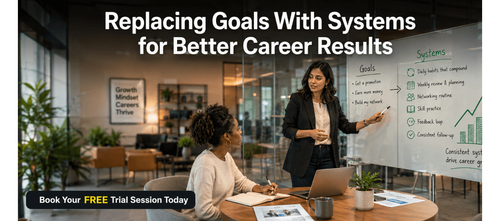

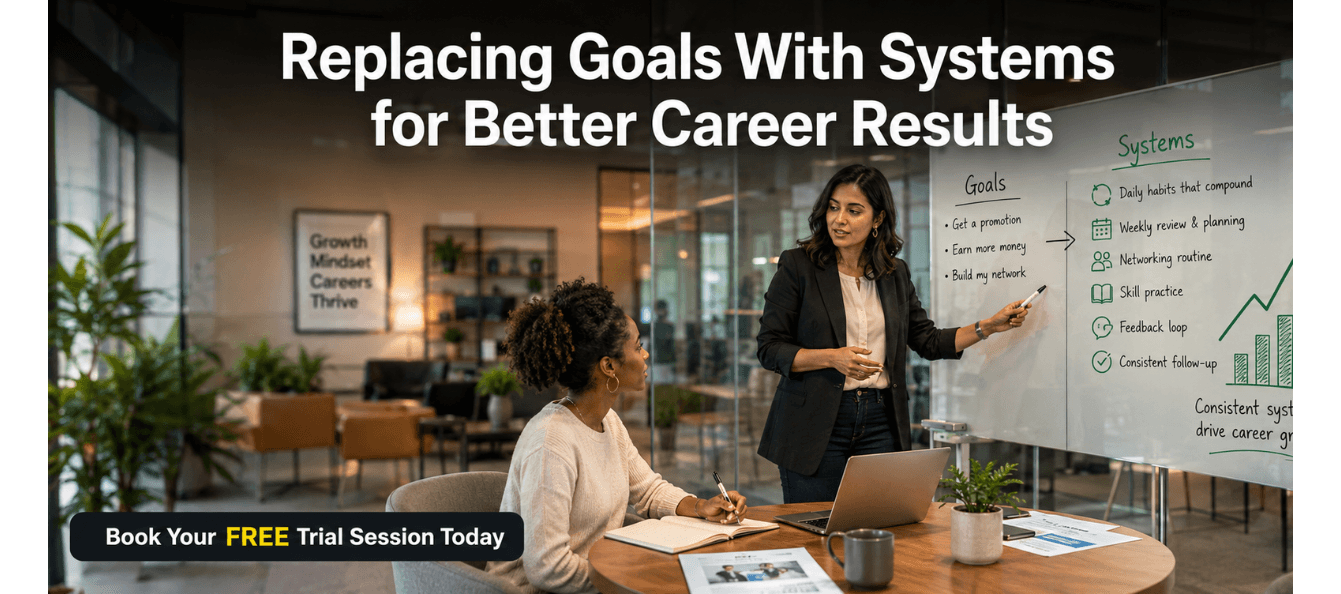
Better Results and Lasting Progress by Replacing Goals With Systems
Have you ever set a big goal, only to find your motivation waning after a few weeks? Whether it’s a career milestone, a fitness goal, or a personal development target, we’ve all experienced the cycle of initial enthusiasm followed by a gradual drop in commitment. This pattern is why most goals, no matter how ambitious, often fall short of delivering lasting results.
What if the problem isn’t the goal itself, but the way we approach it? The truth is, goals are outcome-focused, while systems are process-focused. Systems create predictable results because they focus on the daily behaviors and routines that move you forward, regardless of your mood or motivation level.
In this blog, we will walk you through how to shift from goal-setting to system-building, so you can achieve long-term results that stick. This approach is designed for busy, outcome-oriented professionals who want to see progress without the frustration of unmet targets.
Download these resources and apply them alongside your daily work for improved clarity, productivity, and professional growth. You can also book a free trial to gain expert guidance and enhance your communication, problem-solving, and decision-making skills. The materials are designed in a clear, structured format to help professionals learn efficiently and implement insights with confidence.
Who Is This Blog For?
- Professionals who feel like their goals never seem to stick
- Managers, team leaders, and consultants who want consistent performance without burning out
- Career switchers or those aiming for a promotion who need sustainable progress
- Anyone struggling with consistency, looking for a more dependable approach to personal and professional growth
Why This Topic Matters Today?
For too many professionals, setting ambitious goals leads to a cycle of highs and lows, with results that rarely match the effort put in. The issue lies in how we view goals. A goal only tells you where you want to go, but it says nothing about how to get there every day. Systems, on the other hand, focus on the how—the routines, habits, and behaviors that lead to predictable, sustainable results.
This blog will teach you how to design systems that replace your goals and make progress inevitable. Instead of chasing after distant targets, you’ll start creating daily processes that build momentum toward your outcomes, ensuring that you make consistent strides forward.
Core Concept or Framework Explained
The shift from goal-setting to systems-thinking involves understanding that goals are outcome-oriented, while systems are process-oriented. The guidebook introduces the following concepts:
- Goals: Fixed endpoints that provide motivation but lack direction on how to achieve them.
- Systems: Repeatable processes that, when executed consistently, deliver the desired outcome over time.
To successfully replace your goals with systems, you need to understand four key principles:
1. Repeatability: Your system must be executable on both good and bad days. If it only works when you're energized, it’s not truly a system—it’s just a temporary burst of effort.
2. Visibility: Track your progress regularly to keep your system in action and hold yourself accountable.
3. Adaptability: Your system must be flexible enough to evolve over time without falling apart.
4. Alignment: Your system should connect to something you genuinely care about, not just something you think you should want.
How This Blog and Guidebook Help You?
This blog will help you build a system that supports long-term, sustainable progress by providing the tools to:
- Understand the difference between goals and systems and why the latter works better for long-term growth
- Audit your current goals to identify which are based on wishful thinking rather than actual systems
- Design systems that are repeatable, visible, adaptable, and aligned with your core values
- Implement small, daily actions that will compound into lasting results
- Conduct regular reviews to refine and scale your systems for continuous improvement
Step-by-Step Breakdown
Step 1: Audit Your Current Goals
The first step in replacing goals with systems is to audit your current approach. Most professionals have a mental backlog of goals that aren’t backed by any systems. The Goal Audit Worksheet (available in the guidebook) helps you categorize your goals into “systems” or “wishes.” Identify which goals have a clear process and which ones are just vague aspirations.
Key questions for this audit include:
- What goals have a system behind them?
- Which ones are just hopes without a clear action plan?
- What tasks do I repeat regularly, and how can I turn those into systems?
Step 2: Identify the Behaviors Behind the Outcome
Every goal has behaviors that, when performed consistently, lead to the desired outcome. For example, if your goal is to get promoted, the behaviors could include meeting with your manager weekly, delivering results above expectations, and proactively seeking feedback.
For each goal you want to convert into a system, ask yourself: “What would someone who already has this result do regularly?” This shift in focus from a one-time outcome to repeatable behaviors will help you build a system that supports your progress.
Step 3: Design Your System Architecture
A system without a structure is just a good intention. The architecture of a system is critical, and it should consist of:
1. Trigger: A time or habit that initiates the system (e.g., after your morning coffee, or every Monday at 9 AM).
2. Routine: The core behavior, which should be specific and measurable (e.g., “send 2 emails” or “work for 30 minutes”).
3. Environment: Reduce friction by designing your environment to make the system as easy as possible (e.g., closing distracting tabs, prepping your workspace).
Effective systems need to have all three elements to be sustainable and automatic.
Step 4: Install Your System – The First 30 Days
The first 30 days are the most critical for system installation. Consistency, not performance, is the goal during this phase. Implement the “minimum viable version” principle: define the smallest action that still counts and remove any psychological barriers to starting.
- Week 1: Run your system at the minimum level. Focus on showing up, not on output quality.
- Week 2: Increase the depth slightly, noticing friction points and adjusting your environment accordingly.
- Week 3: Add tracking (e.g., use a habit tracker or a simple checklist).
- Week 4: Review your system and refine it for the next 30 days.
Step 5: Review, Refine, and Scale Your System
After 30 days, it’s time to review your system’s performance. This process helps you assess what’s working and what needs adjustment. Regular system reviews are essential for long-term success.
- Consistency Check: Did you execute the system at least 80% of the time?
- Results Check: Are you seeing progress? Remember, systems produce results slowly at first, but the compounding effect will become evident over time.
- Alignment Check: Does your system still align with your priorities? Adjust if necessary.
- Optimization Check: Identify one small change to make your system 10% more effective.
Real-World Application – Priya’s Journey From Goal-Chaser to System Builder
Priya, a marketing manager, had been “trying to transition into consulting” for two years without any progress. After completing the Goal Audit Worksheet, she realized she had a wish, not a system. There was no repeatable behavior behind her goal—just sporadic bursts of effort. Priya then created a system by implementing consistent actions: a weekly outreach system, a fortnightly LinkedIn post, and monthly informational interviews. In just 90 days, she had two consulting offers and a growing professional network.
Key Takeaways
- Systems are the key to long-term success, not goals.
- A goal without a system is just a wish.
- Start with one system and focus on consistency.
- Design your environment to make the right behavior easy.
- Define a minimum viable version to keep your system running even on tough days.
- Regular reviews help keep your systems aligned and effective.
Your Next Step: Accelerate Your Career with PlanetSpark
Creating an impact-driven resume is not just about landing your next job—it’s about owning your professional story and presenting it with clarity, confidence, and credibility. When your resume clearly communicates value, results, and impact, opportunities follow naturally.
At PlanetSpark, we are committed to empowering working professionals with practical, outcome-focused resources that drive real career growth. From resume building and workplace communication to leadership presence and professional writing, our programs are designed to help you succeed in today’s fast-evolving job market.
Visit https://www.planetspark.in/resources to explore:
- Career and resume-building guides
- Workplace communication and professional writing resources
- Skill-development tools curated for working professionals
Want a deeper, hands-on experience?
You can also book a free trial session to learn more about PlanetSpark’s Working Professional Courses, designed to accelerate your career through personalized coaching, real-world practice, and expert guidance.
Your career deserves more than generic advice.
It deserves clarity, confidence, and measurable impact.
Personalized Communication Roadmaps
Record a video to get a AI generated personalized communication reports