
Resume Guide to Demonstrate Enterprise Operational Impact
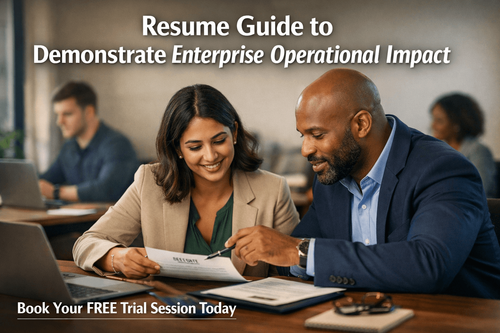

Enterprise Operational Impact Resume: 10 Powerful Templates to Showcase Measurable Results and Leadership
In today’s competitive enterprise job market, having experience is no longer enough—you need to prove impact. Many professionals with strong operational backgrounds struggle to translate their work into compelling resume narratives that resonate with hiring managers. The result? Highly capable candidates get overlooked simply because their resumes focus on responsibilities instead of outcomes.
Enterprise organisations—especially Fortune 500 companies and large consulting firms—are not looking for task-oriented resumes. They are scanning for measurable business impact: cost savings, efficiency improvements, process optimisation, and large-scale transformation outcomes. If your resume does not clearly communicate these, it risks being ignored.
This is where a structured, scenario-driven resume approach becomes essential. Instead of guessing what recruiters want, you can use targeted templates designed for real enterprise contexts—helping you showcase your achievements with clarity, credibility, and strategic positioning.
Download these resources and apply them alongside your daily work for improved clarity, productivity, and professional growth. You can also book a free trial to gain expert guidance and enhance your communication, problem-solving, and decision-making skills. The materials are designed in a clear, structured format to help professionals learn efficiently and implement insights with confidence.
Who Is This Blog For?
- Operations leaders targeting enterprise or leadership roles
- Mid-level professionals transitioning into senior operations positions
- Consultants and programme managers handling large-scale transformations
- Professionals aiming to move from execution-focused roles to strategic leadership
- Candidates applying to Fortune 500 companies or global enterprises
Why This Topic Matters Today?
The hiring landscape for enterprise roles has evolved significantly. Recruiters are no longer impressed by job descriptions—they are evaluating outcomes, scale, and strategic contribution.
According to the resource, enterprise hiring managers specifically look for:
- Measurable operational impact such as cost reduction, efficiency gains, and revenue contribution
- Evidence of working at scale, including headcount, geography, and business complexity
- Clear alignment with enterprise metrics like SLA compliance, P&L ownership, and operational throughput
The challenge is that most resumes fail to meet these expectations. Professionals often:
- List responsibilities instead of outcomes
- Use vague language instead of quantified achievements
- Ignore business context and scale
This disconnect leads to missed opportunities, even for highly qualified candidates. A well-structured enterprise resume bridges this gap by aligning your experience with what employers actually value.
Core Concept or Framework Explained
At the heart of this guide is a powerful concept: your resume must function as a strategic communication tool, not just a career summary.
The framework revolves around three critical ideas:
Outcome-Driven Storytelling
Instead of writing “managed operations,” the focus shifts to measurable impact such as:
- Reduced operational costs
- Improved process efficiency
- Delivered measurable business outcomes
This aligns your resume with how enterprises evaluate performance.
Context and Scale Representation
Enterprise hiring decisions depend heavily on scale. The templates emphasise:
- Number of employees managed
- Geographies covered
- Budget size or revenue impact
This provides credibility and signals your readiness for large, complex environments.
Scenario-Based Structuring
Unlike generic resumes, this resource offers templates built around real-world enterprise scenarios such as:
- Post-merger integrations
- Process transformation initiatives
- Shared services scaling
- Digital operations modernisation
Each template ensures your experience is framed in a way that matches specific hiring contexts.
How This Blog and Guidebook Help You?
This blog and the template pack provide a clear, actionable pathway to transform your resume into a high-impact document.
You will be able to:
- Convert generic experience into measurable achievements
- Align your resume with enterprise hiring expectations
- Use industry-specific language to pass ATS filters
- Present your experience with clarity, structure, and confidence
Ultimately, this leads to:
- Higher shortlisting rates
- Stronger positioning for leadership roles
- Better alignment with high-value opportunities
Step-by-Step Breakdown
Step 1: Choose the Right Enterprise Scenario
The first step is selecting a template that matches your career story.
The resource includes 10 scenario-driven templates such as:
- Post-merger integration leadership
- Enterprise process transformation
- Global shared services scaling
- P&L-driven operations leadership
- Supply chain and vendor optimisation
Each template is designed for a specific context, ensuring relevance and clarity.
Step 2: Build a Strong Professional Summary
Your summary should immediately communicate impact.
Instead of generic introductions, focus on:
- Years of experience in enterprise environments
- Key achievements with measurable results
- Strategic areas of expertise
For example, templates highlight outcomes like multi-million-dollar savings, efficiency gains, and operational transformation.
Step 3: Highlight Core Competencies Strategically
Enterprise resumes require more than a skill list—they need structured capability areas.
Templates organise competencies into categories such as:
- Integration planning and synergy capture
- Process transformation and governance
- Stakeholder alignment and change management
- Automation and digital transformation
This makes your expertise easy to scan and evaluate.
Step 4: Showcase Measurable Professional Experience
This is the most critical section of your resume.
Each bullet point should:
- Start with a measurable result
- Include scale and context
- Highlight business impact
For example:
- Leading cross-functional teams across multiple geographies
- Delivering cost savings through operational restructuring
- Improving performance metrics like SLA compliance or cycle time
The emphasis is always on outcomes, not activities.
Step 5: Demonstrate Enterprise-Level Projects
For senior roles, showcasing key projects is essential.
Templates include structured project sections with:
- Scope and scale
- Timeline
- Measurable outcomes
This reinforces your ability to handle complex, high-impact initiatives.
Step 6: Align with Enterprise Metrics and Language
Using the right terminology is critical for credibility and ATS performance.
The guide emphasises terms such as:
- P&L accountability
- SLA compliance
- Workforce utilisation
- Operational throughput
- Transformation initiatives
This ensures your resume speaks the language of enterprise hiring.
Step 7: Maintain Structured Formatting
Formatting is not just aesthetic—it affects readability and impact.
The templates provide:
- Clear section hierarchy
- Consistent formatting across roles
- Structured placeholders for easy customisation
This helps recruiters quickly identify key information.
Step 8: Customise for Each Application
A one-size-fits-all resume does not work in enterprise hiring.
You should:
- Tailor keywords to the job description
- Adjust emphasis based on role requirements
- Highlight the most relevant achievements
This increases your chances of passing both ATS and human screening.
Step 9: Use Metrics Effectively
One of the strongest principles in the guide is to lead with metrics.
Every bullet point should begin with:
- A number
- A percentage
- A financial impact
This immediately captures attention and establishes credibility.
Step 10: Validate and Refine Your Resume
Before finalising your resume:
- Replace all placeholders with real data
- Check alignment with your target role
- Ensure consistency in tone and structure
A refined resume significantly improves your chances of success.
Common Mistakes or Pitfalls to Avoid
Even experienced professionals make avoidable resume mistakes.
Key pitfalls highlighted in the guide include:
- Listing responsibilities instead of measurable outcomes
- Using vague action verbs like “assisted” or “supported”
- Omitting business context such as scale and impact
- Burying metrics instead of leading with them
- Using generic formats instead of scenario-specific structures
A better approach is to:
- Focus on results and impact
- Use strong, action-oriented language
- Highlight scale and enterprise relevance
How Should You Use This Guidebook Effectively?
To maximise the value of these templates, follow a structured workflow:
- Identify the template that matches your experience
- Replace all placeholder fields with accurate data
- Add measurable metrics to every key achievement
- Customise keywords based on job descriptions
- Review and refine for clarity and impact
Time investment:
- Initial resume setup: 1–2 hours
- Customisation per application: 15–20 minutes
Consistency is key—treat your resume as a living document that evolves with your career.
Key Takeaways
- Enterprise resumes must focus on measurable business impact
- Scale and context are critical for credibility
- Scenario-based templates improve relevance and clarity
- Metrics should lead every key achievement
- Strong formatting enhances readability and effectiveness
- Customisation is essential for each job application
- Avoid generic language and responsibility-focused descriptions
Your Next Step: Accelerate Your Career with PlanetSpark
Creating an impact-driven resume is not just about landing your next job—it’s about owning your professional story and presenting it with clarity, confidence, and credibility. When your resume clearly communicates value, results, and impact, opportunities follow naturally.
At PlanetSpark, we are committed to empowering working professionals with practical, outcome-focused resources that drive real career growth. From resume building and workplace communication to leadership presence and professional writing, our programs are designed to help you succeed in today’s fast-evolving job market.
Visit https://www.planetspark.in/resources to explore:
- Career and resume-building guides
- Workplace communication and professional writing resources
- Skill-development tools curated for working professionals
Want a deeper, hands-on experience?
You can also book a free trial session to learn more about PlanetSpark’s Working Professional Courses, designed to accelerate your career through personalised coaching, real-world practice, and expert guidance.
Your career deserves more than generic advice.
It deserves clarity, confidence, and measurable impact.
Personalized Communication Roadmaps
Record a video to get a AI generated personalized communication reports