
Role Expectation Mapping Guide for Career Clarity
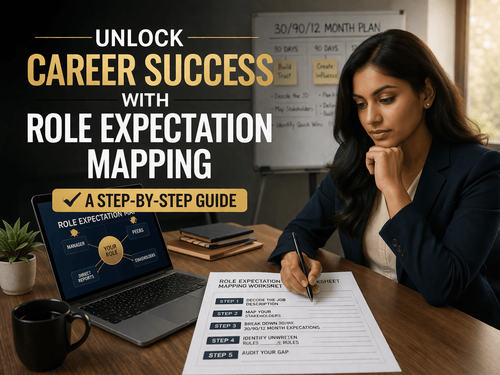

Unlock Career Success with Role Expectation Mapping: A Step-by-Step Guide
Imagine starting a new job or transitioning into a different role, only to realize that your understanding of what success looks like is completely misaligned with what your manager or peers expect from you. Many professionals face this dilemma, often without even realizing the gap. The result? Frustration, stagnation, and missed opportunities. But there is a solution.
Introducing Role Expectation Mapping – a powerful strategy that provides you with clarity on what’s truly expected from you in any role, right from day one. In this guide, we will walk you through a step-by-step process that will not only help you decode what success looks like in your role but also ensure that you’re aligned with the key stakeholders who define your success. Book your free trial session today with Planetspark.
Download for more details or PDF file.
Who Is This Blog For?
This blog is for:
- Career changers looking to reposition themselves in a new industry
- Job seekers wanting to ensure they understand role expectations before applying
- Consultants and managers aiming for smooth transitions and leadership roles
- Professionals looking to optimize their current roles for better career growth.
Why This Topic Matters Today?
Today’s job market is more competitive
than ever. Most professionals enter a new role with assumptions about what’s expected, but they rarely take the time to validate these assumptions with their stakeholders. According to the *Role Expectation Mapping Worksheet*, a significant number of professionals fail in their early tenure due to role misalignment and a lack of clarity.
Research shows that a clear understanding of expectations leads to faster trust-building, higher performance, and better recognition. The longer you remain in the dark about role expectations, the more likely your performance will suffer. Role Expectation Mapping is an essential strategy to ensure you’re on the right track to success.
Core Concept or Framework Explained:
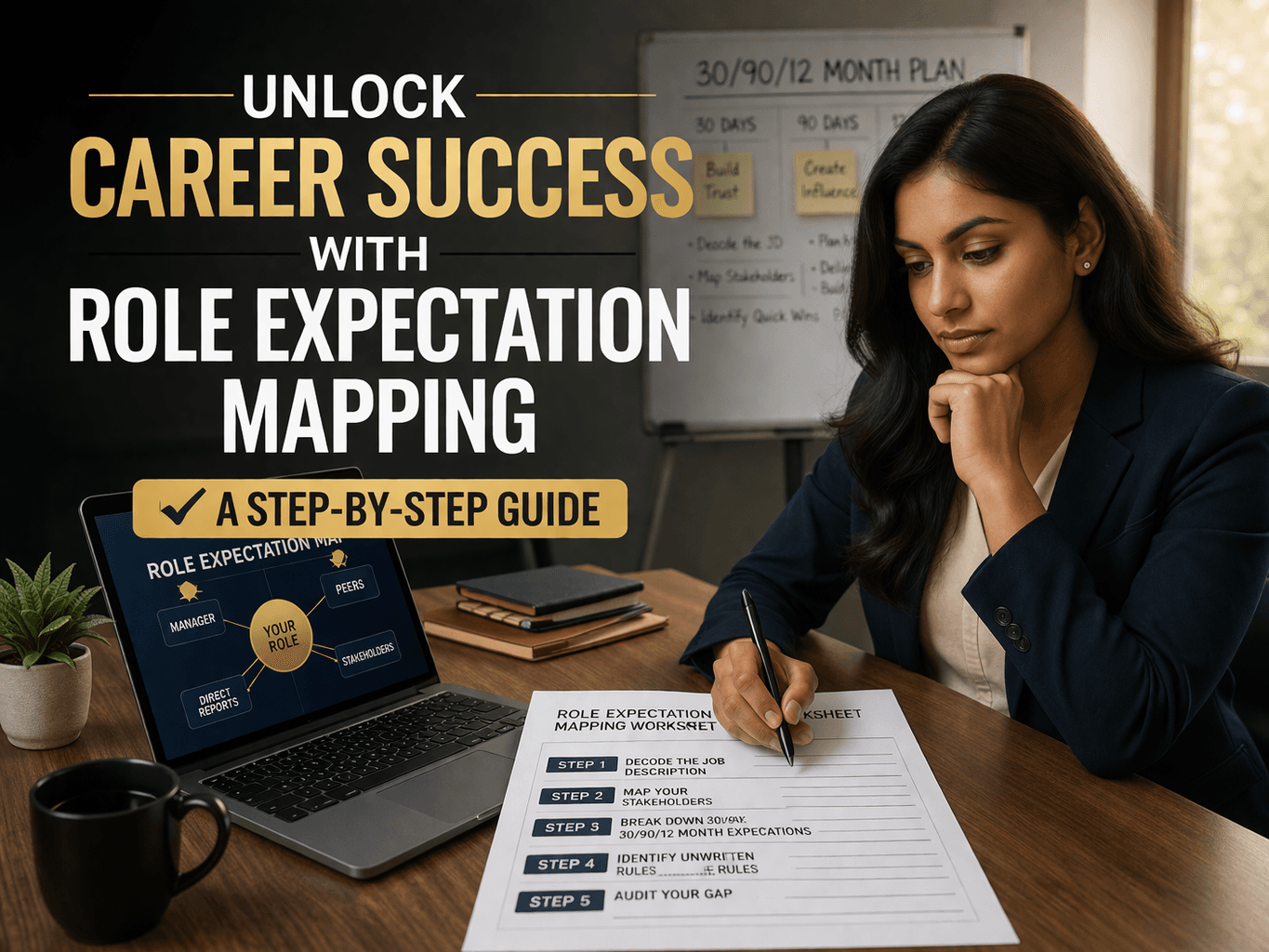
The core idea behind Role Expectation Mapping is the systematic process of identifying and aligning with your role’s expectations. It is not just about fulfilling tasks but understanding what success truly looks like. The process is broken down into five key steps:
1. Decoding the Job Description: Reading between the lines to understand not just the written responsibilities, but the real, day-to-day priorities.
2. Mapping Your Stakeholder Web: Identifying all the people who have a say in your success and aligning with their expectations.
3. Breaking Down Expectations Across Time Horizons: Understanding short-term (30-day), mid-term (90-day), and long-term (12-month) expectations and adjusting your priorities accordingly.
4. Identifying Unwritten Rules: Recognizing the unspoken cultural norms, communication styles, and behaviors that determine success in your specific role.
5. Conducting a Personal Gap Audit: Honestly assessing where you currently stand in comparison to the expectations set for you, and identifying areas for growth.
How This Blog and Guidebook Help You?
This blog and accompanying guidebook help you gain clarity on exactly what success looks like in your role. By following the Role Expectation Mapping process, you will:
- Eliminate confusion and role misalignment
- Foster stronger relationships with key stakeholders
- Gain confidence in your career decisions
- Have a clear, actionable plan for your first 30, 90, and 365 days
- Maximize your growth potential by tackling the most pressing gaps first.
Step-by-Step Breakdown:
Step 1: Decode the Written Role – Beyond the Job Description
Start by analyzing the job description (JD). Highlight action verbs like “lead,” “manage,” or “drive” to identify high-accountability responsibilities. This helps you classify the role (Builder, Operator, or Hybrid) and understand what is most important.
Step 2: Map Your Stakeholder Web – Who Defines Your Success?
Your success is defined by more than just your manager. Create a stakeholder map that identifies key individuals and outlines their expectations. Having explicit conversations about these expectations early on will set you up for success.
Step 3: Break Down Expectations Across Three Time Horizons
Clarify the expectations for the first 30 days (building trust), the first 90 days (driving contributions), and the first 12 months (creating influence). Knowing what to prioritize at each phase will keep you on track.
Step 4: Identify the Unwritten Rules – The Hidden Expectations
Every organization has unwritten rules that govern success. Whether it’s communication norms or visibility expectations, these rules shape how you are perceived. Take time to observe and ask questions to decode these norms.
Step 5: Audit the Gap – Where You Are vs. Where You Need to Be
Conduct a self-assessment to identify the gaps between your current skills, knowledge, and the expectations set for you. Address these gaps with specific actions to grow in your role.
Common Mistakes or Pitfalls to Avoid:
- Assuming the JD is the whole job: JDs often don’t capture the full scope of responsibilities. Decode the role beyond the job description.
- Managing up only, ignoring peers: Strong peer relationships are just as important. Map out stakeholder expectations for all key partners.
- Optimizing for the wrong time horizon: Focus on the immediate needs before considering long-term goals. Confirm your primary time horizon with your manager early.
- Not revisiting expectations: Expectations evolve, so regularly revisit your role and adjust as needed.
How Should You Use This Guidebook Effectively?
- Start by mapping your role: Read the guide once to get full context.
- Have one-on-one conversations: Schedule stakeholder alignment meetings early.
- Allocate time for a quarterly review: Regularly check in with your expectations to stay aligned as your role evolves.
Key Takeaways:
- Shift from assumptions to clarity by decoding your role and mapping expectations.
- Identify your key stakeholders and align with their definitions of success.
- Use the three-horizon framework to stay on track with your priorities.
- Regularly assess your progress and fill the gaps to enhance your performance.
Your Next Step: Accelerate Your Career with PlanetSpark
Creating an impact-driven resume is not just about landing your next job—it’s about owning your professional story and presenting it with clarity, confidence, and credibility. When your resume clearly communicates value, results, and impact, opportunities follow naturally.
At PlanetSpark, we are committed to empowering working professionals with practical, outcome-focused resources that drive real career growth. From resume building and workplace communication to leadership presence and professional writing, our programs are designed to help you succeed in today’s fast-evolving job market.
Visit https://www.planetspark.in/resources to explore:
- Career and resume-building guides
- Workplace communication and professional writing resources
- Skill-development tools curated for working professionals.
Want a deeper, hands-on experience?
You can also book a free trial session to learn more about PlanetSpark’s Working Professional Courses, designed to accelerate your career through personalised coaching, real-world practice, and expert guidance.
Your career deserves more than generic advice.
It deserves clarity, confidence, and measurable impact.
Start building that advantage today—with PlanetSpark.
Personalized Communication Roadmaps
Record a video to get a AI generated personalized communication reports