
Set Execution Benchmarks for Continuous Performance Improvement


Execution Benchmarks That Actually Drive Results: A Practical System for Continuous Performance Improvement
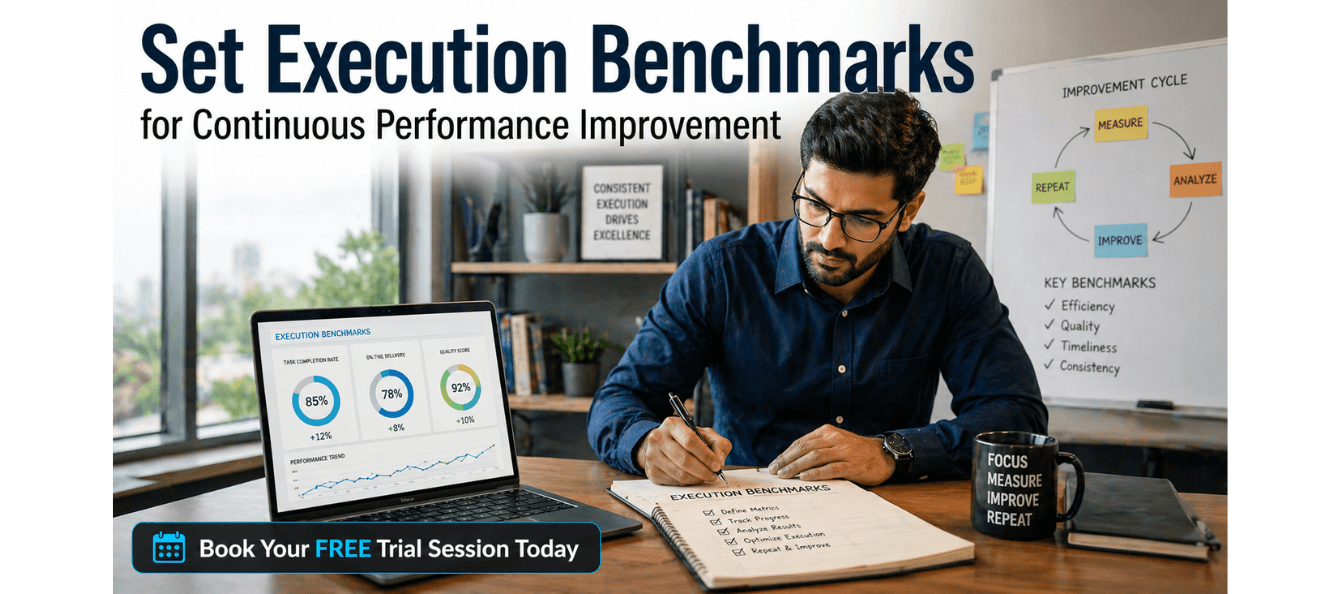
You set goals. You track outcomes. But despite your effort, results often feel inconsistent and unpredictable. Some weeks you perform well, while others fall short—and you are left wondering what went wrong. The real issue is not effort or intent. It is the absence of clear execution benchmarks. Most professionals rely on end results to measure success, but by the time results appear, it is often too late to fix what went wrong. Without measurable checkpoints, performance becomes reactive instead of proactive. This is where execution benchmarks make the difference. They act like a performance GPS, helping you track progress in real time, identify gaps early, and make adjustments before outcomes are affected. This guide gives you a structured system to define, track, and improve performance consistently using clear benchmarks.
Download these resources and apply them alongside your daily work for improved clarity, productivity, and professional growth. You can also book a free trial to gain expert guidance and enhance your communication, problem-solving, and decision-making skills. The materials are designed in a clear, structured format to help professionals learn efficiently and implement insights with confidence.
Who Is This Blog For?
- Working professionals seeking consistent performance improvement
- Managers responsible for tracking team outcomes
- Consultants managing measurable deliverables
- Career switchers building structured performance systems
- Early-career professionals looking to improve execution clarity
Why This Topic Matters Today?
In today’s performance-driven work environment, vague goals are no longer enough. Professionals are expected to deliver consistent results, not occasional success. However, most people track only final outcomes, such as revenue or project completion, without understanding the process behind them. This creates a gap between effort and results. Without benchmarks, you cannot identify where performance is slipping or how to improve it. Execution benchmarks solve this problem by introducing measurable checkpoints that track progress at every stage. They shift performance management from reactive problem-solving to proactive improvement.
Core Concept or Framework Explained
The core concept of this guide is to move from goal-setting to benchmark-driven execution. Benchmarks are specific, measurable indicators that track whether you are on the right path before it is too late to adjust. A strong benchmark system includes three layers: leading indicators that track daily or weekly actions, process benchmarks that measure execution quality, and lagging indicators that reflect final outcomes. This layered approach ensures that you can monitor performance in real time and make informed decisions.
How This Blog and Guidebook Help You?
This guide helps you define what success looks like, build a structured benchmark system, and track performance consistently. It provides frameworks like the PACE Method to set realistic and achievable benchmarks, along with scripts to communicate performance clearly. By applying these systems, you can improve consistency, identify gaps early, and build a sustainable approach to performance improvement.
Step-by-Step Breakdown
Step 1: Define What Good Looks Like
What does success actually mean in your role? Before setting benchmarks, you must clearly define what strong performance looks like. Identify the outcome you are measuring, set a clear performance standard, and define a minimum acceptable threshold. This ensures that your benchmarks are meaningful and aligned with expectations.
Step 2: Build Your Benchmark Architecture
A single metric is not enough to track performance effectively. Build a system that includes leading indicators, process benchmarks, and lagging indicators. Leading indicators track daily actions, process benchmarks measure execution quality, and lagging indicators reflect final outcomes. This layered approach provides a complete view of performance.
Step 3: Use the PACE Method for Benchmark Setting
How do you set benchmarks that are both realistic and challenging? Use the PACE Method. Start by pinpointing the most critical performance area, then anchor your benchmark using current baseline data. Calibrate your target slightly above your current level to create a stretch, and evaluate performance regularly to refine your approach.
Step 4: Communicate Benchmarks Clearly
Clear communication is essential for effective performance management. Use structured scripts to propose benchmarks, review missed targets, and raise performance standards. Consistent communication builds trust and ensures alignment with stakeholders.
Step 5: Apply Benchmarks in Real Work Scenarios
When applied correctly, benchmarks transform performance. For example, tracking milestone completion rates and introducing regular reviews can significantly improve project delivery timelines. The key is to monitor progress consistently and adjust based on real data.
Step 6: Review and Adjust Regularly
Performance improvement is an ongoing process. Conduct weekly check-ins to track progress and monthly reviews to analyse root causes. Use these insights to refine your benchmarks and improve your system continuously.
Step 7: Scale and Raise Benchmarks Over Time
Once you consistently meet your benchmarks, raise the standard gradually. This ensures continuous growth and prevents stagnation. Performance improvement is not a one-time effort but a continuous cycle of setting, tracking, and improving benchmarks.
Common Mistakes or Pitfalls to Avoid
Many professionals make avoidable mistakes when setting benchmarks. These include tracking only outcomes without monitoring inputs, setting targets without baseline data, reviewing performance too infrequently, and failing to raise benchmarks after consistent success. These mistakes limit growth and reduce the effectiveness of performance systems. A better approach is to track multiple indicators, use real data, review regularly, and continuously improve benchmarks.
How Should You Use This Guidebook Effectively?
To use this guide effectively, start by defining a single performance area to benchmark. Gather baseline data and set a realistic target using the PACE Method. Build a system of leading, process, and lagging indicators, and track them consistently. Schedule regular reviews to assess progress and make adjustments. Over time, expand your benchmark system to cover additional performance areas. The key is to start simple and build gradually.
Key Takeaways
- Execution benchmarks provide real-time performance insights
- Clear definitions of success are essential for meaningful tracking
- A layered benchmark system improves accuracy and clarity
- The PACE Method ensures realistic and achievable targets
- Regular reviews enable continuous improvement
- Raising benchmarks drives long-term growth
- Consistent tracking leads to predictable performance outcomes
Your Next Step: Accelerate Your Career with PlanetSpark
Creating an impact-driven resume is not just about landing your next job—it’s about owning your professional story and presenting it with clarity, confidence, and credibility. When your resume clearly communicates value, results, and impact, opportunities follow naturally.
At PlanetSpark, we are committed to empowering working professionals with practical, outcome-focused resources that drive real career growth. From resume building and workplace communication to leadership presence and professional writing, our programs are designed to help you succeed in today’s fast-evolving job market.
Visit https://www.planetspark.in/resources to explore:
- Career and resume-building guides
- Workplace communication and professional writing resources
- Skill-development tools curated for working professionals
Want a deeper, hands-on experience?
You can also book a free trial session to learn more about PlanetSpark’s Working Professional Courses, designed to accelerate your career through personalised coaching, real-world practice, and expert guidance.
Your career deserves more than generic advice.
It deserves clarity, confidence, and measurable impact.
Personalized Communication Roadmaps
Record a video to get a AI generated personalized communication reports