
Stakeholder Tracking Guide for Informal Leadership Success
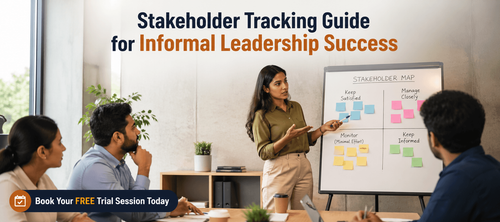

Tracking Stakeholder Engagement for Informal Leadership: A Practical System to Build Influence Without Authority
In today’s workplace, many professionals are expected to lead without formal authority. You may be driving a cross-functional initiative, influencing senior stakeholders, or navigating complex team dynamics—all without a leadership title. The challenge is not just executing tasks but managing relationships, building trust, and sustaining momentum across stakeholders.
Yet most professionals rely on memory, scattered notes, or generic CRM tools that fail to capture the nuance of informal leadership. This leads to missed follow-ups, misunderstood relationships, and stalled initiatives. Without a structured system, even the most capable professionals struggle to demonstrate their impact.
This guidebook provides a practical, scenario-driven framework to help you track, manage, and strengthen stakeholder engagement. By using structured templates across the entire lifecycle—from mapping influence to demonstrating leadership impact—you can transform invisible efforts into measurable outcomes and career growth.
Download these resources and apply them alongside your daily work for improved clarity, productivity, and professional growth. You can also book a free trial to gain expert guidance and enhance your communication, problem-solving, and decision-making skills. The materials are designed in a clear, structured format to help professionals learn efficiently and implement insights with confidence.
Who Is This Blog For?
- Consultants managing client stakeholders without direct authority
- Mid-level managers leading cross-functional initiatives
- Individual contributors aiming to build influence and visibility
- Career switchers seeking sponsorship and internal advocacy
- Freelancers navigating complex stakeholder ecosystems
- Professionals preparing for promotions or leadership roles
Why This Topic Matters Today?
Informal leadership is one of the most powerful yet under-documented professional skills. Many decisions in organisations are influenced not by hierarchy, but by relationships, trust, and persuasion.
However, professionals often:
- Track only formal stakeholders and ignore hidden influencers
- Log meetings but fail to capture sentiment or relationship shifts
- Miss critical follow-ups that weaken trust and credibility
The result is lost momentum, weakened influence, and missed career opportunities. As highlighted in the guide, relationships decay faster than tasks, making consistent engagement tracking essential for long-term success.
Core Concept or Framework Explained
The guidebook introduces a structured 10-template system that covers the full lifecycle of stakeholder engagement for informal leaders.
Instead of relying on a single tool, it breaks down engagement into distinct, scenario-based workflows:
- Mapping influence before action
- Logging every stakeholder interaction
- Tracking relationship sentiment over time
- Building coalitions and sponsorship
- Managing resistance and objections
- Planning communication cadence
- Documenting measurable leadership impact
Each template is designed for a specific real-world situation, allowing professionals to apply the right tool at the right time rather than forcing a one-size-fits-all approach.
The key idea is integration. Outputs from one template feed into another, creating a continuous system of tracking, analysis, and action.
How This Blog and Guidebook Help You?
By applying this system, you can:
- Gain clarity on who influences your success
- Build stronger, more intentional stakeholder relationships
- Detect and address relationship risks early
- Improve consistency in communication and follow-ups
- Demonstrate measurable leadership impact during reviews
Ultimately, it helps you transition from reactive engagement to strategic influence—turning invisible work into visible career growth.
Step-by-Step Breakdown
Step 1: Map Stakeholder Influence Before Acting
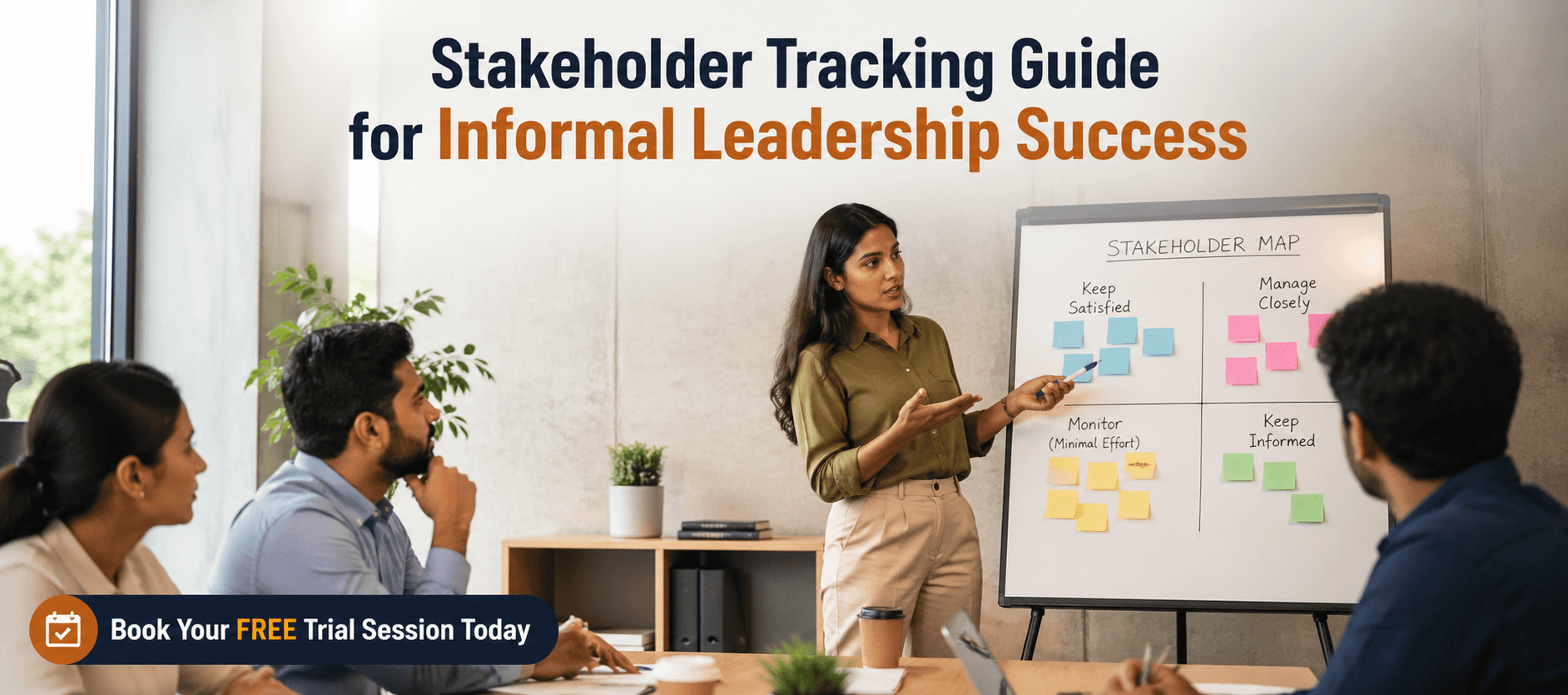
Start with the Influence Map and Power Grid. This helps you classify stakeholders based on influence and alignment before launching any initiative.
You categorise stakeholders as:
- Champion
- Ally
- Neutral
- Sceptic
- Blocker
This step ensures you prioritise high-influence stakeholders who are not yet aligned and avoid wasting effort on low-impact relationships.
Step 2: Track Every Interaction Systematically
Use the Stakeholder Engagement Activity Log to document all touchpoints—not just meetings, but emails, messages, and informal conversations.
Track:
- Interaction type
- Discussion topics
- Stakeholder response
- Next steps
This creates a reliable record of engagement over a 90-day period and ensures no relationship is neglected.
Step 3: Monitor Relationship Sentiment
The Relationship Sentiment Tracker helps you measure whether relationships are improving or declining.
Use a simple scale:
- 1 for hostile
- 5 for strong champion
A drop in sentiment is a critical signal. For example, a drop from 4 to 2 in a month is considered a relationship emergency requiring immediate action.
Step 4: Build and Strengthen Coalitions
The Coalition Building Roster helps you track who supports your initiative and what they have committed to.
Focus on:
- Commitment levels
- Delivered actions
- Gaps in departments or seniority
This ensures your initiative has broad-based support rather than isolated backing.
Step 5: Cultivate Informal Sponsors
The Informal Sponsor Cultivation Log helps you build relationships with senior leaders who can advocate for you.
Track:
- Actions taken to build the relationship
- Their responses
- Relationship stage progression
The key principle is clear: sponsorship is earned through demonstrated value, not requested directly.
Step 6: Ensure Accountability After Meetings
Use the Meeting Follow-Through Sheet to track commitments made during stakeholder interactions.
This includes:
- Who committed to what
- Deadlines
- Completion status
Without formal authority, credibility depends on consistent follow-through.
Step 7: Build Cross-Functional Peer Influence
The Peer Influence Tracker helps you strengthen relationships with colleagues outside your reporting line.
Track:
- Value you provide to peers
- Relationship type
- Influence trends
This builds long-term alliances that support your initiatives.
Step 8: Manage Resistance Strategically
The Resistance and Objection Mapping Log helps you understand and address stakeholder pushback.
Document:
- Type of resistance
- Stated objections
- Underlying concerns
- Mitigation strategies
Passive resistance, especially from high-influence stakeholders, is more dangerous than overt opposition and must be tracked carefully.
Step 9: Plan Communication Proactively
The Communication Cadence Planner ensures consistent and strategic outreach.
Segment stakeholders into tiers:
- High priority with weekly engagement
- Medium priority with bi-weekly touchpoints
- Low priority with monthly updates
This prevents communication gaps and keeps stakeholders aligned.
Step 10: Capture Leadership Impact Evidence
Finally, the Leadership Impact Evidence Record helps you convert your engagement data into a compelling narrative.
Use it to:
- Document stakeholder engagement outcomes
- Highlight measurable results
- Present evidence during performance reviews
This transforms your informal leadership efforts into tangible career advancement proof.
Common Mistakes or Pitfalls to Avoid
- Focusing only on formal stakeholders and ignoring hidden influencers
- Logging activities without analysing relationship sentiment
- Failing to follow up consistently after interactions
- Treating templates as one-time exercises instead of ongoing tools
- Ignoring passive resistance signals from key stakeholders
Avoiding these mistakes ensures sustained momentum and stronger influence.
How Should You Use This Guidebook Effectively?
To maximise results, follow a structured usage approach:
- Start every initiative by mapping stakeholders before engagement
- Update activity logs and sentiment trackers weekly
- Conduct monthly reviews of coalition strength and resistance patterns
- Refine communication strategies and sponsorship efforts quarterly
Consistency is more important than perfection. Even 15 minutes of weekly tracking can significantly improve relationship management and outcomes.
Treat these templates as living documents. Update them after every meaningful interaction and use them as evidence during performance discussions.
Key Takeaways
- Informal leadership success depends on structured stakeholder engagement
- Tracking relationships is as important as tracking tasks
- Influence mapping helps prioritise the right stakeholders early
- Sentiment tracking prevents relationship breakdowns
- Consistent communication builds trust and momentum
- Sponsorship is earned through value, not requested directly
- Data-driven tracking strengthens performance review outcomes
- Integrated systems outperform isolated tools
Your Next Step: Accelerate Your Career with PlanetSpark
Creating an impact-driven resume is not just about landing your next job—it’s about owning your professional story and presenting it with clarity, confidence, and credibility. When your resume clearly communicates value, results, and impact, opportunities follow naturally.
At PlanetSpark, we are committed to empowering working professionals with practical, outcome-focused resources that drive real career growth. From resume building and workplace communication to leadership presence and professional writing, our programs are designed to help you succeed in today’s fast-evolving job market.
Visit https://www.planetspark.in/resources to explore:
- Career and resume-building guides
- Workplace communication and professional writing resources
- Skill-development tools curated for working professionals
Want a deeper, hands-on experience?
You can also book a free trial session to learn more about PlanetSpark’s Working Professional Courses, designed to accelerate your career through personalised coaching, real-world practice, and expert guidance.
Your career deserves more than generic advice.
It deserves clarity, confidence, and measurable impact.
Personalized Communication Roadmaps
Record a video to get a AI generated personalized communication reports