
Step-by-Step Guide for Working Professionals to Track Career Risk Experiments
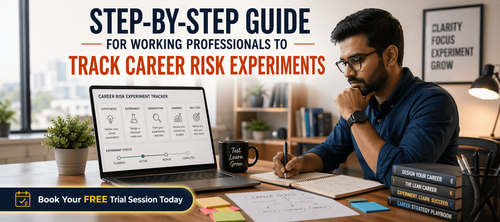

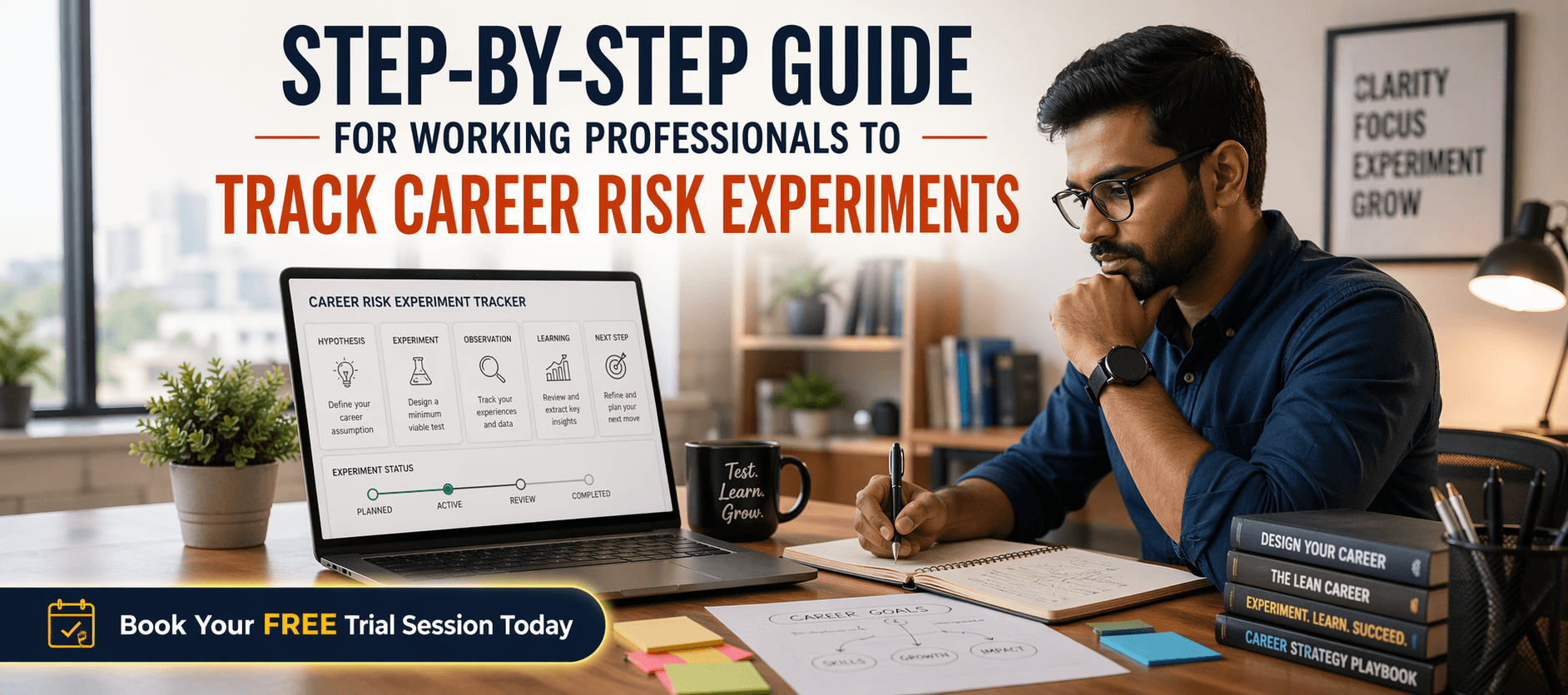
Career Risk Experiment Tracker
In today’s unpredictable professional landscape, making a career move can feel like stepping into the unknown. Whether you are considering a promotion, a role change, a side venture, or an entirely new industry, the pressure to “get it right” often leads to hesitation. Many professionals delay decisions, waiting for certainty that never arrives.
The real problem is not lack of ambition—it is lack of structure. Most people rely on guesswork, opinions, or surface-level research when making career decisions. This leads to costly mistakes, stalled growth, and missed opportunities. The truth is, career growth is not about avoiding risk—it is about managing it intelligently.
This is where the Career Risk Experiment Tracker becomes a powerful tool. Instead of treating career decisions as high-stakes gambles, it helps you approach them as structured experiments. With the right framework, you can test ideas, gather evidence, and make confident decisions—without putting your current stability at risk.
Download these resources and apply them alongside your daily work for improved clarity, productivity, and professional growth. You can also book a free trial to gain expert guidance and enhance your communication, problem-solving, and decision-making skills. The materials are designed in a clear, structured format to help professionals learn efficiently and implement insights with confidence.
Who Is This Blog For?
- Working professionals feeling stuck or uncertain about their next career move
- Career switchers exploring new roles, industries, or functions
- Managers and leaders seeking structured career growth strategies
- Freelancers and consultants testing new service offerings or niches
- Individuals interested in building clarity before making high-stakes decisions
Why This Topic Matters Today?
Career uncertainty has become the norm rather than the exception. With evolving industries, emerging roles, and shifting job expectations, professionals can no longer rely on linear career paths. Yet, many still approach decisions with an all-or-nothing mindset.
This creates several challenges:
- Analysis paralysis due to fear of making the wrong decision
- Financial and reputational risks from premature career moves
- Lack of clarity about what truly fits their skills and interests
- Over-reliance on assumptions instead of real-world evidence
The Career Risk Experiment approach addresses these challenges by shifting the focus from certainty to learning. Instead of asking “Is this the right move?”, professionals start asking “What is the smartest way to test this idea?”
This mindset is what separates reactive career decisions from strategic ones.
Core Concept or Framework Explained
At the heart of the Career Risk Experiment Tracker is a simple but powerful idea: treat your career like a series of experiments, not irreversible decisions.
This framework is built on four core pillars:
Hypothesis-Driven Thinking
Every career move starts with a clear, testable hypothesis. Instead of vague thoughts like wanting a better job, you define specific expectations about a new role, industry, or function. This clarity helps you focus your efforts and measure outcomes effectively.
Minimum Viable Experiments
Rather than making drastic changes, you design small, low-risk tests. These experiments are time-bound, practical, and reversible. They allow you to gather meaningful insights without disrupting your current career stability.
Scientific Observation
During the experiment, you observe your experiences with intention. You track both objective results and subjective responses—what energises you, what drains you, and what surprises you.
Structured Learning Review
After each experiment, you analyse what you learned. This step transforms raw experience into actionable insights, helping you refine your next move with confidence.
Together, these elements create a repeatable system that turns uncertainty into clarity.
How This Blog and Guidebook Help You?
This blog and the underlying tracker provide a structured pathway to smarter career decisions.
You gain:
- A clear system to test career ideas before committing to them
- Tools to reduce risk while exploring new opportunities
- A method to replace assumptions with real-world evidence
- Increased confidence through small, validated steps
- A growing database of personal career insights
Instead of relying on external advice alone, you build your own evidence-based understanding of what works for you.
Step-by-Step Breakdown
Define Your Career Hypothesis
Every experiment begins with a clear hypothesis. This means identifying what you believe about a potential career direction and what evidence would prove or disprove it.
Start by:
- Identifying what is not working in your current role
- Defining the direction you want to explore
- Clarifying what success and failure would look like
A strong hypothesis is specific, testable, and grounded in reality—not just aspiration.
Design Your Minimum Viable Experiment
Once your hypothesis is clear, the next step is to design a small, practical test.
Effective experiments are:
- Time-bound with a clear duration
- Focused on observable outcomes
- Reversible without major consequences
Examples include informational interviews, short projects, or skill-based tasks. The goal is to learn quickly without overcommitting resources.
Run the Experiment and Observe Carefully
Execution is where learning begins. During this phase, your role is not just to act, but to observe like a researcher.
Focus on:
- Tracking your daily experiences and reactions
- Noticing patterns in energy, interest, and performance
- Recording insights in real time
Avoid rushing to conclusions. Let evidence build over time before making judgments.
Capture and Analyse Your Learning
After completing the experiment, conduct a structured review.
Ask yourself:
- Did the results support or challenge your hypothesis?
- What did you learn about your skills and preferences?
- What surprised you during the process?
This step is critical. Without reflection, even the best experiments fail to deliver value.
Use Action Tools and Worksheets
The tracker includes practical tools to guide each stage:
- Experiment Design Worksheet to plan your approach
- Pre-Launch Checklist to ensure readiness
- Mid-Experiment Check to stay on track
- Reflection Questions to extract meaningful insights
These tools ensure consistency and depth in your experimentation process.
Apply Real-World Learning
A strong example from the resource shows how a professional transitioned careers through structured experiments instead of immediate commitment.
By starting with small steps—research, internal projects, and eventually freelance work—they built confidence, skills, and a network before making a full transition.
This demonstrates that career shifts do not require drastic leaps—just smart, consistent experimentation.
Common Mistakes or Pitfalls to Avoid
Even with the right framework, professionals often make predictable mistakes.
Common pitfalls include:
- Starting without a clear, written hypothesis
- Running experiments that are too large or complex
- Collecting experiences without defining success criteria
- Skipping the learning review phase
- Working in isolation without accountability
- Drawing conclusions too early based on limited data
A better approach is to stay disciplined:
- Keep experiments small and focused
- Define success before starting
- Commit to full timelines
- Reflect deeply before moving to the next step
Avoiding these mistakes significantly improves the quality of your career decisions.
How Should You Use This Guidebook Effectively?
To maximise the value of the Career Risk Experiment Tracker, follow a structured workflow:
- Start by writing a clear career hypothesis
- Design a small, actionable experiment
- Allocate realistic time each week
- Document observations consistently
- Conduct a detailed review after completion
Suggested time investment:
- 2–5 hours per week for running experiments
- 60–90 minutes for post-experiment analysis
For best results:
- Use the tracker regularly, not occasionally
- Share your progress with a mentor or accountability partner
- Treat each experiment as part of a larger learning journey
Consistency and reflection are what turn experiments into long-term career intelligence.
Key Takeaways
- Career decisions should be treated as experiments, not irreversible risks
- A clear, testable hypothesis is the foundation of smart career moves
- Small, low-risk experiments generate faster and better insights
- Observation and documentation improve learning quality
- Structured reflection turns experience into actionable intelligence
- Accountability increases consistency and follow-through
- Starting early is more valuable than waiting for perfect conditions
Your Next Step: Accelerate Your Career with PlanetSpark
Creating an impact-driven resume is not just about landing your next job—it’s about owning your professional story and presenting it with clarity, confidence, and credibility. When your resume clearly communicates value, results, and impact, opportunities follow naturally.
At PlanetSpark, we are committed to empowering working professionals with practical, outcome-focused resources that drive real career growth. From resume building and workplace communication to leadership presence and professional writing, our programs are designed to help you succeed in today’s fast-evolving job market.
Visit https://www.planetspark.in/resources to explore:
- Career and resume-building guides
- Workplace communication and professional writing resources
- Skill-development tools curated for working professionals
Want a deeper, hands-on experience?
You can also book a free trial session to learn more about PlanetSpark’s Working Professional Courses, designed to accelerate your career through personalised coaching, real-world practice, and expert guidance.
Your career deserves more than generic advice.
It deserves clarity, confidence, and measurable impact.
Personalized Communication Roadmaps
Record a video to get a AI generated personalized communication reports