
Step-by-Step Guide to Build a Notion Portfolio
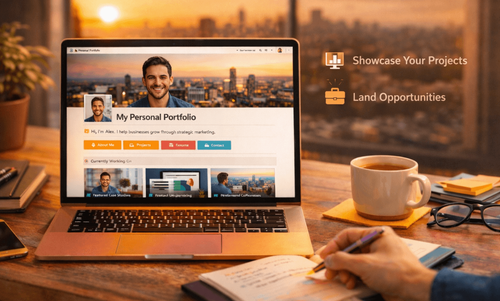

How to Build a Notion-Based Personal Portfolio: A Step-by-Step Guide for Career Growth
In today’s competitive job market, having a standout portfolio can make all the difference. Yet, many professionals struggle to showcase their skills, projects, and career story in one place. Resumes are static, LinkedIn is overcrowded, and personal websites often require technical expertise. The result? Professionals find themselves scrambling to compile their best work when an opportunity arises, costing them time, confidence, and sometimes even the opportunity itself.
This is where a Notion-based portfolio comes in. Notion is a flexible, user-friendly platform that allows you to build a dynamic, shareable portfolio that’s easy to update and maintain—no coding required. It’s a living document that evolves as you do, keeping your career story ready to share whenever an opportunity knocks.
In this blog, we'll walk you through the process of building your own Notion-based personal portfolio, using a simple five-step method that fits seamlessly into your busy professional life.
Who Is This Blog For?
This guide is designed for working professionals who want to showcase their career progression in a flexible, digital format. It's perfect for:
- Career changers
- Job seekers
- Consultants
- Managers
- Early to mid-career professionals (0–15 years of experience)
If you’re short on time but want to create an impactful portfolio, this guide will help you achieve that goal quickly and effectively.
Why This Topic Matters Today?
In today’s fast-paced work environment, professionals need to stand out. Whether you're switching careers, freelancing, or simply looking to capture and share your accomplishments, a Notion portfolio is an excellent way to present your career story in an organized, accessible format.
Traditional resumes fail to capture the nuances of your career, and LinkedIn profiles can get lost in the noise. Notion gives you full control over your portfolio, allowing you to highlight specific projects, achievements, and skill sets that align with your current career goals. Additionally, a well-crafted portfolio can signal to hiring managers and clients that you’re organized, tech-savvy, and intentional about your career development.
Core Concept or Framework Explained
The beauty of a Notion-based portfolio lies in its simplicity and flexibility. Building one isn't about design perfection—it’s about strategic storytelling. You’re not just compiling a list of achievements; you’re crafting a narrative that ties together your skills, experience, and aspirations into a coherent story.
There are five core steps to building your Notion portfolio:
1. Define Your Narrative
Your portfolio’s narrative is the foundation of your personal brand. It’s essential to define your target audience and clarify your positioning statement. What unique value do you offer? What skills or experiences make you stand out in your field?
2. Structure Your Pages
Structure your portfolio like a well-organized house—each page has a clear purpose, and visitors can easily navigate through it. Include key sections like your homepage, about me, projects/case studies, resume/experience, and a contact/CTA page.
3. Populate With Content
Populate your portfolio with your most compelling projects, achievements, and proof points. Use the CAR framework (Context, Action, Result) for each project to clearly highlight the outcomes of your work.
4. Design and Polish
Once the content is in place, focus on design. Use Notion’s built-in features like cover images, icons, and toggle blocks to make your portfolio visually appealing and easy to navigate.
5. Publish and Share
After publishing your portfolio, share it strategically. Include the link on your LinkedIn profile, in your email signature, and in your resume header. Regularly update it to keep it fresh and relevant.
How This Blog and Guidebook Help You?
This blog serves as a comprehensive, step-by-step guide to building a Notion-based portfolio, providing you with the tools, templates, and checklists needed to create a professional, shareable portfolio that tells your unique career story.
By following this guide, you’ll not only build a portfolio that effectively showcases your skills and achievements, but you’ll also gain a deeper understanding of how to use Notion to streamline your career development process. With a polished, up-to-date portfolio at your fingertips, you’ll be ready to seize career opportunities with confidence.
Step-by-Step Breakdown
- Step 1: Define Your Narrative
Before you dive into Notion, clarify the story you want your portfolio to tell. Identify your target audience and define your positioning statement (e.g., "I help [audience] achieve [outcome] by [method/skill]"). Select 3-5 key projects or achievements that best showcase your skills and expertise.
- Step 2: Structure Your Notion Pages
Set up the architecture of your portfolio. Key sections include:
- Home/Landing Page: The digital front door with a brief introduction and navigation links.
- About Me: Share your professional journey, skills, and what drives you.
- Projects/Case Studies: Showcase 3-5 high-impact projects, using the CAR framework for each.
- Resume/Experience: Highlight your key roles and outcomes, linking to relevant projects.
- Contact/CTA Page: Make it easy for people to reach you with a clear call to action.
- Step 3: Populate With Content
Populate your portfolio with rich content, focusing on projects that best align with your positioning. Use the CAR framework for each project—clearly describe the context, action, and result of each project. Be specific and use numbers to make your outcomes stand out.
- Step 4: Design and Polish
Focus on design elements that enhance user experience. Add cover images, assign icons, and ensure consistent formatting across pages. Make sure your portfolio looks professional and is easy to navigate, with sufficient whitespace to avoid visual clutter.
- Step 5: Publish and Share
Publish your portfolio to the web using Notion’s settings. Share it on LinkedIn, in your email signature, and on your resume. Ensure that you schedule regular maintenance to keep your portfolio up-to-date.
Common Mistakes or Pitfalls to Avoid
As you build your Notion portfolio, be mindful of the following mistakes:
- Mistake 1: Treating it Like a Resume Dump
Avoid overwhelming visitors with a laundry list of jobs, skills, or certifications. Be selective and only include items that reinforce your positioning statement.
- Mistake 2: No Clear Call-to-Action
Every page should have a next step—whether it's "See my projects," "Let’s talk," or "Download my resume." Guide your visitors through your portfolio.
- Mistake 3: Vague Project Descriptions
Avoid vague descriptions like "Led a team"—be specific about what you did and the measurable results you achieved.
- Mistake 4: Building It and Forgetting It
Regularly update your portfolio to keep it relevant. Set a reminder to update it every few weeks to ensure it remains fresh and accurate.
- Mistake 5: Ignoring Mobile Experience
Notion pages can look different on mobile devices. Always preview your portfolio on mobile to ensure it’s user-friendly.
How Should You Use This Guidebook Effectively?
To make the most of this guidebook, follow these practical steps:
1. Complete the Pre-Build Checklist: Identify your target audience, write your positioning statement, and gather key project artifacts.
2. Set Aside Time for Building: Dedicate 2–4 hours to building the initial version of your portfolio. Don’t aim for perfection—just get it live.
3. Maintain Regularly: Spend 15 minutes every two weeks to update your portfolio, add new content, and refine the design.
Key Takeaways
- Focus on storytelling, not tool features.
- Curate your content carefully—quality over quantity.
- Structure your portfolio with clear, intuitive navigation.
- Use the CAR framework to describe projects with specificity.
- Publish and share your portfolio, but always keep it updated.
- Schedule regular maintenance and use feedback to iterate.
Your Next Step: Accelerate Your Career with PlanetSpark
Creating an impact-driven resume is not just about landing your next job—it’s about owning your professional story and presenting it with clarity, confidence, and credibility. When your resume clearly communicates value, results, and impact, opportunities follow naturally.
At PlanetSpark, we are committed to empowering working professionals with practical, outcome-focused resources that drive real career growth. From resume building and workplace communication to leadership presence and professional writing, our programs are designed to help you succeed in today’s fast-evolving job market.
Visit https://www.planetspark.in/resources to explore:
- Career and resume-building guides
- Workplace communication and professional writing resources
- Skill-development tools curated for working professionals
Want a deeper, hands-on experience?
You can also book a free trial session to learn more about PlanetSpark’s Working Professional Courses, designed to accelerate your career through personalised coaching, real-world practice, and expert guidance.
Your career deserves more than generic advice.
It deserves clarity, confidence, and measurable impact.