
Step-by-Step Guide to Building Scalable Systems for Career Growth


Preparing Systems That Scale With Your Career Growth
In today's fast-paced professional world, it's not just about working harder, it's about working smarter. Many professionals find themselves caught in the grind—constantly reacting to job opportunities and urgent tasks without a clear direction for their career growth. If you feel like your career growth is stuck, despite hard work and dedication, it might be time to build the systems that help you scale effectively and intentionally.
Building a system that works for you, even when you're distracted or overwhelmed, is the key to breaking free from the treadmill of busyness. With a structured framework, you can design, track, and scale your career with intention, ensuring continuous growth at every stage. This toolkit will help you establish repeatable systems that take the guesswork out of your career planning.
Download these resources and apply them alongside your daily work for improved clarity, productivity, and professional growth. You can also book a free trial to gain expert guidance and enhance your communication, problem-solving, and decision-making skills. The materials are designed in a clear, structured format to help professionals learn efficiently and implement insights with confidence.
Who Is This Blog For?
Career switchers seeking clarity and direction in a new field
Managers and professionals looking to scale their leadership presence
Consultants and freelancers aiming to build a sustainable career system
Professionals with 0-15 years of experience wanting structured career growth
Individuals feeling stuck in their current role and looking for actionable steps to move forward.
Why This Topic Matters Today?
In today’s competitive job market, standing still is not an option. Professionals who remain reactive—responding to whatever opportunity comes their way—are more likely to feel stuck. Those who proactively design their career paths using intentional systems are the ones who rise to senior-level positions. The key to success is not only what you know, but how well you position and leverage your skills, relationships, and direction over time.
Core Concept or Framework Explained
The heart of career growth lies in four key layers: Identity Architecture, Skill Engine, Relationship Infrastructure, and Direction Engine. These layers act as the foundation for building a scalable career.
Identity Architecture: This is your professional brand and narrative. Who are you, what do you stand for, and why should people choose you over others? A strong identity is the cornerstone of all your career efforts.
Skill Engine: Your system for acquiring, mastering, and demonstrating skills. It’s about more than just learning; it’s about making sure your skills align with your long-term goals and are visible in your professional life.
Relationship Infrastructure: Building and maintaining meaningful relationships with mentors, peers, sponsors, and networks. These relationships are what open doors to new opportunities.
Direction Engine: This is your navigational system—your goal-setting framework. Without clear direction, even the best skills and relationships will not lead to sustainable growth.
How This Blog and Guidebook Help You?
This blog, coupled with the guidebook, will provide you with:
A detailed framework for systematically scaling your career
Tools and templates to track your skills, relationships, and career direction
Real-world strategies for overcoming common career growth bottlenecks
By implementing these systems, you can transition from being reactive to proactive, ultimately building a career that aligns with your goals and values.
Step-by-Step Breakdown:
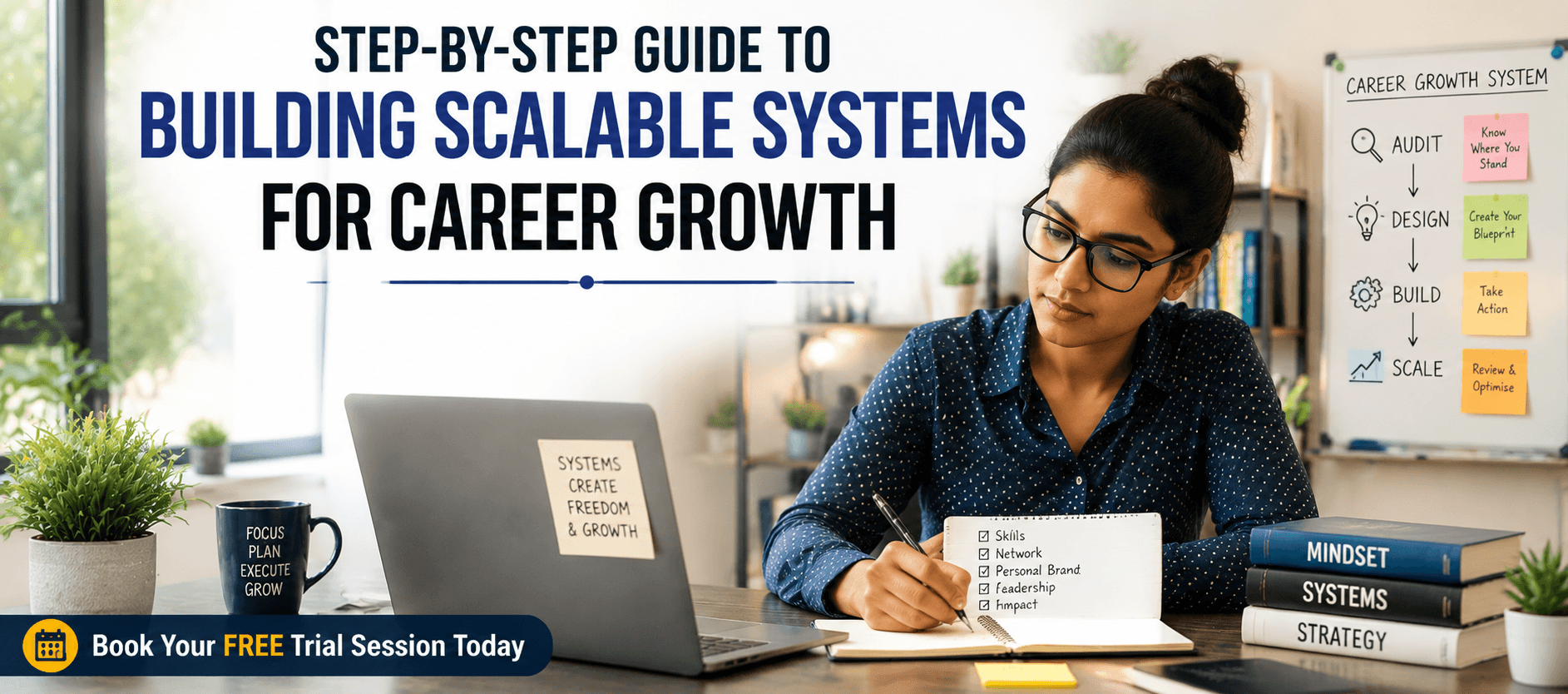
Phase 1: Audit – Know Where You Stand
Before diving into goal-setting, take stock of where you are. Conduct an audit to identify gaps in your skills, relationships, and personal brand. The audit phase helps you understand where you need to focus your efforts.
Map your skills against current market demands.
Review your relationships—do you have mentors or sponsors?
Evaluate your personal brand and online presence—does it reflect your goals?
Phase 2: Design – Create Your Blueprint
Once you have audit data, design a blueprint. Your blueprint should capture your professional narrative, key skills, and relationship goals, as well as clear milestones for the next 6–12 months.
Write your career positioning statement.
Identify key skills to develop in the next quarter.
Define 6-month and 2-year directional goals.
Phase 3: Build – Take Action
Put your blueprint into action. This is where you start executing your plan, focusing on skill acquisition, relationship building, and brand development.
Phase 4: Scale – Build Systems for Longevity
Once you’ve laid the foundation, the final phase is scaling. Regularly review and update your systems to keep them aligned with your evolving goals. Quarterly reviews ensure that your career growth remains intentional and strategic.
Common Mistakes or Pitfalls to Avoid
Many professionals make predictable errors when building their career systems. Here are some common pitfalls to avoid:
Optimizing for the current role instead of future growth: Focus too much on excelling in your current position without preparing for the next level.
Networking only when you need something: Building relationships should be a consistent, proactive effort, not just when you're job hunting.
Treating skill development as a one-time event: Continuously refine your skill set to stay relevant in your field.
Confusing activity with progress: Attending webinars or updating your CV without connecting those actions to clear goals doesn’t move the needle.
How Should You Use This Guidebook Effectively?
To make the most of this toolkit, follow this simple workflow:
Audit your current career state to identify gaps.
Design a personalized career blueprint with clear goals and milestones.
Build your career systems by taking consistent action.
Scale by reviewing and adapting your systems every quarter.
Key Takeaways:
Systems outperform hustle—build them once, and they work repeatedly.
The 4-layer career framework is essential for sustainable growth.
Consistent reflection and adjustment are key to building a scalable career.
Networking, skill development, and personal branding should be continuous, not transactional.
Your Next Step: Accelerate Your Career with PlanetSpark
Creating an impact-driven resume is not just about landing your next job—it’s about owning your professional story and presenting it with clarity, confidence, and credibility. When your resume clearly communicates value, results, and impact, opportunities follow naturally.
At PlanetSpark, we are committed to empowering working professionals with practical, outcome-focused resources that drive real career growth. From resume building and workplace communication to leadership presence and professional writing, our programs are designed to help you succeed in today’s fast-evolving job market.
Visit PlanetSpark Resources
to explore:
Career and resume-building guides
Workplace communication and professional writing resources
Skill-development tools curated for working professionals.
Want a deeper, hands-on experience?
ou can also book a free trial session to learn more about PlanetSpark’s Working Professional Courses, designed to accelerate your career through personalized coaching, real-world practice, and expert guidance.
Your career deserves more than generic advice.
It deserves clarity, confidence, and measurable impact.
Start building that advantage today—with PlanetSpark.
Personalized Communication Roadmaps
Record a video to get a AI generated personalized communication reports