
Step-by-Step Guide to Strategic Initiative Execution on Resume
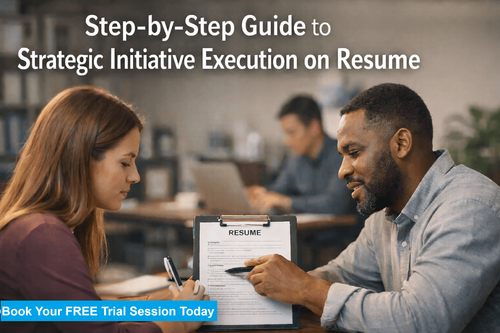

Strategic Initiative Execution Resume Guide: How to Showcase High-Impact Leadership and Measurable Results
In today’s competitive job market, having experience is no longer enough—what truly differentiates professionals is their ability to demonstrate impact. You may have led large initiatives, managed cross-functional teams, or contributed to transformation projects, but if your resume only lists responsibilities, you risk being overlooked.
Hiring managers and senior stakeholders are not just scanning for roles—they are evaluating outcomes, ownership, and the ability to execute strategy under complexity. A generic resume fails to communicate this depth, often leading to missed opportunities despite strong experience.
This is where a strategic initiative-focused resume becomes critical. Instead of describing what you did, it clearly shows what changed because of your work—positioning you as a results-driven professional capable of delivering business impact.
Download these resources and apply them alongside your daily work for improved clarity, productivity, and professional growth. You can also book a free trial to gain expert guidance and enhance your communication, problem-solving, and decision-making skills. The materials are designed in a clear, structured format to help professionals learn efficiently and implement insights with confidence.
Who Is This Blog For?
- Programme managers, transformation leads, and strategy professionals
- Consultants working on execution-focused engagements
- Operations heads and cross-functional project owners
- Professionals transitioning into strategy or leadership roles
- Mid-to-senior professionals preparing for high-impact roles
Why This Topic Matters Today?
In modern organisations, execution is as valuable as strategy. Companies are investing heavily in transformation, digital adoption, and cross-functional initiatives—creating demand for professionals who can not only plan but deliver outcomes.
However, most resumes fail to reflect this reality. As highlighted in the resource, professionals often:
- Focus on responsibilities instead of outcomes
- Underrepresent initiative ownership and scale
- Fail to quantify business impact
- Use generic formats that dilute strategic contributions
This creates a disconnect between actual capability and perceived value. In a market where hiring decisions are increasingly outcome-driven, this gap can significantly impact career progression.
Core Concept or Framework Explained
The core idea behind a strategic initiative execution resume is simple yet powerful: shift from activity-based storytelling to impact-driven storytelling.
Outcome-Focused Narrative
Instead of listing tasks, the resume answers a critical question—what changed because of your work?
This means every experience should highlight:
- Business impact
- Measurable results
- Strategic contribution
Structured Initiative Presentation
The templates follow a structured approach that includes:
- Initiative scope and context
- Role and ownership level
- Scale (team size, budget, duration)
- Quantified outcomes
This ensures clarity and makes it easier for recruiters to assess your value quickly.
Context-Specific Customisation
Different roles require different emphasis. The guide highlights that a resume for:
- Internal promotion
- External leadership role
- Consulting engagement
must be tailored differently to reflect expectations and context.
How This Blog and Guidebook Help You?
This blog and the underlying resource provide a complete system for building high-impact resumes.
You gain:
- 10 scenario-based resume templates aligned with real professional roles
- Clear guidance on structuring initiative-driven experience
- Practical frameworks to quantify and present outcomes
- ATS-friendly formatting for better visibility in hiring systems
The result is a resume that reflects leadership, execution capability, and measurable business impact—key factors in securing interviews.
Step-by-Step Breakdown
Step 1: Choose the Right Career Scenario
The resource includes 10 distinct templates tailored to specific professional contexts such as:
- Cross-functional programme leadership
- Organisational transformation
- Strategy-to-execution consulting
- Digital transformation and operations excellence
Selecting the right template ensures your resume aligns with your career narrative.
Step 2: Build a Strong Professional Summary
Your summary should immediately position you as an initiative leader.
Focus on:
- Years of experience
- Strategic scope
- One flagship achievement
Example approach:
- Highlight cross-functional leadership
- Mention measurable impact
- Show ability to translate strategy into execution
This sets the tone for the rest of your resume.
Step 3: Highlight Core Initiative Competencies
Instead of generic skills, focus on capabilities such as:
- Stakeholder alignment
- Programme governance
- KPI and OKR tracking
- Executive communication
These signal strategic capability rather than operational tasks.
Step 4: Present Flagship Initiatives
Every strong resume includes a detailed initiative section.
Structure it clearly:
- Scope: What was the initiative and its business objective
- Role: Your level of ownership
- Scale: Team size, budget, and duration
- Outcomes: Quantified results
For example:
- Reduced costs by a specific percentage
- Improved efficiency within a defined timeframe
- Delivered milestones ahead of schedule
This is where your impact becomes visible.
Step 5: Showcase Professional Experience with Outcomes
Each role should emphasise initiative-driven achievements.
Instead of writing:
- Managed project timelines
Write:
- Led a cross-functional initiative reducing decision latency by a measurable percentage
This shift dramatically improves perceived value.
Step 6: Use Scenario-Based Templates
The guide provides templates for different roles such as:
- Product-led growth initiative owner
- Market entry execution specialist
- Strategic partnerships builder
- Post-merger integration lead
Each template is designed to reflect specific expectations and outcomes relevant to that role.
Step 7: Quantify Everything
Quantification is non-negotiable in strategic roles.
Use metrics such as:
- Percentage improvements
- Revenue or cost impact
- Time savings
- Scale of operations
This transforms abstract contributions into concrete results.
Step 8: Optimise for ATS and Recruiters
The resource emphasises including relevant keywords such as:
- Programme governance
- Stakeholder alignment
- Change management
- Value realisation
At the same time, maintain readability and avoid keyword stuffing.
Step 9: Perform Final Quality Checks
Before submission:
- Replace all placeholders with real data
- Ensure every outcome includes a metric
- Align LinkedIn profile with resume summary
- Export in clean PDF format
These steps ensure professionalism and consistency.
Step 10: Customise for Every Application
Never use a template verbatim.
Tailor:
- Initiative scope
- Keywords
- Emphasis areas
based on the job description to maximise relevance.
Common Mistakes or Pitfalls to Avoid
Even experienced professionals make critical resume mistakes.
Common pitfalls include:
- Listing responsibilities instead of outcomes
- Failing to quantify results
- Using passive language instead of ownership-driven language
- Applying the same resume format across all roles
- Ignoring context-specific expectations
A better approach is to:
- Focus on measurable impact
- Use strong action-oriented language
- Tailor content for each application
How Should You Use This Guidebook Effectively?
To maximise value from this resource, follow a structured approach:
- Identify your career scenario and choose the closest template
- Replace all placeholders with accurate data
- Add quantified outcomes to every initiative
- Tailor the content for each job application
- Run the resume through an ATS checker
Time investment:
- 30–60 minutes for initial setup
- 10–15 minutes for tailoring per application
Consistency and iteration will significantly improve your results over time.
Key Takeaways
- Strategic resumes must focus on outcomes, not responsibilities
- Quantification is essential to demonstrate impact
- Structured templates improve clarity and readability
- Different roles require different resume emphasis
- Customisation is critical for every application
- Strong resumes highlight ownership, scale, and results
- ATS optimisation increases visibility and success rate
Your Next Step: Accelerate Your Career with PlanetSpark
Creating an impact-driven resume is not just about landing your next job—it’s about owning your professional story and presenting it with clarity, confidence, and credibility. When your resume clearly communicates value, results, and impact, opportunities follow naturally.
At PlanetSpark, we are committed to empowering working professionals with practical, outcome-focused resources that drive real career growth. From resume building and workplace communication to leadership presence and professional writing, our programs are designed to help you succeed in today’s fast-evolving job market.
Visit https://www.planetspark.in/resources to explore:
- Career and resume-building guides
- Workplace communication and professional writing resources
- Skill-development tools curated for working professionals
Want a deeper, hands-on experience?
You can also book a free trial session to learn more about PlanetSpark’s Working Professional Courses, designed to accelerate your career through personalised coaching, real-world practice, and expert guidance.
Your career deserves more than generic advice.
It deserves clarity, confidence, and measurable impact.
Personalized Communication Roadmaps
Record a video to get a AI generated personalized communication reports