
Step-by-Step Job Search Planning Roadmap for Professionals
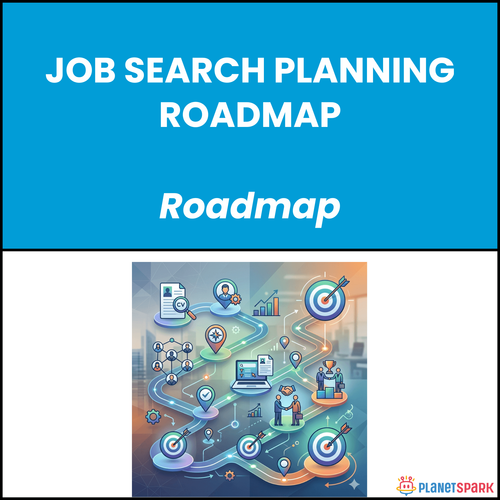

Job Search Planning Roadmap: A Step-by-Step System to Land Your Next Role Faster and Smarter
Most professionals don’t struggle with job searching because they lack skills—they struggle because they lack a system. They update their resume at the last minute, apply to dozens of roles, and wait. Days turn into weeks, and weeks into frustration. Silence, rejection, and uncertainty start to take over.
The truth is simple: the modern job market no longer rewards effort alone. It rewards clarity, strategy, and consistency. Without a structured approach, even highly capable professionals get stuck in a cycle of low responses and missed opportunities.
This is exactly where a structured job search roadmap changes everything. Instead of reacting to opportunities, you start creating them. Instead of guessing, you follow a proven system that guides you from confusion to clarity—and from applications to offers.
Book your free trial session today with Planetspark.
Download for more details or PDF file.
Who Is This Blog For?
- Working professionals with 0–15 years
of experience aiming for faster career growth
- Mid-career professionals seeking role upgrades, promotions, or better organisations
- Career changers looking to reposition themselves strategically
- Consultants and freelancers building a stronger pipeline of opportunities
- Job seekers struggling with low interview conversion despite strong experience
Why This Topic Matters Today?
The job search landscape has fundamentally changed. Applying to jobs is no longer enough. In fact, most professionals spend the majority of their time on job boards—yet only a small percentage of interviews come from them.
A significant portion of roles today are filled through referrals, networking, and proactive outreach. At the same time, recruiters spend only seconds scanning resumes and rely heavily on structured evaluation methods.
Without a clear strategy, professionals face:
- Directionless searching with no defined goals
- Generic applications that fail to stand out
- Low interview conversion rates
- Burnout due to inconsistent effort and lack of results
A structured roadmap solves these challenges by introducing clarity, focus, and measurable progress into your job search.
Core Concept or Framework Explained
At the heart of this roadmap is a six-phase job search system. This framework reflects how successful professionals actually navigate the hiring process in today’s market.
The six phases include:
- Self-Assessment: Understanding your strengths, values, and goals
- Positioning: Crafting your resume, LinkedIn, and professional narrative
- Application Strategy: Applying strategically with a clear plan
- Networking: Building relationships that unlock hidden opportunities
- Interview Mastery: Converting conversations into offers
- Offer and Negotiation: Securing the best possible outcome
This system is not linear. Professionals often revisit phases—especially positioning—as their understanding evolves. The key is consistency and intentional execution.
How This Blog and Guidebook Help You?
This blog and the roadmap together provide:
- A clear, structured approach to job searching
- Practical frameworks you can apply immediately
- Checklists and templates to save time and improve execution
- Real-world examples of successful job search strategies
- A repeatable system that works across industries and experience levels
The outcome is simple: instead of guessing what to do next, you follow a proven process that increases your chances of landing the right role faster.
Step-by-Step Breakdown
Step 1: Self-Assessment – Know What You’re Actually Looking For
Most professionals skip this step—and pay for it later. Without clarity, applications become scattered and ineffective.
This phase focuses on defining:
- What energises you in your work
- Your core strengths and unique advantages
- Your non-negotiable values in a workplace
- Your long-term career direction
A structured self-assessment helps you:
- Apply to fewer but more relevant roles
- Communicate your goals with confidence
- Make better career decisions
Even a focused 45-minute session on self-assessment can significantly improve your job search outcomes.
Step 2: Positioning – Build a Professional Brand That Gets You Hired
Positioning is how you communicate your value to the market. It is not about listing responsibilities—it is about telling a compelling professional story.
Strong positioning includes:
- A clear value proposition
- Achievement-driven resume content
- A keyword-optimised LinkedIn profile
- A concise and confident professional pitch
An effective resume follows key principles:
- Strong action verbs at the start of each bullet
- Quantified achievements in most statements
- Clear, scannable formatting
- Alignment with job-specific keywords
Positioning is not a one-time task—it evolves as you refine your goals and messaging.
Step 3: Application Strategy – Apply Smarter, Not Harder
One of the biggest mistakes professionals make is over-relying on job boards. A smarter approach balances effort across multiple channels.
The 70/30 rule defines this strategy:
- 70 percent effort on networking and proactive outreach
- 30 percent effort on job board applications
A strong application strategy includes:
- Tailoring your resume for each role
- Tracking applications consistently
- Following up with hiring managers
- Maintaining weekly activity targets
This structured approach increases interview conversion while reducing wasted effort.
Step 4: Networking – Building Relationships That Open Doors
Networking is often avoided—but it is the most powerful lever in a job search.
Effective networking focuses on:
- Reaching out to existing contacts
- Connecting with professionals in target companies
- Conducting informational interviews
- Engaging consistently on professional platforms
Key principles include:
- Personalised outreach messages
- Clear and specific conversation requests
- Genuine curiosity and value-driven interactions
When done right, networking leads to referrals, insights, and opportunities that are never publicly posted.
Step 5: Interview Mastery – Converting Conversations Into Offers
Getting interviews is only half the battle. Converting them requires preparation and communication skills.
Successful candidates:
- Research the company thoroughly
- Prepare structured stories using proven frameworks
- Practise responses out loud
- Ask thoughtful, relevant questions
The STAR method remains central to interview success:
- Situation
- Task
- Action
- Result
- Reflection
Adding reflection demonstrates self-awareness and growth—qualities employers value highly.
Step 6: Offer and Negotiation – Getting What You Are Worth
Many professionals accept offers without negotiation—often leaving significant value on the table.
A strong negotiation approach includes:
- Researching market salary benchmarks
- Defining your ideal and acceptable range
- Evaluating the full compensation package
- Communicating confidently and professionally
Negotiation is expected, not optional. It signals confidence, clarity, and business understanding.
Common Mistakes or Pitfalls to Avoid
- Using a generic resume for every application
- Relying only on job boards for opportunities
- Failing to follow up after applying
- Preparing inadequately for interviews
- Accepting the first offer without negotiation
- Searching inconsistently without a weekly system
Avoiding these mistakes alone can dramatically improve your job search outcomes.
How Should You Use This Guidebook Effectively?
To get maximum value from this roadmap:
- Read the entire guide once to understand the full system
- Focus on one phase at a time based on your current stage
- Complete worksheets and action steps as you go
- Allocate 8–10 focused hours per week for your job search
- Track your activities and review progress weekly
- Revisit key phases, especially positioning, as needed
Consistency matters more than intensity. A steady, structured approach delivers better results than sporadic effort.
Key Takeaways
- Treat your job search as a structured project, not a side activity
- Focus on clarity before sending applications
- Build strong positioning before going to market
- Prioritise networking over job boards
- Prepare thoroughly for every interview
- Always negotiate your offer professionally
- Maintain a consistent weekly rhythm for sustained progress
Your Next Step: Accelerate Your Career with PlanetSpark
Creating an impact-driven resume is not just about landing your next job—it’s about owning your professional story and presenting it with clarity, confidence, and credibility. When your resume clearly communicates value, results, and impact, opportunities follow naturally.
At PlanetSpark, we are committed to empowering working professionals with practical, outcome-focused resources that drive real career growth. From resume building and workplace communication to leadership presence and professional writing, our programs are designed to help you succeed in today’s fast-evolving job market.
Visit https://www.planetspark.in/resources to explore:
- Career and resume-building guides
- Workplace communication and professional writing resources
- Skill-development tools curated for working professionals
Want a deeper, hands-on experience?
You can also book a free trial session to learn more about PlanetSpark’s Working Professional Courses, designed to accelerate your career through personalised coaching, real-world practice, and expert guidance.
Your career deserves more than generic advice.
It deserves clarity, confidence, and measurable impact.
Start building that advantage today—with PlanetSpark.
Personalized Communication Roadmaps
Record a video to get a AI generated personalized communication reports