
Storytelling Skills for Professionals: Career Growth Guide
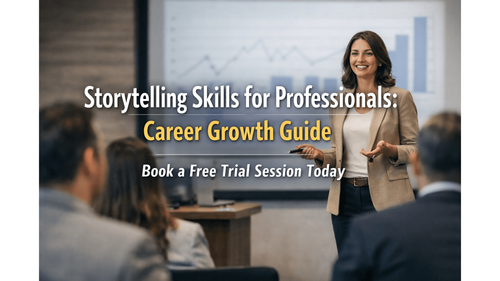

Master Workplace Storytelling: A Practical Guide to Communicating Ideas That Influence, Persuade, and Drive Results
You can have the best idea in the room, the strongest analysis, or the most innovative solution—and still be ignored. This is the reality many working professionals face today. In fast-paced workplaces filled with meetings, emails, and constant noise, ideas do not succeed based on quality alone. They succeed based on how well they are communicated.
This is where workplace storytelling becomes a game-changer. It is not about being dramatic or charismatic. It is about structuring your message in a way that captures attention, builds clarity, and drives action. This guide transforms everyday communication into powerful narratives that influence decisions, build trust, and accelerate your career growth.
Book your free trial session today with Planetspark.
Download for more details
Who Is This Blog For?
- Working professionals looking to improve
communication and influence at work
- Mid-career employees aiming for leadership roles and stakeholder visibility
- Managers and team leads responsible for presenting ideas and driving decisions
- Consultants, analysts, and specialists who work with data and insights
- Professionals struggling with ignored emails, unclear presentations, or lack of impact
Why This Topic Matters Today?
Workplace communication has evolved significantly. Attention spans are shrinking, inboxes are overflowing, and decision-makers expect clarity within seconds.
Many professionals face common challenges:
- Ideas get ignored because they lack context
- Data overwhelms instead of persuading
- Emails go unread or misunderstood
- Presentations feel like information overload
- Influence depends more on title than clarity
In this environment, storytelling is no longer optional. It is a critical professional skill. The ability to turn information into a clear, structured narrative determines whether your message gets attention—or gets lost.
Core Concept or Framework Explained
At the heart of effective workplace communication is a simple but powerful structure: Context, Conflict, Resolution.
- Context sets the stage and explains what is happening
- Conflict introduces the challenge, gap, or opportunity
- Resolution presents the action, recommendation, or decision
This three-part structure ensures your communication is clear, purposeful, and action-oriented.
Building on this foundation, the guide introduces powerful frameworks:
- Story Spine: Situation, Complication, Insight, Recommendation
- SCR Framework: Situation, Complication, Resolution for quick conversations
- BLUF Principle: Bottom Line Up Front for writing
- Data Story Framework: Insight-led storytelling with numbers
- Presentation Arc: Stakes, point of view, evidence, objection, and action
These frameworks transform scattered information into structured, persuasive communication.
How This Blog and Guidebook Help You?
This blog and guidebook equip you with practical tools to:
- Structure your communication for clarity and impact
- Turn data into meaningful insights that drive decisions
- Write emails and reports that get responses
- Deliver presentations that influence outcomes
- Communicate confidently in meetings and conversations
The result is not just better communication—but stronger professional credibility, visibility, and career growth.
Step-by-Step Breakdown
Step 1: Understand What Workplace Storytelling Really Means
Workplace storytelling is not about entertainment. It is about guiding your audience from confusion to clarity.
Every communication—whether a report, email, or presentation—should:
- Start with clear context
- Introduce a meaningful challenge or insight
- End with a clear action or decision
This structure ensures your message is not just heard but understood and acted upon.
Step 2: Choose the Right Story Format for the Situation
Different situations require different storytelling formats:
- Problem–Solution Arc for proposals and pitches
- Data Story for reports and analytics
- Before/After Frame for change and improvement
- Journey Narrative for career or team communication
- Strategic Memo for leadership communication
Selecting the right format ensures your message fits the context and audience expectations.
Step 3: Know Your Audience Before You Communicate
Effective communication starts with understanding your audience.
Ask yourself:
- What do they care about most?
- What do they already know?
- What do I need from them?
When you align your message with your audience’s priorities, your communication becomes relevant, clear, and actionable.
Step 4: Build Your Story Spine
The Story Spine provides a structured way to communicate:
- Situation: Current context
- Complication: Problem or challenge
- Insight: Key finding
- Recommendation: Clear action
This framework ensures your message flows logically and builds a compelling case before presenting the solution.
Step 5: Make Data Tell a Story
Data alone does not persuade—insight does.
To make data effective:
- Lead with the insight, not the numbers
- Focus on one key metric
- Provide comparison for context
- Explain the “so what” behind every number
- End with a recommended action
This approach transforms data from noise into decision-making power.
Step 6: Write Clear and Actionable Messages Using BLUF
The BLUF principle ensures clarity in written communication:
- Start with your main point
- Support it with evidence
- Add minimal context
- End with a clear call to action
This structure respects the reader’s time and increases response rates significantly.
Step 7: Present Like a Storyteller
Effective presentations follow a narrative structure:
- Open with stakes or a key problem
- Introduce your point of view early
- Build your case with evidence
- Address objections proactively
- Close with a clear action
This approach keeps your audience engaged and focused on outcomes rather than information overload.
Step 8: Use Storytelling in Everyday Conversations
Daily interactions shape your professional reputation.
The SCR framework helps structure quick conversations:
- Situation: Set context
- Complication: Highlight the issue
- Resolution: Provide a recommendation
This ensures even short conversations are clear, concise, and impactful.
Step 9: Apply Storytelling Consistently Through Practice
A structured 30-day practice approach helps build mastery:
- Week 1: Apply the Story Spine
- Week 2: Focus on audience analysis
- Week 3: Improve data storytelling
- Week 4: Integrate full presentation frameworks
Consistent practice turns storytelling into a natural communication habit.
Common Mistakes or Pitfalls to Avoid
- Burying the main point instead of leading with it
- Presenting data without explaining its meaning
- Ending communication without a clear ask
- Providing too much or too little detail
- Ignoring potential objections
- Starting with weak or generic openings
- Ending presentations passively without reinforcing the message
Avoiding these mistakes significantly improves clarity and impact.
How Should You Use This Guidebook Effectively?
To get the best results from this guide:
- Read it once to understand the frameworks
- Apply one framework at a time to real situations
- Spend 5 minutes planning before important communication
- Practise consistently in everyday interactions
- Revisit and refine your approach regularly
Even a small investment of time can lead to significant improvements in communication effectiveness.
Key Takeaways
- Lead with your main point in every communication
- Use structured frameworks like Story Spine and SCR
- Always align your message with your audience
- Turn data into insights with clear meaning
- End every communication with a specific action
- Practise storytelling daily in real scenarios
- Consistency is the key to long-term improvement
Your Next Step: Accelerate Your Career with PlanetSpark
Creating an impact-driven resume is not just about landing your next job—it’s about owning your professional story and presenting it with clarity, confidence, and credibility. When your resume clearly communicates value, results, and impact, opportunities follow naturally.
At PlanetSpark, we are committed to empowering working professionals with practical, outcome-focused resources that drive real career growth. From resume building and workplace communication to leadership presence and professional writing, our programs are designed to help you succeed in today’s fast-evolving job market.
Visit https://www.planetspark.in/resources to explore:
- Career and resume-building guides
- Workplace communication and professional writing resources
- Skill-development tools curated for working professionals
Want a deeper, hands-on experience?
You can also book a free trial session to learn more about PlanetSpark’s Working Professional Courses, designed to accelerate your career through personalised coaching, real-world practice, and expert guidance.
Your career deserves more than generic advice.
It deserves clarity, confidence, and measurable impact.
Start building that advantage today—with PlanetSpark.
Personalized Communication Roadmaps
Record a video to get a AI generated personalized communication reports