
Strategic Conflict Management Between Teams: Pro Guide 2026
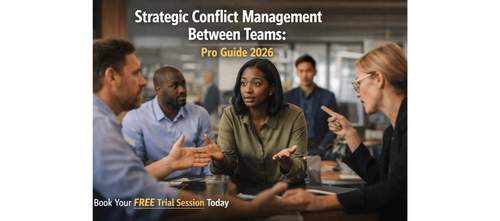

Effective Conflict Management at Work: A Practical Approach to Converting Team Challenges into Collaboration and Tangible Results
In today’s collaborative workplaces, conflict between teams is not just common—it is inevitable. Whether it’s marketing versus product, operations versus sales, or leadership versus execution teams, disagreements often arise around priorities, timelines, and responsibilities. Yet, most professionals are never formally trained to handle these situations strategically.
The result? Miscommunication escalates into blame cycles, productivity drops, and relationships deteriorate. Many leaders either avoid conflict until it becomes unmanageable or handle it reactively, damaging trust and credibility in the process.
But here’s the reality: conflict is not the problem. Poorly managed conflict is.
This guidebook provides a structured, practical approach to transforming team friction into alignment, trust, and measurable outcomes. Instead of relying on instinct or emotion, you learn how to diagnose, manage, and prevent conflict with clarity and confidence.
It equips you with actionable frameworks to identify the root causes of conflict—whether they stem from misaligned goals, unclear ownership, communication gaps, or resource constraints. You’ll also learn how to facilitate constructive conversations, align stakeholders with competing priorities, and create shared accountability across teams.
More importantly, this guide shifts your perspective: from viewing conflict as a disruption to recognizing it as a powerful opportunity for innovation, stronger collaboration, and better decision-making. When managed strategically, conflict can surface hidden risks, challenge assumptions, and ultimately lead to more resilient teams and improved business outcomes.
By the end of this guide, you won’t just be reacting to conflict—you’ll be leading through it with intention, structure, and impact.
Download these resources and apply them alongside your daily work for improved clarity, productivity, and professional growth. You can also book a free trial to gain expert guidance and enhance your communication, problem-solving, and decision-making skills. The materials are designed in a clear, structured format to help professionals learn efficiently and implement insights with confidence.
Who Is This Blog For?
- Managers and team leads handling
cross-functional conflicts
- Working professionals dealing with inter-team dependencies
- Consultants navigating stakeholder disagreements
- Career switchers stepping into leadership or collaborative roles
- Leaders aiming to build high-performing, aligned teams
Why This Topic Matters Today?
In modern organisations, work rarely happens in isolation. Teams are interconnected, interdependent, and often competing for shared resources, timelines, and outcomes.
According to the guidebook, most workplace conflicts are not caused by difficult individuals but by deeper structural issues such as:
- Misaligned goals and KPIs
- Unclear ownership and responsibilities
- Ineffective communication systems
- Lack of defined escalation paths
When left unresolved, these conflicts lead to:
- Recurring blame cycles between teams
- Escalations that damage professional relationships
- Delayed projects and missed business outcomes
- Reduced trust and collaboration
In this environment, conflict management is no longer a soft skill—it is a strategic leadership capability.
Core Concept or Framework Explained
The guidebook introduces a powerful five-stage strategic conflict management journey that transforms how professionals approach team disagreements.
This framework is structured into five progressive modules:
Diagnose the Conflict
Before solving anything, you must understand the type and root cause. Conflicts typically fall into four categories:
- Resource conflicts: Competition for budget, tools, or time
- Process conflicts: Disagreements on workflows and execution
- Goal conflicts: Misaligned priorities or KPIs
- Relationship conflicts: Trust issues or emotional tension
Choose Your Strategy
Instead of reacting emotionally, you select a strategy based on context using the Thomas-Kilmann model:
- Collaborate
- Compete
- Compromise
- Avoid
- Accommodate
The key is flexibility—not using the same approach every time.
Facilitate the Conversation
Conflict resolution is structured into three phases:
- Opening: Establish shared intent and psychological safety
- Exploration: Understand root causes without blame
- Resolution: Create mutually agreed actions
Rebuild Trust and Alignment
Resolution is not the end. Trust must be rebuilt through consistent actions across:
- Competence
- Integrity
- Benevolence
Prevent Future Conflict
Long-term success comes from designing systems that reduce conflict, such as:
- Clear ownership structures
- Regular cross-team communication
- Defined escalation protocols
How This Blog and Guidebook Help You?
This blog and guidebook provide a practical, actionable toolkit for managing workplace conflict effectively.
You gain:
- A repeatable framework for handling any type of team conflict
- Structured conversation techniques that reduce escalation
- Decision-making tools to choose the right strategy every time
- Real-world examples to apply concepts immediately
- Systems to prevent recurring conflicts
The result is stronger relationships, improved productivity, and enhanced leadership credibility.
Step-by-Step Breakdown
Step 1: Diagnose the Conflict First
Before jumping into action, identify what you are actually dealing with.
Ask yourself:
- Is this about resources, process, goals, or relationships?
- Who are the key stakeholders?
- What is the real underlying issue?
The guidebook emphasises that a well-mapped conflict is already partially resolved because it separates facts from assumptions.
Step 2: Choose Your Conflict Strategy Intentionally
Avoid using the same approach in every situation.
Use key decision factors:
- Importance of the relationship
- Stakes of the outcome
- Time available
- Power dynamics
- Emotional intensity
For example:
- High stakes + long-term relationship → Collaborate
- Time pressure → Compromise
- Non-negotiable outcomes → Compete
This structured thinking prevents poor decisions driven by emotion.
Step 3: Facilitate the Resolution Conversation
Most professionals fail because they enter conversations unprepared.
Use the three-phase structure:
Opening
Set the tone with shared intent rather than blame.
Example approach: Focus on understanding before defending.
Exploration
Ask open-ended questions to uncover root causes:
- What impact has this had on your team?
- When did this become a problem?
This phase is critical—skipping it leads to unresolved tension.
Resolution
Co-create solutions with clear next steps:
- Define one actionable change
- Set measurable outcomes
- Assign responsibility
Step 4: Rebuild Trust After Conflict
Resolving the issue is only the beginning. Trust must be rebuilt deliberately.
Focus on three signals:
- Competence: Deliver on commitments consistently
- Integrity: Communicate transparently
- Benevolence: Show genuine support for the other team
The guidebook highlights that small, consistent actions over 30 days are more effective than one large gesture.
Step 5: Prevent Future Conflict Structurally
The most effective professionals don’t just resolve conflict—they prevent it.
Focus on three layers:
Structural
- Define ownership clearly
- Use tools like RACI frameworks
- Establish escalation paths
Relational
- Conduct regular cross-team meetings
- Build ongoing communication channels
Cultural
- Encourage open dialogue
- Normalise healthy disagreement
By fixing systems, you eliminate recurring issues at the root.
Common Mistakes or Pitfalls to Avoid
Even experienced professionals make predictable mistakes.
Common errors include:
- Avoiding conflict until it escalates
- Entering conversations with a fixed solution
- Escalating issues too early to senior leadership
- Focusing on personalities instead of processes
- Failing to document agreements
- Treating resolution as the end of the process
- Using the same strategy for every situation
Better approach:
- Diagnose before acting
- Explore before solving
- Document outcomes clearly
- Follow through consistently
How Should You Use This Guidebook Effectively?
To maximise impact, use the guidebook in three modes:
Read-through Mode
- When entering a new conflict situation
Reference Mode
- Use specific frameworks as needed
Worksheet Mode
- Apply tools like conflict mapping and trust plans
Suggested workflow:
- Spend 10–15 minutes diagnosing the issue
- Use the strategy matrix before conversations
- Prepare using the checklist 24 hours in advance
- Apply the 30-day trust rebuild plan post-resolution
Consistency and repetition are key to building this skill.
Key Takeaways
- Conflict is a natural part of productive work—not a failure
- Accurate diagnosis is the foundation of effective resolution
- Strategy selection must be intentional, not instinctive
- Structured conversations lead to better outcomes
- Trust rebuilding requires consistent, visible actions
- Prevention depends on strong systems, not just communication
- Conflict intelligence is a learnable, high-impact skill
Your Next Step: Accelerate Your Career with PlanetSpark
Creating an impact-driven resume is not just about landing your next job—it’s about owning your professional story and presenting it with clarity, confidence, and credibility. When your resume clearly communicates value, results, and impact, opportunities follow naturally.
At PlanetSpark, we are committed to empowering working professionals with practical, outcome-focused resources that drive real career growth. From resume building and workplace communication to leadership presence and professional writing, our programs are designed to help you succeed in today’s fast-evolving job market.
Visit https://www.planetspark.in/resources to explore:
- Career and resume-building guides
- Workplace communication and professional writing resources
- Skill-development tools curated for working professionals
Want a deeper, hands-on experience?
You can also book a free trial session to learn more about PlanetSpark’s Working Professional Courses, designed to accelerate your career through personalised coaching, real-world practice, and expert guidance.
Your career deserves more than generic advice.
It deserves clarity, confidence, and measurable impact.
Start building that advantage today—with PlanetSpark.
Personalized Communication Roadmaps
Record a video to get a AI generated personalized communication reports