
Strategic Enterprise Operations Resume Guide for 2026
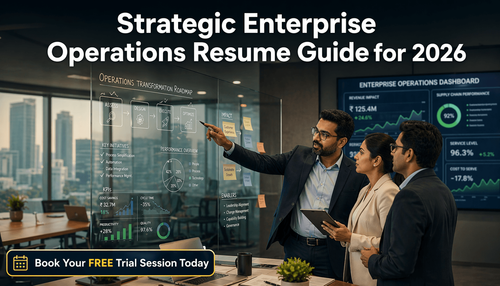

Strategic Enterprise Operations Resume Templates: Build High-Impact CVs That Showcase Measurable Business Results
In today’s competitive job market, operations professionals are expected to do far more than manage processes—they are expected to drive enterprise-wide impact. Yet, many highly capable professionals struggle to communicate this effectively on their resumes. Instead of highlighting strategic contributions, they fall into the trap of listing routine responsibilities, which fails to capture the attention of hiring managers or pass applicant tracking systems.
If your resume currently sounds like a list of tasks rather than a story of transformation, you are not alone. Operations roles—especially at the enterprise level—require a distinct approach that emphasises scale, strategy, and measurable outcomes. Without this, even strong candidates risk being overlooked for high-impact roles.
The resource addresses this exact challenge by offering structured, scenario-driven resume templates tailored for enterprise operations professionals. These templates help you clearly communicate operational depth, leadership capability, and measurable business value—ensuring your resume reflects the true impact of your work.
Download these resources and apply them alongside your daily work for improved clarity, productivity, and professional growth. You can also book a free trial to gain expert guidance and enhance your communication, problem-solving, and decision-making skills. The materials are designed in a clear, structured format to help professionals learn efficiently and implement insights with confidence.
Who Is This Blog For?
- Operations professionals targeting enterprise-level roles for the first time
- Mid-career professionals transitioning into strategic operations leadership
- Consultants moving into in-house enterprise operations roles
- Senior leaders applying for Director or VP-level operations positions
- Professionals returning from consulting or career breaks
- Supply chain, procurement, and shared services leaders seeking role upgrades
Why This Topic Matters Today?
Enterprise operations have evolved into a strategic function that directly impacts organisational performance, cost efficiency, and scalability. As highlighted in the resource, generic resumes fail operations professionals because they bury strategic contributions under task-based descriptions.
Key challenges in today’s hiring environment include:
- Recruiters prioritising measurable outcomes over responsibilities
- Heavy reliance on ATS systems that scan for specific operational keywords
- Increasing demand for cross-functional leadership and P&L accountability
- Need to demonstrate impact across geographies, teams, and budgets
Without a structured approach, even experienced professionals struggle to present their work in a way that aligns with these expectations.
Core Concept or Framework Explained
The central idea behind this guide is simple yet powerful: your resume must communicate enterprise-level impact, not operational activity.
Instead of answering “What tasks did you perform?”, your resume should clearly demonstrate:
- The scale of operations you managed
- The strategic initiatives you led
- The measurable outcomes you delivered
The templates follow a scenario-based framework, where each resume structure is aligned with a specific enterprise operations role. According to the template directory on page 3, these include:
- Enterprise Operations Transformation Lead
- Strategic Supply Chain Operations Manager
- Cross-Functional Programme Operations Director
- Business Process Excellence & Lean Operations Lead
- Enterprise Technology Operations Manager
- Mid-Career Operations Specialist Entering Enterprise
- Operations Consultant Transitioning to In-House Role
- Global Shared Services Operations Head
- Enterprise Procurement & Vendor Operations Lead
- Operations Career Re-Entry After Executive Consulting Break
Each template is designed to reflect real-world hiring scenarios, ensuring your resume speaks directly to the expectations of the role.
How This Blog and Guidebook Help You?
This guidebook helps transform your resume into a strategic communication tool that:
- Highlights operational leadership and enterprise-level thinking
- Demonstrates measurable impact through quantified achievements
- Aligns your resume with industry-specific keywords for ATS success
- Positions you as a high-value candidate for leadership roles
- Differentiates your profile in competitive hiring processes
By using these templates, you move from generic presentation to targeted storytelling—making your resume significantly more effective.
Step-by-Step Breakdown
Select the Right Template for Your Role
Start by identifying the scenario that best matches your experience. Each template corresponds to a specific operational context, such as supply chain management, shared services leadership, or programme operations.
For example:
- If you manage multi-region programmes, choose the Cross-Functional Programme Operations Director template
- If you specialise in process improvement, use the Lean Operations template
- If you are transitioning into enterprise roles, select the mid-career transition template
Build a Strong Professional Summary
Your summary should clearly establish:
- Years of experience
- Area of expertise
- Key achievements or outcomes
For instance, the template on page 4 emphasises showcasing transformation programmes, budgets, and measurable results directly in the summary.
Highlight Core Competencies Strategically
Instead of listing generic skills, organise your competencies into categories such as:
- Transformation strategy
- Process re-engineering
- Change management
- P&L accountability
This structured presentation enhances readability and ATS performance.
Showcase Measurable Impact in Experience
Your professional experience section should focus on:
- Strategic initiatives led
- Scale of operations (teams, budgets, geographies)
- Measurable outcomes
For example, the supply chain template on page 5 highlights:
- Vendor ecosystem management
- Demand forecasting improvements
- Cost savings achieved through strategic initiatives
This ensures every bullet point demonstrates value.
Use Metrics to Strengthen Credibility
Every achievement should include:
- Percentage improvements
- Cost savings
- Time reductions
- Operational efficiencies
The guide repeatedly emphasises that numbers are essential for demonstrating impact and credibility.
Tailor for Each Application
Customise your resume by:
- Aligning keywords with the job description
- Highlighting relevant experience
- Adjusting competencies based on role requirements
This is critical for passing ATS filters and improving recruiter engagement.
Common Mistakes or Pitfalls to Avoid
The guide identifies several common errors that reduce resume effectiveness:
- Listing responsibilities instead of outcomes
- Failing to include scale indicators like budget and team size
- Using vague language such as “assisted” or “involved”
- Ignoring ATS keyword optimisation
- Using a one-size-fits-all resume format
- Leaving placeholders or metrics incomplete
Avoiding these mistakes significantly improves your chances of being shortlisted.
How Should You Use This Guidebook Effectively?
To get the best results from this template pack, follow a structured approach:
- Identify the most relevant template based on your experience
- Replace all placeholders with real, specific data
- Add quantifiable metrics to every achievement
- Customise keywords for each job application
- Ensure formatting is clean and ATS-friendly
- Review for clarity, impact, and consistency
The guide emphasises that these templates are starting points—not finished resumes. Customisation is essential for success.
Key Takeaways
- Enterprise operations resumes must focus on measurable impact, not tasks
- Scenario-based templates help align your resume with specific roles
- Quantifying achievements is critical for credibility and differentiation
- Tailoring your resume improves ATS performance and recruiter attention
- Structured formatting enhances clarity and professionalism
- Avoid generic language and highlight leadership, scale, and outcomes
Your Next Step: Accelerate Your Career with PlanetSpark
Creating an impact-driven resume is not just about landing your next job—it’s about owning your professional story and presenting it with clarity, confidence, and credibility. When your resume clearly communicates value, results, and impact, opportunities follow naturally.
At PlanetSpark, we are committed to empowering working professionals with practical, outcome-focused resources that drive real career growth. From resume building and workplace communication to leadership presence and professional writing, our programs are designed to help you succeed in today’s fast-evolving job market.
Visit https://www.planetspark.in/resources to explore:
- Career and resume-building guides
- Workplace communication and professional writing resources
- Skill-development tools curated for working professionals
Want a deeper, hands-on experience?
You can also book a free trial session to learn more about PlanetSpark’s Working Professional Courses, designed to accelerate your career through personalised coaching, real-world practice, and expert guidance.
Your career deserves more than generic advice.
It deserves clarity, confidence, and measurable impact.
Personalized Communication Roadmaps
Record a video to get a AI generated personalized communication reports