
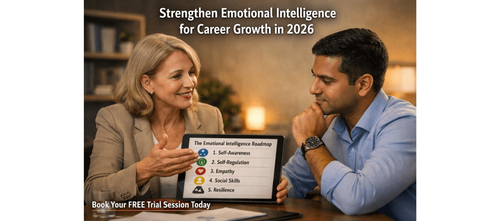
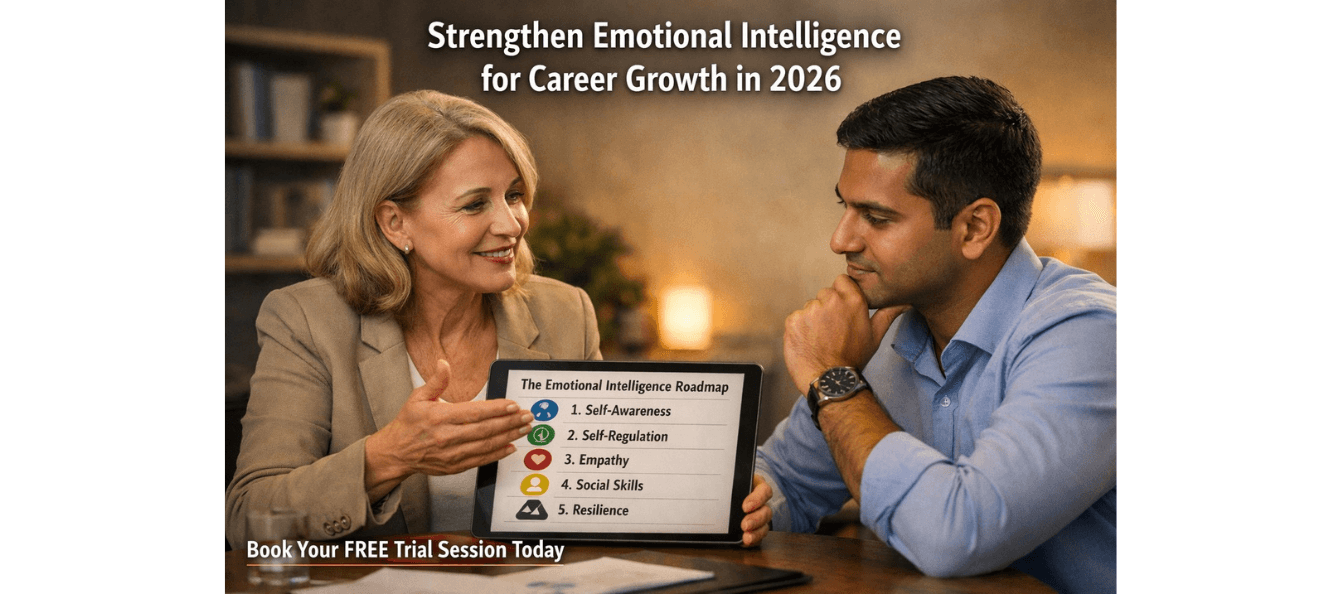
Strengthen Emotional Intelligence for Career Growth in 2026

Elevating Emotional Intelligence for Workplace Success: A Practical 5-Step EQ Roadmap for Professionals
If you’ve ever felt overlooked for promotions despite strong technical skills, struggled to manage workplace conflict, or found yourself reacting under pressure instead of responding thoughtfully—you’re not alone. Many professionals hit a plateau not because they lack expertise, but because they lack one critical skill: emotional intelligence.
In today’s fast-paced, high-stakes work environments, success is no longer determined by what you know alone. It’s defined by how you handle pressure, communicate with others, navigate conflict, and build trust. Yet, emotional intelligence remains one of the least formally taught and most undervalued professional capabilities.
This guide bridges that gap. It provides a structured, practical roadmap to help you build emotional intelligence step by step—so you can move from being reactive to intentional, from misunderstood to trusted, and from competent to truly influential.
Download these resources and apply them alongside your daily work for improved clarity, productivity, and professional growth. You can also book a free trial to gain expert guidance and enhance your communication, problem-solving, and decision-making skills. The materials are designed in a clear, structured format to help professionals learn efficiently and implement insights with confidence.
Who Is This Blog For?
- Early- to mid-career professionals looking to accelerate growth
- Career changers adapting to new workplace dynamics
- Managers and team leaders aiming to improve leadership presence
- Consultants and client-facing professionals handling high-stakes interactions
- Professionals struggling with conflict, feedback, or workplace relationships
Why This Topic Matters Today?
Emotional intelligence is no longer a “nice-to-have” skill—it is a career-defining capability. While technical skills help you get hired, emotional intelligence determines how far you go.
Many professionals face challenges such as:
- Feeling reactive instead of composed under pressure
- Struggling to “read the room” in meetings or negotiations
- Difficulty giving or receiving feedback without tension
- Conflict that drains energy and slows progress
- Inconsistent leadership presence
Research highlights a critical gap: while most professionals believe they are self-aware, only a small percentage actually demonstrate true self-awareness in practice. This gap leads to misunderstandings, stalled growth, and missed opportunities.
In a workplace that increasingly values collaboration, adaptability, and leadership, emotional intelligence is what separates average performers from trusted leaders.
Core Concept or Framework Explained
Emotional intelligence is not a single trait—it is a collection of interconnected skills that develop over time. The guide introduces a structured 5-part EQ roadmap designed to build these skills progressively.
The framework operates across three domains:
- Self-awareness
- Emotional management
- Interpersonal effectiveness
The five competencies are:
- Self-awareness: Understanding your emotions and triggers
- Self-regulation: Managing responses under pressure
- Empathy: Accurately reading others
- Social skills: Communicating and influencing effectively
- Motivated resilience: Sustaining performance over time
Each step builds on the previous one. Without self-awareness, regulation becomes inconsistent. Without regulation, empathy becomes reactive. Over time, integrating all five creates a stable, reliable way of operating—especially under pressure.
How This Blog and Guidebook Help You?
This roadmap is designed for real-world application, not theory. It helps you:
- Improve how others experience working with you
- Communicate more effectively in high-stakes situations
- Handle conflict without damaging relationships
- Build trust and influence across teams
- Maintain composure and clarity under pressure
The ultimate outcome is simple but powerful: you become someone who is trusted, respected, and consistently chosen for leadership opportunities.
Step-by-Step Breakdown
Step 1: Self-Awareness — Know What’s Driving You
Self-awareness is the foundation of emotional intelligence. It involves recognising your emotions, understanding triggers, and identifying patterns in your behaviour.
A simple but powerful practice is the Emotional Inventory:
- Reflect on your emotional highs and lows each day
- Identify triggers behind reactions
- Notice the difference between reacting and responding
- Recognise emotions you suppressed
Over time, this builds a clear understanding of your patterns, helping you close the gap between intention and impact.
Step 2: Self-Regulation — Respond Strategically, Not Reactively
Self-regulation is your ability to pause and choose your response rather than reacting impulsively.
Key techniques include:
- The 6-second pause: Allow emotional intensity to settle before responding
- Reframing: Choose a more generous interpretation of situations
- Naming emotions: Identify what you’re feeling to reduce intensity
- Strategic exit: Step away when needed and return with clarity
Professionals who master this skill earn trust because they remain composed when it matters most.
Step 3: Empathy — Read the Room Before You Speak
Empathy is the ability to understand and respond to others effectively. It includes three components:
- Cognitive empathy: Understanding perspectives
- Affective empathy: Recognising emotional states
- Empathic concern: Acting with consideration
A practical tool is the Perspective-Prep Worksheet:
- Identify the other person’s priorities and pressures
- Anticipate concerns or resistance
- Consider what they need to feel heard and respected
This preparation transforms conversations from reactive exchanges into thoughtful interactions.
Step 4: Social Skills — Communicate, Influence, and Navigate Conflict
Social skills are the visible output of emotional intelligence. They determine how you give feedback, manage disagreements, and build relationships.
A simple feedback model includes:
- Observe behaviour without judgment
- Explain the impact
- Invite the other person’s perspective
- Agree on a way forward
For conflict situations, one powerful sentence can shift the dynamic:
“Help me understand your perspective on this—I want to make sure I’m seeing the full picture before I respond.”
This approach reduces defensiveness and builds trust.
Step 5: Motivated Resilience — Sustain Performance When It Gets Hard
Resilience is not about constant motivation—it’s about sustaining performance through challenges.
Key habits include:
- Anchoring to purpose beyond salary
- Celebrating small daily progress
- Reframing setbacks as learning opportunities
- Protecting recovery time to avoid burnout
Professionals who build resilience don’t just perform well temporarily—they sustain high performance over time.
Common Mistakes or Pitfalls to Avoid
- Confusing niceness with emotional intelligence instead of having honest conversations
- Suppressing emotions instead of regulating them effectively
- Assuming intention equals impact without seeking feedback
- Avoiding difficult conversations and letting issues escalate
- Treating empathy as agreement rather than understanding
- Viewing emotional intelligence as a one-time fix instead of an ongoing practice
Each of these mistakes reduces effectiveness, while the right approach strengthens trust and credibility.
How Should You Use This Guidebook Effectively?
To get maximum value from this resource:
- Work sequentially through all five steps for full skill development
- Use it as a reference guide for specific workplace challenges
- Practise daily reflection through short exercises
- Apply tools immediately in real conversations
- Revisit monthly reflection questions for continuous improvement
A practical workflow:
- Daily: 3-minute emotional reflection
- Weekly: Apply one EQ technique in real scenarios
- Monthly: Deep reflection on patterns and progress
Consistency matters more than intensity. Small, repeated actions drive lasting change.
Key Takeaways
- Emotional intelligence is a learnable, career-defining skill
- Self-awareness is the foundation of all EQ development
- Self-regulation helps you respond thoughtfully under pressure
- Empathy improves communication and reduces conflict
- Social skills determine how others experience working with you
- Resilience ensures long-term performance and growth
- Small, consistent practices create meaningful transformation
- EQ directly impacts trust, influence, and career progression
Your Next Step: Accelerate Your Career with PlanetSpark
Creating an impact-driven resume is not just about landing your next job—it’s about owning your professional story and presenting it with clarity, confidence, and credibility. When your resume clearly communicates value, results, and impact, opportunities follow naturally.
At PlanetSpark, we are committed to empowering working professionals with practical, outcome-focused resources that drive real career growth. From resume building and workplace communication to leadership presence and professional writing, our programs are designed to help you succeed in today’s fast-evolving job market.
Visit https://www.planetspark.in/resources to explore:
- Career and resume-building guides
- Workplace communication and professional writing resources
- Skill-development tools curated for working professionals
Want a deeper, hands-on experience?
You can also book a free trial session to learn more about PlanetSpark’s Working Professional Courses, designed to accelerate your career through personalised coaching, real-world practice, and expert guidance.
Your career deserves more than generic advice.
It deserves clarity, confidence, and measurable impact.
Personalized Communication Roadmaps
Record a video to get a AI generated personalized communication reports