
Structured Approach to Navigating Career Role Changes
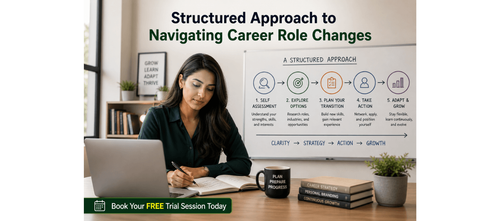

Master Your Career Transition: A Strategic Plan for Shifting Roles or Industries
Changing careers or shifting industries can feel like a daunting process, especially when you're not sure where to start. The fear of having to "begin from scratch" often holds many professionals back. However, the reality is that your current skills, experiences, and network are valuable assets that can be leveraged during your transition. This guide will provide you with a strategic framework to plan your career move, helping you to navigate your transition with confidence and clarity, without the need to start from zero.
Download these resources and apply them alongside your daily work for improved clarity, productivity, and professional growth. You can also book a free trial to gain expert guidance and enhance your communication, problem-solving, and decision-making skills. The materials are designed in a clear, structured format to help professionals learn efficiently and implement insights with confidence.

Who Is This Blog For?
- Career switchers looking to make a bold move
- Mid-career professionals (3-15 years of experience) considering a pivot
- Consultants looking to pivot their focus or client type
- Managers leading or managing team transitions
- Professionals aiming to switch functions without starting from scratch
Why This Topic Matters Today?
The world of work is changing, and many professionals are now seeking new opportunities that align with their changing interests or the realities of their industry. However, many struggle with transitions because they lack a clear strategy. Without a structured approach, career moves can lead to frustration, missed opportunities, or a lack of momentum. This blog provides a roadmap to plan your career transition, so you can move with intention and leverage your existing skills—without feeling like you’re starting from zero.
Core Concept or Framework Explained
The framework for a successful career transition involves three essential steps:
1. Self-Audit: Understanding your skills, motivations, and readiness for change.
2. Target Definition: Defining the specific roles and industries you are aiming for.
3. Gap Closer: Identifying and closing the gaps between your current skills and the requirements of your target roles.
4. Network Activation: Building and nurturing relationships strategically during your transition.
5. 90-Day Action Plan: Creating a structured plan to execute your transition.
By following this framework, you will be able to navigate your career transition strategically, ensuring you're moving toward your next opportunity with confidence.
How This Blog and Guidebook Help You?
This blog, paired with the practical worksheets and action guides, will help you:
- Conduct a self-assessment to clarify your transferable assets
- Define your target role and industry with precision
- Create a gap-closing plan focused on high-impact areas
- Develop a transition strategy that includes actionable networking and application steps
- Build a 90-day plan to stay on track and motivated
Step-by-Step Breakdown
Step 1: Audit Yourself Before You Move
Every successful transition starts with honest self-reflection. Before updating your CV or reaching out to recruiters, it’s important to have a clear picture of your current strengths, skills, and motivations. Skipping this step is one of the most common reasons transitions stall or lead to regret.
Key Actions:
- Skills Inventory: List all the skills you use regularly—both technical and interpersonal. Categorize each skill as Transferable, Specialist, or Developing. This inventory will serve as the foundation of your transition narrative.
- Values & Motivations: Reflect on why you're making this transition. What does your ideal working day look like in 2 years? What kind of impact do you want your work to have? This reflection will help ensure that your move aligns with your values and long-term goals.
Reflection Prompt:
- Score yourself 1-5 on energy, growth, alignment, and impact in your current role. If any score is below 3, it’s a strong indicator that a transition might be worth pursuing seriously.
Step 2: Define Your Target with Precision
Vague goals lead to vague results. To make your transition work, you need to define your target role and industry with precision. This means turning your self-audit into a specific, researched target that you can actively pursue.
Key Actions:
- Define Your Target Role: Identify 2-3 specific job titles that match your skills and aspirations. Research what these roles actually require—not just the job description, but the day-to-day reality.
- Map the Target Industry: Understand the target industry’s key players, growth trends, hiring patterns, and cultural norms. This knowledge will help you speak the language of your new field.
- Identify Your Gaps: Compare your current profile to the requirements of your target role. List the qualifications or experiences you’re missing and assess which gaps need to be closed before applying.
Pro Tip: Use LinkedIn's "People Also Viewed" and "Career Paths" features to discover realistic transition routes that others have taken from your current role to your target.
Step 3: Build Your Transition Narrative
Your narrative is the connection between your past and future. Without a compelling story, your transition can appear unfocused or risky to potential employers. Your narrative should make your transition feel logical and inevitable, not forced.
Key Actions:
- Where I’ve Been: Summarize your background in terms of skills and impact, not just job titles.
- Why I’m Moving: Frame your reason for transitioning as growth-oriented, not escape-oriented. Lead with curiosity and ambition.
- What I Bring: Highlight your transferable skills and connect them to the needs of your target role or industry.
Reflection Prompt: Write your narrative in 3 sentences. Read it aloud. Does it sound confident and clear? If not, revise until it does.
Step 4: Close the Gaps Strategically
Once you identify your gaps, don’t fall into the trap of taking every course available. Focus on the critical gaps that will truly impact your transition, and take active steps to close them through projects, freelance work, or stretch assignments.
Key Actions:
- Prioritize Critical Gaps: Focus on 1-2 gaps that would disqualify you from your target role. Other gaps can be addressed on the job.
- Choose Active Learning: Engage in projects, freelance work, or volunteering instead of just passive courses.
- Set Deadlines: Close your gaps within 60-90 days, then begin applying.
- Make Your Learning Visible: Share what you’re learning on LinkedIn or in your CV to signal commitment and attract opportunities.
Step 5: Activate Your Network with Purpose
Networking is critical for career transitions, especially when switching industries. However, networking isn’t just about asking for a job—it’s about building genuine relationships with people in your target field.
Key Actions:
- Reach Out to Insiders: Request 20-minute informational interviews with professionals in your target role or industry. Ask about their career paths and what the role really requires.
- Leverage Your Existing Network: Identify people who bridge your current field with your target industry and ask for introductions.
- Seek Mentors & Coaches: Find someone who has made a similar transition. Their experience can compress your learning curve and provide valuable insights.
Step 6: Your 90-Day Transition Action Plan
A plan without execution is just an idea. This 90-day framework divides your transition into three phases, with clear priorities and measurable outcomes.
Key Phases:
- Audit & Define: Self-assess, target roles, draft your narrative.
- Build & Connect: Close gaps, activate your network, update your CV.
- Apply & Iterate: Start applications, interview, refine.
Weekly Rhythm Checklist:
- Review and update your target role shortlist
- Reach out to 5 new or existing network contacts
- Spend 2 hours on gap-closing activity (course, project, writing)
- Apply to 3-5 roles matching your target profile
Milestone Markers:
- Day 30: Self-audit complete, target defined, narrative drafted
- Day 60: CV and LinkedIn updated, 20+ network conversations completed
- Day 90: Active applications in progress, first interviews secured
Real-World Application – Case Study & Common Mistakes
Case Study: From Marketing Manager to UX Strategist
Priya, a marketing manager with 7 years of experience in FMCG, wanted to move into UX strategy at a tech company. Instead of immediately enrolling in a full UX bootcamp, she audited her existing skills, identified her gap in prototyping, and took a targeted prototyping course. Over the next 60 days, she completed the course, redesigned her company’s internal onboarding process, and networked with 12 UX professionals. By Day 90, she had two interviews and accepted an offer as a UX Strategist.
Common Mistakes & Fixes
1. Mistake: Applying before defining the target
Fix: Complete your self-audit and target definition before applying.
2. Mistake: Over-investing in credentials
Fix: Prioritize projects and experiences that offer visible proof of capability.
3. Mistake: Networking only when desperate
Fix: Build relationships consistently before you need them.
4. Mistake: Treating rejection as failure
Fix: Every rejection is feedback—use it to adjust your approach and keep moving.
Key Takeaways
- Audit before you act: Self-knowledge is your most powerful asset.
- Define a specific target: Vague goals produce vague results.
- Build a compelling narrative: Connect your past to your future with confidence.
- Close gaps strategically: Focus on critical gaps and prioritize visible, active learning.
- Network with genuine curiosity: Relationships open doors that applications cannot.
- Execute your 90-day plan: Structure creates momentum.
- Iterate, don’t quit: Adjust your approach, keep moving, and trust the process.
Your Next Step: Accelerate Your Career with PlanetSpark
Visit https://www.planetspark.in/resources to explore: -
Career and-building guides
Workplace communication and professional writing resources
Skill-development tools curated for working professionals
Want a deeper, hands-on experience?
You can also book a free trial session to learn more about PlanetSpark’s Working Professional Courses, designed to accelerate your career through personalised coaching, real-world practice, and expert guidance. Your career deserves more than generic advice. It deserves clarity, confidence, and measurable impact.
Personalized Communication Roadmaps
Record a video to get a AI generated personalized communication reports