
The Ultimate Guide to Creating Systems for Managing Multiple Areas of Life

How Mapping Your Personal Systems Across Life Domains Can Improve Your Life and Career
Every professional has systems that govern how they manage their work, health, finances, relationships, and even their inner life. These systems can either work for you or against you. The key to transforming your life is understanding your existing systems, identifying the ones that are holding you back, and upgrading them intentionally. In this blog, we’ll break down how you can map your personal systems and use that insight to enhance your career and life.
Download these resources and apply them alongside your daily work for improved clarity, productivity, and professional growth. You can also book a free trial to gain expert guidance and enhance your communication, problem-solving, and decision-making skills. The materials are designed in a clear, structured format to help professionals learn efficiently and implement insights with confidence.

Who Is This Blog For?
Career switchers aiming for a smooth transition
Managers looking to optimise their work systems
Consultants striving for better work-life balance
Early- to mid-career professionals seeking greater clarity
Professionals wanting to improve their personal and professional life management.
Why This Topic Matters Today?
In today's fast-paced world, professionals often neglect non-work areas of life while over-investing in work systems. This imbalance can lead to burnout, missed opportunities, and a lack of fulfilment. Mapping your personal systems gives you clarity about what’s working and what’s not. It helps you bring balance, energy, and intentional design to all domains of life, leading to greater professional success and personal satisfaction.
A clear audit of your life domains helps you pinpoint inefficiencies and areas for growth, allowing you to take actionable steps toward change. The result? A balanced and more fulfilling career and life.
Core Concept or Framework Explained
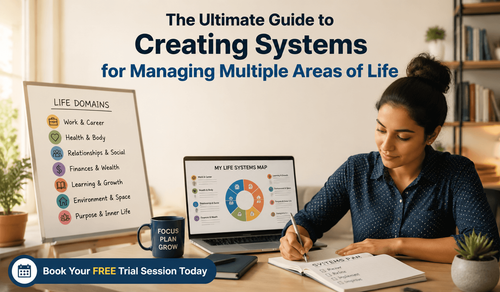
The process of mapping your personal systems involves evaluating seven key domains of your life:
Work & Career: How you manage tasks, grow professionally, and navigate workplace dynamics.
Health & Body: Your sleep, nutrition, exercise, and energy management.
Relationships & Social: Maintaining connections with friends, family, and community.
Finances & Wealth: Managing your income, savings, investments, and financial decisions.
Learning & Growth: How you develop skills, seek feedback, and evolve intellectually.
Environment & Space: Organising your physical and digital workspace.
Purpose & Inner Life: Staying connected to your values, spirituality, and sense of meaning.
Each domain operates through systems—some intentional and some inherited by habit or circumstance. Mapping these systems is the first step toward upgrading them for greater alignment with your goals and values.
How This Blog and Guidebook Help You?
This blog and accompanying worksheet will guide you through:
Conducting a systems inventory to identify the systems you’re currently operating on.
Assessing the effectiveness of your systems and determining where improvements are needed.
Designing new, intentional systems that will support your personal and professional growth.
By the end, you’ll have a clearer understanding of the systems driving your life and practical steps to upgrade them, ensuring that your time and energy are spent on what truly matters.
Step-by-Step Breakdown:
Step 1: Post-Interview Thank You
After an interview, your follow-up email should reinforce your interest and professionalism. This email should:
Be sent within 24 hours.
Reference a specific discussion point from the interview.
Highlight how your skills align with the role.
Step 2: Networking Event Follow-Up
After meeting someone at an event, focus on building a lasting connection. Your follow-up should:
Mention the event and the conversation topic.
Add a genuine compliment or shared interest.
Offer value before asking for anything.
Step 3: Cold Outreach to Recruiters
Proactive outreach can open hidden opportunities. Your email should:
Introduce yourself and briefly state your experience.
Specify your areas of interest.
Be polished and concise (under 150 words).
Step 4: Application Status Follow-Up
If you haven’t heard back after applying, sending a follow-up can demonstrate initiative. Send it 7-10 days after applying, reaffirm your interest, and mention any relevant company updates.
Step 5: Referral Introduction Response
Respond promptly when referred by someone. Thank the referrer, introduce yourself, and suggest a next step.
Step 6: LinkedIn Connection Request
A personalized LinkedIn note significantly boosts acceptance rates. Keep it under 300 characters, reference a shared interest, and keep a conversational tone.
Step 7: Reconnecting with a Former Colleague
Rebuilding past connections can unlock new opportunities. Start with a warm tone, share an update, and suggest a casual catch-up.
Step 8: Informational Interview Request
Focus on learning, not asking for a job. Be respectful of the person’s time, ask specific questions, and foster meaningful connections.
Step 9: Proposal or Project Follow-Up
For freelancers and consultants, follow-ups can drive conversions. Be confident, offer flexibility, and ask for a simple response.
Step 10: Career Switch Outreach
When entering a new field, focus on learning. Understand your transferable skills, research the industry, and clearly express your motivation.
Common Mistakes or Pitfalls to Avoid
Sending generic, non-personalized messages.
Using vague subject lines like “Hi” or “Checking in.”
Apologizing unnecessarily in professional emails.
Asking for too much in one message.
Following up excessively without response.
Instead, focus on personalizing each message, keeping communication concise, and maintaining a confident, respectful tone.
How Should You Use This Guidebook Effectively?
Identify the scenario (e.g., interview, networking).
Select the relevant template.
Replace placeholder text and add personalized details.
Proofread before sending.
With these templates, you can save time and maintain quality in your communications. Using these templates consistently will help you build stronger, more meaningful relationships.
Key Takeaways:
Follow-up communication is a critical career growth tool.
Personalization significantly increases response rates.
Timing is essential for effective communication.
Structured templates save time and improve clarity.
Always maintain a professional tone that is confident, not apologetic.
Consistent follow-ups help build long-term relationships.
Your Next Step: Accelerate Your Career with PlanetSpark
Creating an impact-driven resume is not just about landing your next job—it’s about owning your professional story and presenting it with clarity, confidence, and credibility. When your resume clearly communicates value, results, and impact, opportunities follow naturally.
At PlanetSpark, we are committed to empowering working professionals with practical, outcome-focused resources that drive real career growth. From resume building and workplace communication to leadership presence and professional writing, our programs are designed to help you succeed in today’s fast-evolving job market.
Visit https://www.planetspark.in/resources
to explore:
Career and resume-building guides
Workplace communication and professional writing resources
Skill-development tools curated for working professionals.
Want a deeper, hands-on experience?
You can also book a free trial session to learn more about PlanetSpark’s Working Professional Courses, designed to accelerate your career through personalized coaching, real-world practice, and expert guidance.
Your career deserves more than generic advice.
It deserves clarity, confidence, and measurable impact.
Start building that advantage today—with PlanetSpark.
Personalized Communication Roadmaps
Record a video to get a AI generated personalized communication reports