
The Ultimate Guide to Tracking Leadership KPIs for Growth

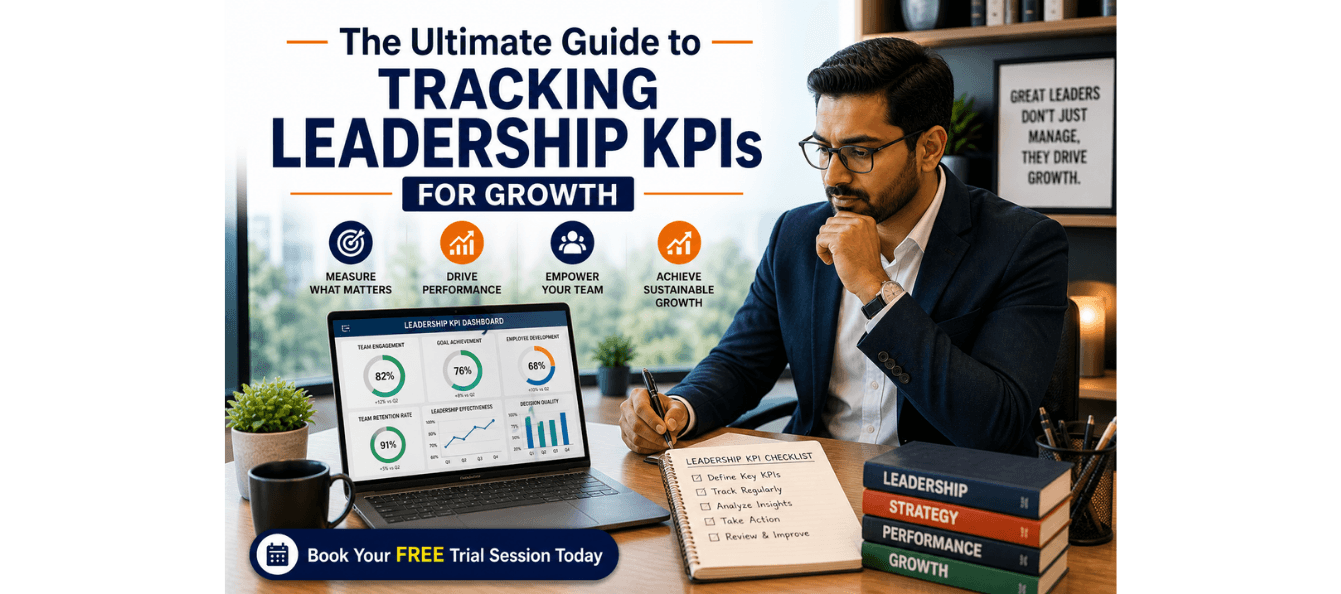
Executive KPI Tracking Template: How to Measure Leadership Impact and Accelerate Career Growth
Most professionals believe they are performing well—but struggle to prove it when it matters most.
You may be leading projects, managing teams, solving problems, and putting in consistent effort. Yet during performance reviews, promotion discussions, or client evaluations, your impact often feels unclear or undervalued. Feedback becomes subjective, recognition feels inconsistent, and growth seems slower than expected.
The core issue is not lack of capability—it is lack of measurable evidence.
Leadership today is no longer judged by effort or intent alone. It is evaluated based on outcomes, consistency, and the ability to demonstrate results with clarity. Without a structured system to track performance, even strong leaders remain invisible.
This is where a Leadership KPI Tracking Template becomes a powerful career tool. It helps you define what matters, measure your effectiveness, and communicate your impact with confidence and credibility.
Download these resources and apply them alongside your daily work for improved clarity, productivity, and professional growth. You can also book a free trial to gain expert guidance and enhance your communication, problem-solving, and decision-making skills. The materials are designed in a clear, structured format to help professionals learn efficiently and implement insights with confidence.
Who Is This Blog For?
- Early-career professionals building leadership capabilities
- First-time managers looking to prove their effectiveness
- Mid-level professionals aiming for promotions and role expansion
- Consultants who need to quantify client impact
- Team leads managing performance and engagement
- Career switchers transitioning into leadership roles
- Experienced professionals seeking structured performance systems
Why This Topic Matters Today?
The modern workplace is increasingly data-driven, and leadership is no exception. Decisions about promotions, salary increases, and leadership opportunities are no longer based purely on perception—they are influenced by measurable outcomes.
Many professionals fall into the trap of tracking activity instead of impact. They focus on how much they are doing rather than what results they are achieving. This leads to several common challenges:
- Performance reviews that feel vague and subjective
- Difficulty articulating achievements during appraisals
- Lack of clarity on what actually drives leadership success
- Missed opportunities due to invisible contributions
The guidebook highlights a critical truth: without a KPI tracking system, your leadership contributions remain invisible—even to yourself.
In a competitive professional environment, the ability to measure and communicate your impact is what differentiates high-potential leaders from the rest.
Core Concept
At the heart of the Leadership KPI Tracking Template is a simple but powerful idea: leadership effectiveness must be measured through outcomes, not activities.
Many professionals confuse effort-based metrics such as number of meetings or emails with true performance indicators. However, these do not reflect leadership impact. Instead, leadership KPIs focus on results—what actually changes because of your leadership.
The guide introduces a four-quadrant leadership model that ensures a balanced and comprehensive evaluation:
People: Metrics related to team engagement, retention, and satisfaction
Performance: Delivery outcomes such as project completion rates and efficiency
Culture: Feedback scores, collaboration quality, and team environment
Growth: Skill development, innovation, and long-term capability building
Focusing on only one quadrant creates imbalance. For example, strong performance without attention to people can lead to burnout, while focusing only on culture without results can reduce accountability.
True leadership excellence comes from performing consistently across all four areas.
Another key concept is the importance of measurable KPIs. A strong KPI includes:
- A clear baseline
- A defined target
- A measurable data source
- A timeline for achievement
For example:
- Weak KPI: Improve team morale
- Strong KPI: Increase team engagement score from 6.2 to 7.5 by Q3
This shift from vague intentions to measurable outcomes is what transforms leadership into a data-driven discipline.
How This Blog and Guidebook Help You?
This blog and the accompanying guidebook provide a structured system to help you take control of your leadership performance.
By applying these concepts, you can:
- Gain clarity on what truly defines leadership success
- Build a system to track performance consistently
- Identify gaps and improve faster
- Present your achievements with confidence during reviews
- Make your contributions visible to decision-makers
- Strengthen your ability to advocate for promotions and growth
Instead of relying on assumptions or informal feedback, you begin to operate with evidence. This not only improves your performance but also changes how others perceive your value.
Step-by-Step Breakdown
Understanding Leadership KPIs
The first step is building the right mindset. Leadership KPIs are not about tracking how busy you are—they are about measuring the impact of your decisions and actions.
You must focus on outcome-based metrics that reflect real change. These could include team retention rates, project delivery success, or engagement scores.
This clarity ensures that every metric you track contributes to meaningful improvement.
Building Your Personal KPI Dashboard
The guide outlines a simple four-step process to set up your KPI system:
- Plan Scope
Identify the key areas of leadership you want to measure
- Map KPIs
Select specific metrics aligned with People, Performance, Culture, and Growth
- Configure Dashboard
Create a simple tracking system using tools like spreadsheets or Notion
- Validate and Train
Ensure your KPIs are measurable and refine them over time
A critical part of this process is defining how each KPI will be measured before you begin tracking. This prevents confusion and ensures consistency.
Creating Your KPI Tracking Template
The guide provides a structured template that includes:
- KPI name
- Quadrant category
- Baseline value
- Target value
- Current progress
- Data source
- Review frequency
This structure answers essential questions:
- What am I measuring?
- Where am I starting from?
- Where am I going?
- Where am I now?
- How do I know?
By answering these consistently, you move from guesswork to clarity.
Implementing Weekly and Monthly Rituals
Consistency is what makes KPI tracking effective.
The guide introduces a simple 15-minute weekly ritual:
- Open your dashboard
- Update KPI values
- Identify significant changes
- Define one key leadership action for the week
- Schedule that action
In addition, monthly reflection questions help you evaluate progress, identify patterns, and make adjustments.
This structured review process ensures continuous improvement rather than reactive decision-making.
Setting KPIs Based on Career Stage
Not all KPIs are relevant at every stage of your career. The guide provides benchmarks based on experience levels:
- Early leadership focuses on building trust and proving capability
- Mid-level leadership focuses on scaling impact and team development
- Senior leadership focuses on strategic outcomes and organisational growth
This ensures your goals are realistic, relevant, and aligned with your responsibilities.
Learning from Real-World Application
The guide includes a case study of a professional who transitioned from an invisible contributor to a promotable leader.
By implementing KPI tracking:
- Team engagement improved significantly
- Project delivery rates increased
- Career recognition and growth accelerated
The key takeaway is that measurable performance—not just effort—drives career advancement.
Common Mistakes
Even with the right system, many professionals make predictable mistakes:
- Tracking activities instead of outcomes
Focus on results, not effort
- Setting targets without a baseline
Always measure your starting point first
- Tracking in isolation
Share your data with managers and mentors
- Abandoning the system during challenges
Consistency matters most during difficult periods
- Ignoring qualitative insights
Combine data with feedback for a complete picture
Avoiding these mistakes ensures your KPI system remains effective and sustainable.
How Should You Use This Guidebook Effectively?
To get the best results, follow a structured approach:
- Spend 45 minutes reading the guide end-to-end
- Select 6 to 8 KPIs relevant to your role
- Measure baseline performance in the first week
- Set 90-day targets for each KPI
- Build your tracking template in a simple tool
- Schedule a weekly 15-minute review session
- Conduct monthly reflections to adjust your approach
- Share progress regularly with your manager
The key principle is simplicity and consistency. A basic system used regularly is far more effective than a complex system used occasionally.
Key Takeaways
- Leadership impact must be measured to be recognised
- Outcome-based KPIs are more valuable than activity metrics
- A balanced approach across People, Performance, Culture, and Growth is essential
- Baselines and measurable targets are critical for progress
- Weekly tracking rituals drive consistency and improvement
- Data strengthens performance conversations and career growth
- Simplicity and discipline are more important than complexity
Your Next Step: Accelerate Your Career with PlanetSpark
Creating an impact-driven resume is not just about landing your next job—it’s about owning your professional story and presenting it with clarity, confidence, and credibility. When your resume clearly communicates value, results, and impact, opportunities follow naturally.
At PlanetSpark, we are committed to empowering working professionals with practical, outcome-focused resources that drive real career growth. From resume building and workplace communication to leadership presence and professional writing, our programs are designed to help you succeed in today’s fast-evolving job market.
Visit https://www.planetspark.in/resources to explore:
- Career and resume-building guides
- Workplace communication and professional writing resources
- Skill-development tools curated for working professionals
Want a deeper, hands-on experience?
You can also book a free trial session to learn more about PlanetSpark’s Working Professional Courses, designed to accelerate your career through personalised coaching, real-world practice, and expert guidance.
Your career deserves more than generic advice.
It deserves clarity, confidence, and measurable impact.
Personalized Communication Roadmaps
Record a video to get a AI generated personalized communication reports