
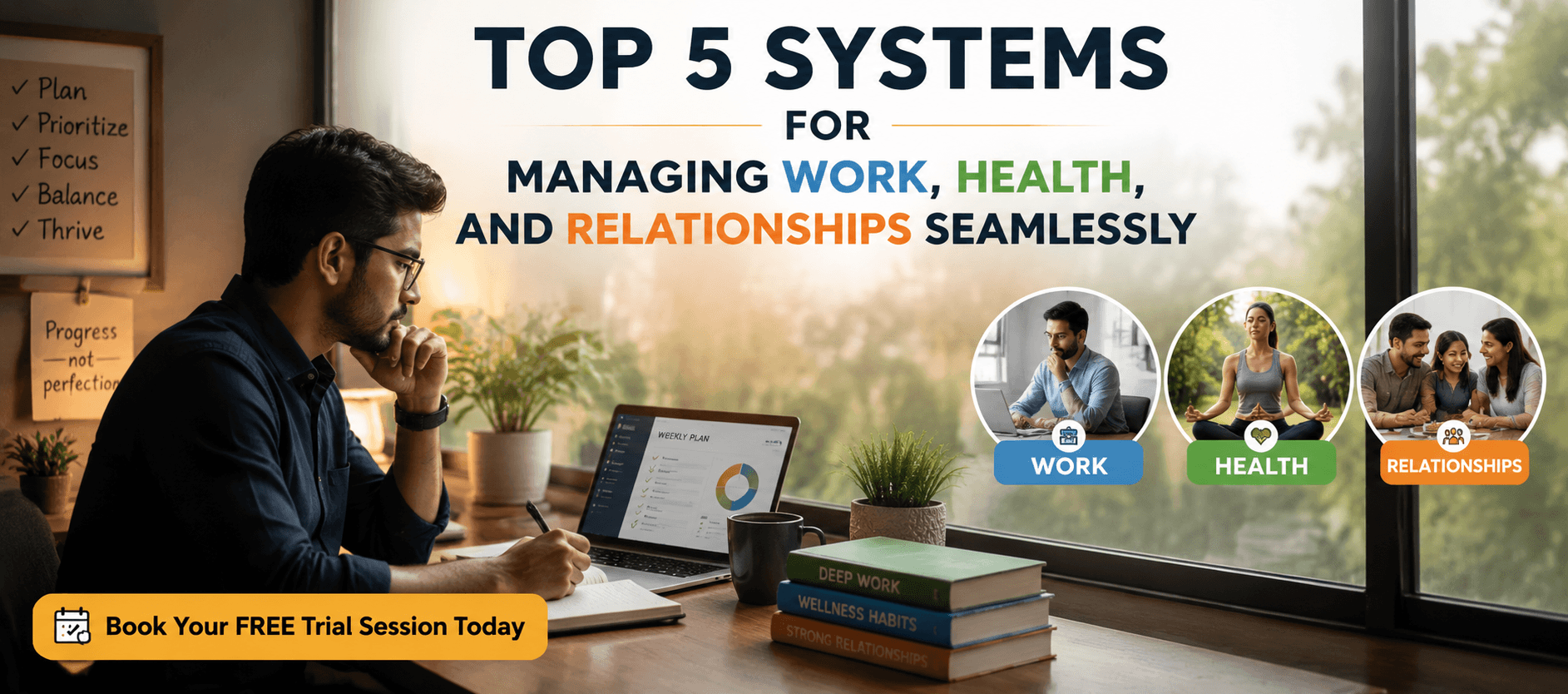
Top 5 Systems for Managing Work, Health, and Relationships Seamlessly


How to Create Systems for Managing Work, Health, and Relationships
In today’s fast-paced professional world, it's easy to feel like you're always behind. The demands of work, health, and relationships often collide, creating a sense of overwhelm and exhaustion. Whether you're managing a team, switching careers, or trying to balance work with personal life, there's always a looming feeling of falling short.
The solution lies not in willpower, but in creating systems—intentionally designed structures that make it easier to navigate through the chaos. This guide provides actionable frameworks and tools to help you design systems for work, health, and relationships, so you can thrive across all dimensions of life.
Download these resources and apply them alongside your daily work for improved clarity, productivity, and professional growth. You can also book a free trial to gain expert guidance and enhance your communication, problem-solving, and decision-making skills. The materials are designed in a clear, structured format to help professionals learn efficiently and implement insights with confidence.
Who Is This Blog For?
Career switchers looking to reset their professional life
Managers balancing teams, projects, and personal goals
Early-to-mid-career professionals struggling to keep up
Consultants juggling client needs with personal wellbeing
Professionals who want to design a life, not just survive one.
Why This Topic Matters Today?
In an era where burnout is a common phenomenon, effective time and energy management are no longer optional. Professionals today face an endless juggling act—managing work demands, personal health, and maintaining relationships. The key issue is that most people approach these areas separately, leading to burnout and inefficiency.
According to research, professionals who don’t manage their time effectively suffer from increased stress, decreased job satisfaction, and poor personal health. Systems offer a practical solution that aligns with both career success and personal well-being. It's time to stop managing by crisis and start managing by design.
Core Concept or Framework Explained
The framework behind this guide revolves around three interconnected domains: Work, Health, and Relationships.
Work System
This system focuses on setting clear work intentions, protecting deep work time, and consistently reviewing work outputs. It's about ensuring that effort translates into meaningful results, rather than reacting to every email or meeting.
Health System
A health system is built around creating sustainable energy for work and life through adequate sleep, movement, nutrition, and mental recovery. It’s not about extreme fitness; it’s about creating a baseline that keeps you functioning at your best.
Relationship System
This system ensures that the most important people in your life—partners, family, and professional networks—receive consistent, intentional attention. By scheduling regular check-ins and creating communication protocols, relationships are nurtured, preventing them from being neglected in the busyness of life.
How This Blog and Guidebook Help You?
This guidebook equips you with the tools and frameworks needed to create systems that work for you. Whether it’s structuring your workday for maximum productivity, ensuring you prioritize health despite a busy schedule, or strengthening your relationships, the strategies here allow you to build systems that simplify decision-making and help you stay on track.
By following the structured approach provided, you'll see tangible improvements in your energy, focus, and overall work-life harmony.
Step-by-Step Breakdown:
Step 1: Design Your Work System
Weekly Intention Setting: Every Sunday or Monday, identify your top three outcomes for the week. Not tasks—results that will define a successful week.
Time Blocking: Reserve your peak-energy hours for deep work, ensuring that meetings and distractions don’t consume them.
Capture & Process System: Use a trusted inbox to capture all incoming information, reviewing it daily to avoid mental clutter.
Weekly Review Ritual: Spend 30 minutes every Friday reviewing what was completed and what needs to carry forward.
Step 2: Establish Your Health System
Sleep: Aim for 7–9 hours of sleep each night. Start by setting a consistent wake-up time.
Movement: Schedule at least 150 minutes of moderate exercise per week. Even a daily walk counts.
Nutrition: Prepare meals in advance to reduce decision fatigue during the workday.
Mental Recovery: Incorporate 10–20 minutes of non-screen time daily to recharge.
Step 3: Build Your Relationship System
Intimate Relationships: Schedule undistracted time with partners or family, such as a weekly dinner or walk.
Friendship Networks: Stay in regular contact with close friends through small gestures, like sending a text or sharing an article.
Professional Network: Invest in your professional relationships by scheduling monthly check-ins with mentors or colleagues, even without an immediate goal in mind.
Common Mistakes or Pitfalls to Avoid
Building systems takes time, and there are common mistakes that many professionals make:
No Prioritization System: Working through tasks in the order they appear rather than based on importance.
Always-On Notifications: Treating every notification as urgent, which leads to constant interruptions.
No Shutdown Ritual: Work bleeding into personal time without a clear signal of the day’s end.
Under-communicating Boundaries: If you don’t communicate your priorities and limits, others will unknowingly disrupt them.
How Should You Use This Guidebook Effectively?
To get the most out of this guide, follow a gradual approach:
Step 1: Reflect on your current systems in all three domains (Work, Health, Relationships).
Step 2: Implement one system per week. Don’t try to overhaul everything at once.
Step 3: Schedule weekly check-ins with yourself to review progress and adjust as needed.
Key Takeaways:
Systems are more reliable than willpower in managing your work, health, and relationships.
Protecting your energy through health systems boosts your productivity and relationships.
Work systems should prioritize output over busyness, focusing on what truly matters.
Relationships require intentionality—designing habits and rituals to nurture them consistently.
Weekly reviews are crucial to keep all systems aligned and working together.
Recognize the difference between trade-offs and sacrifices during high-pressure periods.
Your Next Step: Accelerate Your Career with PlanetSpark
Creating an impact-driven resume is not just about landing your next job—it’s about owning your professional story and presenting it with clarity, confidence, and credibility. When your resume clearly communicates value, results, and impact, opportunities follow naturally.
At PlanetSpark, we are committed to empowering working professionals with practical, outcome-focused resources that drive real career growth. From resume building and workplace communication to leadership presence and professional writing, our programs are designed to help you succeed in today’s fast-evolving job market.
Visit https://www.planetspark.in/resources
to explore:
Career and resume-building guides
Workplace communication and professional writing resources
Skill-development tools curated for working professionals.
Want a deeper, hands-on experience?
You can also book a free trial session to learn more about PlanetSpark’s Working Professional Courses, designed to accelerate your career through personalised coaching, real-world practice, and expert guidance.
Your career deserves more than generic advice.
It deserves clarity, confidence, and measurable impact.
Start building that advantage today—with PlanetSpark.
Personalized Communication Roadmaps
Record a video to get a AI generated personalized communication reports