
Resume Red Flags to Avoid: A 2026 Guide for Working Professionals

Last Updated At: 26 Feb 2026
8 min read
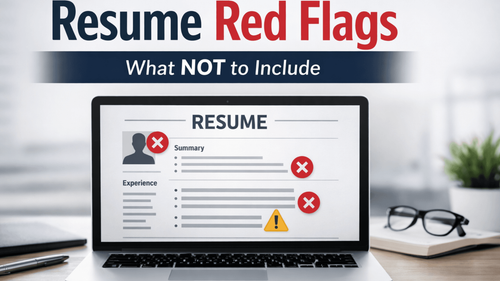
Resume Red Flags to Avoid: What Not to Include for Career Growth in 2026?
Introduction
Your resume gets six to seven seconds. That is often all the time a recruiter spends deciding whether to move forward or move on. In that narrow window, your skills and experience may not even get a chance if certain red flags appear on the page.
Many working professionals lose interviews not because they lack capability, but because their resumes include outdated, irrelevant, or risky elements that immediately raise concerns. These red flags signal poor judgment, lack of awareness of modern hiring standards, or misalignment with the role.
The Resume Red Flags: What Not to Include guidebook exists to solve this exact problem. It helps you identify and eliminate the silent resume mistakes that cost interviews, even for qualified candidates. This blog breaks down the checklist in detail and shows how to use it to create a clean, credible, and recruiter-ready resume.
Who Is This Blog For?
This blog and guidebook are designed for:
- Working professionals with 0 to 15 years of experience
- Job seekers not receiving interview callbacks despite strong profiles
- Career switchers updating resumes for new roles or industries
- Managers and consultants targeting competitive positions
- Professionals returning to the job market after a break
- Anyone wanting an ATS-friendly, modern resume that reflects current standards
If you want recruiters to focus on your impact rather than question your resume choices, this resource is for you.
Why This Topic Matters Today?
Hiring today is faster, more automated, and more competitive than ever. Applicant Tracking Systems reject a large percentage of resumes before a human sees them. Even when recruiters do review resumes, they skim quickly and rely on signals to make fast decisions.
According to hiring research highlighted in the guidebook:
- Formatting issues and red flags cause early rejection
- Recruiters associate outdated content with outdated skills
- Personal information oversharing introduces bias and risk
- Generic language signals low impact and weak differentiation
In crowded job markets, resumes that include red flags are often filtered out instantly. Removing these elements is no longer optional. It is a baseline requirement for career growth.
Core Concept or Framework Explained
The guidebook is structured as a comprehensive checklist that groups resume red flags into five critical categories. Each category reflects how recruiters actually review resumes and where professionals most often go wrong.
The framework focuses on elimination first. Before adding new achievements or skills, the guidebook helps you remove what damages credibility. This approach ensures that your strengths are not overshadowed by avoidable mistakes.
The five categories are:
- Personal information overshares
- Outdated or irrelevant content
- Poor formatting and presentation choices
- Content that raises recruiter concerns
- Inappropriate or controversial elements
Together, these categories create a clear audit system for identifying what does not belong on a modern professional resume.
How This Blog and Guidebook Help You?
This blog explains not just what to remove, but why it matters. The guidebook gives you a practical checklist to apply immediately.
By using it, you gain:
- Clear awareness of recruiter expectations
- Confidence in what to remove without second-guessing
- Improved ATS compatibility and readability
- A stronger focus on achievements and results
- A resume that reflects professionalism and current standards
Instead of guessing why applications fail, you gain control over how your resume is perceived.
Step-by-Step Breakdown
Personal information overshares
Many professionals unknowingly include personal details that are outdated, irrelevant, or risky.
Common red flags include:
- Photos or headshots
- Birth dates or age indicators
- Marital status or family details
- Full street addresses
- Social security numbers
Photos can introduce unconscious bias and distract from qualifications. Age indicators such as old graduation years or phrases like decades of experience can trigger age discrimination. Personal details unrelated to work performance weaken professionalism.
The modern standard is simple:
- Name
- City and state
- Phone number
- Professional email
- LinkedIn profile link
Nothing more is required at the resume stage.
Outdated or irrelevant content
Resumes often fail because they reflect past conventions rather than current hiring needs.
Key red flags include:
- Objective statements focused on what you want
- Jobs from more than 20 years ago
- Early career roles with no relevance
- Obsolete technical skills
- Basic skills that everyone already has
Objective statements waste valuable space and add no value to recruiters. Old roles clutter the resume and make you appear disconnected from current industry practices. Listing outdated software or basic tools signals poor skills awareness.
The guidebook recommends:
- Replacing objectives with results-focused summaries
- Limiting experience to the most recent 10 to 15 years
- Highlighting current, in-demand skills aligned to the role
Poor formatting and presentation choices
Even strong content can fail if the resume is hard to read or incompatible with ATS systems.
Formatting red flags include:
- Unprofessional email addresses
- Excessive graphics or creative layouts
- Multiple fonts or colors
- Font sizes under 10 points
- Dense text blocks with no white space
Recruiters associate messy formatting with lack of attention to detail. ATS systems often fail to parse complex designs, charts, or graphics.
Best practices outlined in the guidebook include:
- Simple professional email formats
- Clean, single-column layouts
- Standard fonts at 11 to 12 points
- Bullet points and clear section spacing
Clarity beats creativity in resume design.
Content that raises recruiter concerns
Some resume content triggers deeper doubts rather than immediate rejection.
These include:
- Unexplained employment gaps
- Job hopping without context
- Listing duties instead of achievements
- Buzzword-heavy, generic language
Gaps without explanation raise questions about reliability or skill currency. Frequent short roles without narrative suggest instability. Duties describe what you did, not how well you did it.
The guidebook shows how to:
- Briefly and honestly explain gaps
- Frame contract or project-based roles clearly
- Rewrite bullets using measurable outcomes
- Replace buzzwords with evidence-based achievements
Inappropriate or controversial elements
Certain information can alienate reviewers or weaken negotiation position.
These red flags include:
- Political or religious affiliations
- Controversial hobbies or interests
- Salary history or expectations
- Listing references on the resume
These elements introduce bias, distract from qualifications, or prematurely expose sensitive information. Recruiters expect references to be available later, not listed upfront.
The safest approach is to keep resumes strictly professional and role-focused.
Common Mistakes or Pitfalls to Avoid
The guidebook highlights frequent mistakes professionals make even after revisions:
- Minimising red flags instead of removing them
- Leaving old content for completeness
- Adding buzzwords to sound impressive
- Overdesigning to stand out visually
- Ignoring ATS compatibility
Each of these mistakes reduces clarity and credibility. The better alternative is simplicity, relevance, and measurable impact.
How Should You Use This Guidebook Effectively?
The guidebook works best as an audit tool, not just a reading resource.
Recommended workflow:
- Spend 30 to 45 minutes reviewing your resume alongside the checklist
- Highlight every red flag honestly
- Delete outdated or risky content completely
- Rewrite experience bullets using action plus measurable result
- Update formatting for clarity and ATS readability
- Revisit the checklist whenever applying for new roles
This process ensures your resume evolves with your career.
Key Takeaways / Summary
- Recruiters scan resumes in seconds, not minutes
- Red flags often cause rejection before skills are reviewed
- Personal information oversharing introduces bias
- Outdated content signals outdated capability
- Poor formatting hurts ATS and readability
- Achievements matter more than duties
- Removing red flags increases interview chances significantly
Your Next Step: Accelerate Your Career with PlanetSpark
Creating an impact-driven resume is not just about landing your next job—it’s about owning your professional story and presenting it with clarity, confidence, and credibility. When your resume clearly communicates value, results, and impact, opportunities follow naturally.
At PlanetSpark, we are committed to empowering working professionals with practical, outcome-focused resources that drive real career growth. From resume building and workplace communication to leadership presence and professional writing, our programs are designed to help you succeed in today’s fast-evolving job market.
Visit https://www.planetspark.in/resources to explore:
- Career and resume-building guides
- Workplace communication and professional writing resources
- Skill-development tools curated for working professionals
Want a deeper, hands-on experience?
You can also book a free trial session to learn more about PlanetSpark’s Working Professional Courses, designed to accelerate your career through personalised coaching, real-world practice, and expert guidance.
Your career deserves more than generic advice.
It deserves clarity, confidence, and measurable impact.