
Top Resume Tips for Enterprise Strategic Initiatives on Resume
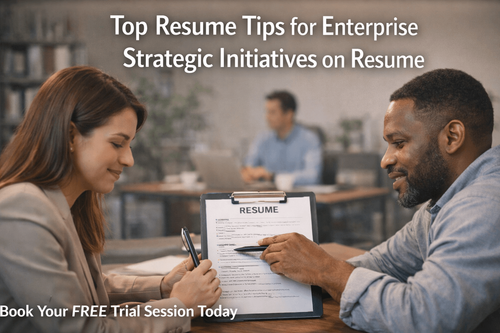

Strategic Initiatives Resume Guide: Highlighting Enterprise Leadership Impact
In today’s enterprise hiring landscape, having experience in strategic initiatives is not enough—you must be able to communicate it clearly, quickly, and convincingly. You may have led digital transformation programmes, driven cost optimisation initiatives, or contributed to cross-functional strategy execution, but if your resume fails to highlight these effectively, your experience risks being undervalued.
The problem is that most resume formats are designed for individual contributor roles. They focus on responsibilities rather than outcomes, job titles rather than impact. As a result, complex enterprise initiatives get buried in dense paragraphs, making it difficult for recruiters to assess your true value within seconds.
For senior and strategic roles, this is a critical gap. Recruiters are scanning for scale, ownership, and results—often within the first six seconds. If your resume does not surface these signals immediately, even strong experience may not translate into interview opportunities.
This is exactly where a structured, enterprise-focused resume approach becomes essential. It enables you to present your strategic initiatives in a way that highlights leadership, cross-functional execution, and measurable business outcomes—helping you stand out in competitive hiring processes.
Download these resources and apply them alongside your daily work for improved clarity, productivity, and professional growth. You can also book a free trial to gain expert guidance and enhance your communication, problem-solving, and decision-making skills. The materials are designed in a clear, structured format to help professionals learn efficiently and implement insights with confidence.
Who Is This Blog For?
- Managers, consultants, and senior professionals leading enterprise initiatives
- Professionals targeting Director, VP, or senior strategy roles
- Individuals transitioning from delivery to strategy-focused positions
- Professionals returning to the job market after major programmes
- Consultants preparing capability statements or client-facing resumes
Why This Topic Matters Today?
Enterprise organisations are increasingly focused on large-scale strategic initiatives—digital transformation, cost optimisation, market expansion, ESG programmes, and data strategy. These initiatives are complex, cross-functional, and high-impact.
However, as highlighted in the resource, most professionals struggle to present this work effectively on their resumes.
Key challenges include:
- Listing duties instead of outcomes
- Burying initiative names within dense content
- Failing to include scale indicators such as budget, team size, or geography
- Using internal jargon without context
- Treating all roles with equal importance instead of prioritising strategic impact
This disconnect reduces clarity and weakens positioning for senior roles.
Core Concept or Framework Explained
The foundation of an enterprise strategic initiatives resume is built around three critical signals that recruiters evaluate instantly.
The Three-Signal Framework
According to the guide, every resume must clearly communicate:
- Scale of the initiative
- Ownership or level of contribution
- Measurable outcome achieved
These three elements must be visible within seconds of reading your resume.
Outcome-Led Storytelling
Instead of describing tasks, each bullet point should answer:
- What initiative did you work on?
- What action did you take?
- What measurable result did it create?
This transforms your resume from descriptive to persuasive.
Structured Resume Architecture
The templates are designed to:
- Highlight flagship initiatives early in each role
- Present scale indicators clearly
- Use concise, action-oriented bullet points
- Maintain ATS-friendly formatting
This ensures both readability and effectiveness.
How This Blog and Guidebook Help You?
This blog and the resource provide a complete system for building enterprise-ready resumes.
You gain:
- 10 scenario-based templates aligned with real enterprise roles
- Clear frameworks for structuring strategic initiatives
- Guidance on quantifying impact and outcomes
- ATS-friendly formats optimised for recruiter scanning
The result is a resume that clearly communicates leadership, scale, and measurable value.
Step-by-Step Breakdown
Step 1: Identify Your Strategic Scenario
The resource includes templates for different enterprise scenarios such as:
- Enterprise programme director managing strategic portfolios
- Digital transformation leader driving technology adoption
- M&A integration strategist managing post-merger execution
- Cost optimisation leader delivering savings programmes
- Market expansion programme manager launching new geographies
- ESG strategy leader executing sustainability initiatives
- Data and AI strategy owner building enterprise intelligence systems
Selecting the right template ensures alignment with your experience.
Step 2: Build a Strong Executive Summary
Your summary should immediately highlight:
- Years of experience
- Scale of initiatives managed
- Signature outcomes
For example:
- Mention budget size or number of initiatives
- Highlight one key strategic achievement
- Position yourself as a leader
This creates a strong first impression.
Step 3: Highlight Core Strategic Competencies
Focus on capabilities such as:
- Strategic portfolio management
- Cross-functional stakeholder alignment
- Programme governance and risk frameworks
- Change management and execution
- OKR and KPI design
These signal leadership and strategic depth.
Step 4: Name and Highlight Key Initiatives
Each role should clearly state:
- Name of the initiative
- Scope and context
- Your ownership
As noted in the resource, recruiters should not have to search for this information—it must be immediately visible.
Step 5: Showcase Scale Indicators
Always include at least two of the following:
- Budget size
- Team size
- Number of geographies
- Business units impacted
- End users or customers affected
Scale signals seniority and complexity.
Step 6: Write Outcome-Led Bullet Points
Each bullet should follow a clear structure:
- Action taken
- Initiative context
- Measurable result
For example:
- Delivered cost savings within a defined timeframe
- Achieved revenue growth through strategic initiative
- Improved operational efficiency by a measurable percentage
This ensures clarity and impact.
Step 7: Demonstrate Stakeholder Leadership
Strong resumes clearly show:
- C-suite or board-level interaction
- Cross-functional coordination
- External stakeholder engagement
This validates the level of strategic work.
Step 8: Apply ATS-Friendly Formatting
The guide recommends:
- Avoiding tables and complex layouts
- Using standard fonts
- Keeping sections clearly defined
- Saving in compatible formats
This ensures your resume passes automated screening systems.
Step 9: Perform Final Quality Checks
Before submission:
- Replace all placeholders
- Ensure every bullet includes an outcome
- Maintain consistent formatting
- Remove internal jargon or clarify it
- Keep the document concise
These steps improve professionalism and readability.
Step 10: Customise for Every Application
The guide emphasises tailoring your resume based on the role.
Adjust:
- Keywords
- Initiative emphasis
- Outcome highlights
This significantly improves your chances of selection.
Common Mistakes or Pitfalls to Avoid
Many professionals weaken their resumes through avoidable mistakes.
Common errors include:
- Writing task-based instead of outcome-based content
- Omitting scale indicators
- Hiding key initiatives in long paragraphs
- Using unclear or internal terminology
- Not differentiating high-impact roles
A better approach is to:
- Lead with impact and results
- Highlight scale and ownership
- Use clear, structured storytelling
How Should You Use This Guidebook Effectively?
To maximise the value of this resource, follow a structured workflow:
- Select the template closest to your scenario
- Replace all placeholders with real data
- Add measurable outcomes and scale indicators
- Tailor content to each job application
- Apply ATS formatting rules before submission
Time investment:
- 60–90 minutes for initial setup
- 15–20 minutes for customisation per application
Consistency and refinement will significantly improve your results.
Key Takeaways
- Enterprise resumes must highlight scale, ownership, and outcomes
- Recruiters scan resumes within seconds, so clarity is critical
- Outcome-led bullet points significantly improve impact
- Scale indicators signal seniority and complexity
- Structured templates improve readability and positioning
- ATS optimisation is essential for visibility
- Customisation increases success rate
Your Next Step: Accelerate Your Career with PlanetSpark
Creating an impact-driven resume is not just about landing your next job—it’s about owning your professional story and presenting it with clarity, confidence, and credibility. When your resume clearly communicates value, results, and impact, opportunities follow naturally.
At PlanetSpark, we are committed to empowering working professionals with practical, outcome-focused resources that drive real career growth. From resume building and workplace communication to leadership presence and professional writing, our programs are designed to help you succeed in today’s fast-evolving job market.
Visit https://www.planetspark.in/resources to explore:
- Career and resume-building guides
- Workplace communication and professional writing resources
- Skill-development tools curated for working professionals
Want a deeper, hands-on experience?
You can also book a free trial session to learn more about PlanetSpark’s Working Professional Courses, designed to accelerate your career through personalised coaching, real-world practice, and expert guidance.
Your career deserves more than generic advice.
It deserves clarity, confidence, and measurable impact.
Personalized Communication Roadmaps
Record a video to get a AI generated personalized communication reports