
Top Strategies for Managing Workplace Competition in 2026

Strategic Workplace Competition: How to Stand Out, Build Influence, and Accelerate Your Career Without Burning Bridges
In today’s high-performance work environments, competition is no longer optional—it is constant. Whether you are aiming for a promotion, leading projects, or trying to stand out in a crowded team, you are competing for visibility, opportunities, and influence every single day. Yet most professionals approach competition in ways that quietly damage their careers. Some stay invisible, hoping their work will speak for itself. Others become overly aggressive, damaging relationships and trust. Both approaches lead to stagnation, frustration, and missed opportunities.
Book your free trial session today with PlanetSpark.
Download for more details or PDF file.
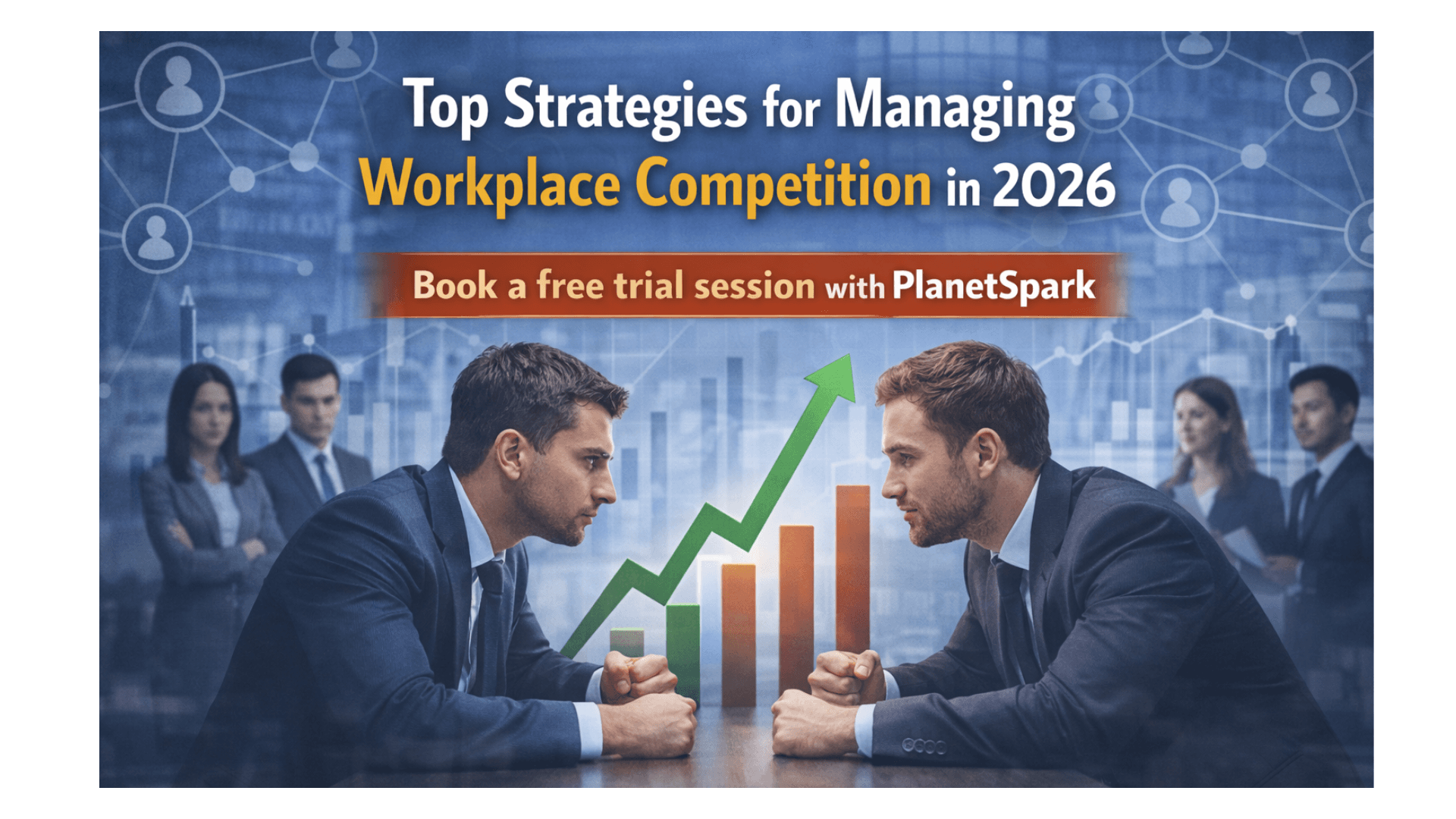
The reality is simple: workplace competition is not about outperforming others—it is about positioning yourself strategically. This blog transforms a powerful guidebook into a practical, step-by-step playbook to help you turn competitive pressure into career growth, without burning out or burning bridges.
Who Is This Blog For?
- Working professionals with 0–15 years of experience navigating competitive environments
- Career switchers trying to establish credibility in new roles or industries
- Mid-career professionals aiming for promotions and leadership visibility
- Consultants and specialists building a strong professional reputation
- Job seekers and employees struggling with recognition, visibility, or career stagnation
Why This Topic Matters Today?
Modern workplaces are more competitive than ever before. Opportunities are limited, expectations are higher, and visibility often determines success as much as performance.
The guidebook highlights a critical insight: competition itself is not the problem—how you respond to it is. Many professionals fall into predictable traps:
- Staying invisible and hoping hard work gets noticed
- Comparing themselves constantly with peers
- Treating colleagues as rivals instead of collaborators
- Becoming overly dependent on manager approval
These patterns drain energy, damage relationships, and limit long-term growth.
In contrast, professionals who approach competition strategically build influence, create opportunities, and become indispensable. That is the difference between reacting to competition and using it as a career accelerator.
Core Concept or Framework Explained
At the heart of this guidebook is a powerful shift in mindset:
You are not competing against your colleagues. You are competing against your previous version.
This approach is built around a six-part strategic framework:
- Awareness: Understand your competitive environment clearly
- Positioning: Build a strong, consistent professional identity
- Differentiation: Compete through value, not politics
- Relationships: Turn rivals into allies
- Communication: Make your value visible
- Resilience: Sustain performance over time
Together, these six pillars create a system for long-term career growth. Instead of short-term wins, you build a reputation that consistently attracts opportunities.
How This Blog and Guidebook Help You?
This blog and the original guidebook help you:
- Identify your unique strengths and competitive advantages
- Position yourself strategically within your organisation
- Build a reputation that attracts opportunities automatically
- Develop strong professional relationships that support growth
- Communicate your value clearly and consistently
- Handle setbacks without losing momentum
The outcome is not just career progression—it is sustainable, long-term professional success built on clarity, credibility, and trust.
Step-by-Step Breakdown
Step 1: Build Awareness of Your Competitive Landscape
Before taking action, you need clarity. Most professionals skip this step and jump straight into tactics like networking or speaking up more. Without context, those efforts often fail.
Start by asking four critical questions:
- What unique value do I bring?
- What am I currently known for?
- Where is my organisation heading?
- Where do my strengths align with those priorities?
This intersection is your strategic sweet spot. It tells you where to invest your energy for maximum impact.
Additionally, map your environment:
- Identify decision-makers and influencers
- Understand key organisational priorities
- Evaluate your current visibility level
- Recognise strong competitors and learn from them
This awareness ensures your efforts are focused, not scattered.
Step 2: Position Yourself Deliberately
Once you understand your environment, the next step is positioning. Your professional reputation should not be accidental—it should be intentional.
Strong positioning involves:
- Defining a niche where your skills, domain, and impact intersect
- Communicating your work consistently in meetings and updates
- Aligning yourself with high-priority organisational initiatives
A critical tool here is your contribution narrative—a clear, 60-second explanation of:
- What you do
- What value you bring
- What results you have delivered
- Where you are heading
When done right, this ensures people think of you first when opportunities arise.
Step 3: Differentiate Through Value, Not Politics
In competitive environments, many professionals rely on visibility games or office politics. These may deliver short-term gains but damage long-term credibility.
True differentiation comes from:
- Consistently delivering high-quality outcomes
- Solving problems proactively
- Documenting and sharing measurable impact
- Developing future-relevant skills
- Making others around you more effective
The key shift is from activity to impact. Being busy does not create value—results do.
Step 4: Turn Relationships Into a Competitive Advantage
One of the most counterintuitive insights from the guidebook is this: your competitors can become your greatest assets.
Instead of treating peers as threats:
- Identify colleagues with complementary strengths
- Offer value before expecting anything in return
- Build relationships across teams and functions
- Maintain connections consistently over time
Strategic generosity builds trust, influence, and long-term career protection. In environments where others compete aggressively, collaboration becomes your differentiator.
Step 5: Communicate Your Value Clearly and Consistently
Talent alone is not enough. If your work is not visible, it does not exist in the eyes of decision-makers.
Effective communication operates at three levels:
- Output communication: Sharing results and achievements
- Thinking communication: Demonstrating ideas and insights
- Aspiration communication: Expressing career goals clearly
High-impact habits include:
- Sending weekly updates with measurable wins
- Speaking up early in meetings with prepared insights
- Documenting results with clear metrics
- Requesting regular feedback and development discussions
A simple but powerful structure to use is:
Here is what I noticed, here is what I did, and here is the result.
This signals ownership, clarity, and strategic thinking.
Step 6: Build Resilience for Long-Term Success
Workplace competition is mentally demanding. Setbacks are inevitable—missed promotions, failed projects, or lack of recognition.
What separates successful professionals is not avoidance of failure, but how they respond to it.
Build resilience through:
- Acknowledging setbacks honestly
- Analysing lessons instead of overthinking
- Reconnecting with long-term goals
- Taking immediate forward action
Also, develop a recovery portfolio—habits that help you recharge and sustain performance over time. Without this, burnout becomes inevitable.
Common Mistakes or Pitfalls to Avoid
- Waiting to be noticed instead of communicating value
- Comparing yourself constantly to peers
- Confusing busyness with meaningful impact
- Damaging relationships under pressure
- Focusing only on short-term approval instead of long-term positioning
Avoiding these mistakes can dramatically accelerate your career growth.
How Should You Use This Guidebook Effectively?
To get the best results from this framework:
- Read the guide once to understand the full strategy
- Complete the worksheets and reflection exercises honestly
- Apply one module at a time instead of trying everything at once
- Allocate 2–3 focused hours per week for implementation
- Revisit the framework every quarter to update your strategy
You can also follow a simple 30-day plan:
- Week 1: Build awareness and define your narrative
- Week 2: Improve visibility and communication habits
- Week 3: Identify differentiation gaps and act on them
- Week 4: Review progress and create a 90-day plan
Consistency, not intensity, drives results.
Key Takeaways
- Workplace competition is a strategy problem, not a personality trait
- Focus on outperforming your past self, not your peers
- Build a strong, clear professional reputation intentionally
- Differentiate through measurable value, not politics
- Invest in relationships to create long-term career leverage
- Communicate your impact consistently and clearly
- Treat setbacks as data, not failure
- Build resilience to sustain long-term performance
Your Next Step: Accelerate Your Career with PlanetSpark
Creating an impact-driven resume is not just about landing your next job—it’s about owning your professional story and presenting it with clarity, confidence, and credibility. When your resume clearly communicates value, results, and impact, opportunities follow naturally.
At PlanetSpark, we are committed to empowering working professionals with practical, outcome-focused resources that drive real career growth. From resume building and workplace communication to leadership presence and professional writing, our programs are designed to help you succeed in today’s fast-evolving job market.
Visit https://www.planetspark.in/resources to explore:
- Career and resume-building guides
- Workplace communication and professional writing resources
- Skill-development tools curated for working professionals
Want a deeper, hands-on experience?
You can also book a free trial session to learn more about PlanetSpark’s Working Professional Courses, designed to accelerate your career through personalised coaching, real-world practice, and expert guidance.
Your career deserves more than generic advice.
It deserves clarity, confidence, and measurable impact.
Start building that advantage today—with PlanetSpark.
Personalized Communication Roadmaps
Record a video to get a AI generated personalized communication reports