
Track Stress and Recovery Cycles for Better Performance
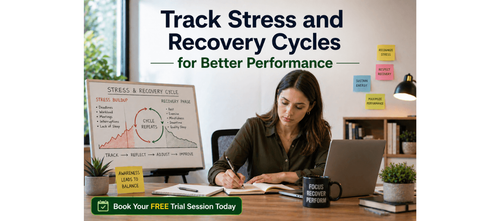

Stress vs. Recovery: Finding the Right Balance: A Data-Driven System to Prevent Burnout and Sustain Peak Performance
In today’s demanding professional environment, stress is not an occasional challenge—it is a constant undercurrent. Most professionals are aware that they feel stressed, but very few can clearly answer critical questions: When does stress peak? What triggers it? How long does recovery take? And most importantly—what actually helps?
This gap between awareness and data is where burnout quietly develops. You continue functioning, meeting deadlines, and pushing through pressure, but the underlying stress accumulates over time. By the time you feel consistently exhausted, unfocused, or disengaged, you are already operating at a deficit.
The real issue is not stress itself—it is the absence of a system to track and manage it.
This is where a structured stress tracking and recovery framework becomes transformative. Instead of guessing, it gives you a measurable way to understand your stress patterns, identify triggers, and build recovery habits that actually work for you. It turns stress from a vague feeling into actionable data.
Download these resources and apply them alongside your daily work for improved clarity, productivity, and professional growth. You can also book a free trial to gain expert guidance and enhance your communication, problem-solving, and decision-making skills. The materials are designed in a clear, structured format to help professionals learn efficiently and implement insights with confidence.
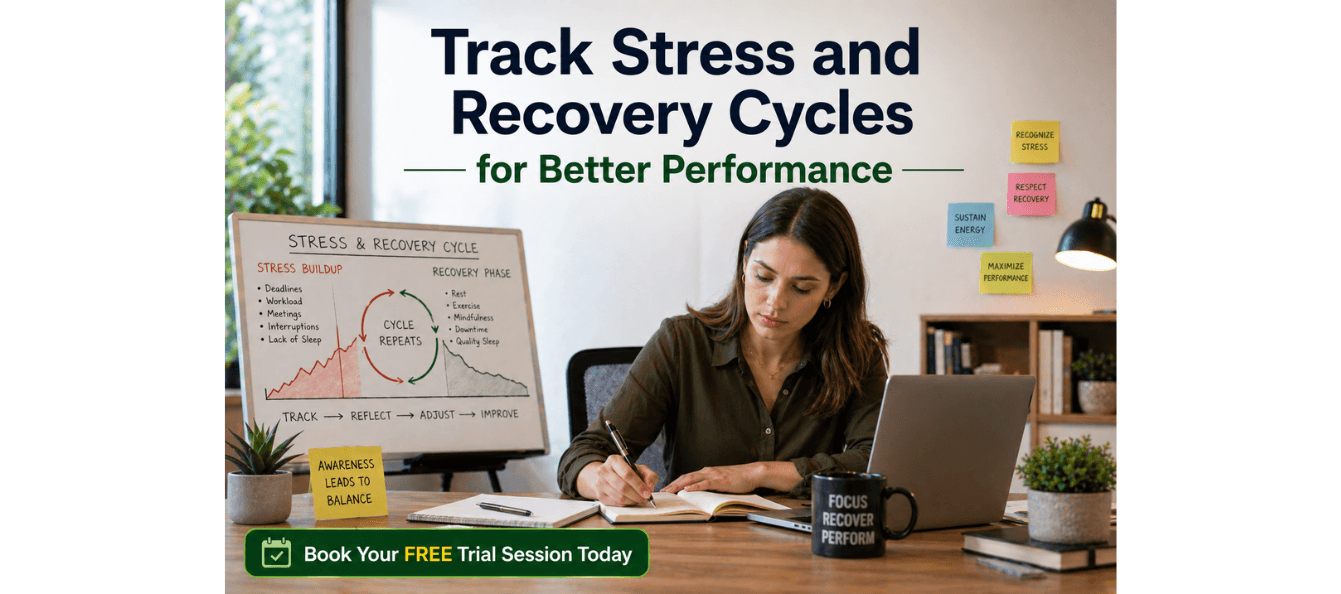
Who Is This Blog For?
- Working professionals experiencing frequent stress, fatigue, or burnout symptoms
- Managers handling high-pressure roles and team responsibilities
- Career-driven individuals aiming to sustain long-term performance
- Professionals struggling with inconsistent energy and recovery cycles
- Anyone looking to build structured, data-driven self-awareness
Why This Topic Matters Today?
Modern work environments demand constant context-switching, rapid decision-making, and continuous performance. This creates a steady accumulation of cognitive and emotional load that often goes unnoticed.
Key challenges professionals face today:
- Stress builds gradually and invisibly over weeks or months
- Recovery is reactive instead of planned or measured
- Most people rely on intuition rather than data
- High performers often push through stress without tracking limits
Without structured tracking, professionals:
- Miss early warning signs of burnout
- Fail to identify recurring stress triggers
- Struggle to recover effectively
- Experience declining performance over time
Tracking stress is no longer optional—it is a critical professional skill.
Core Concept or Framework Explained
The stress tracking framework is built on three core principles:
Stress Must Be Measured
You cannot manage what you do not track. Logging stress levels consistently transforms vague awareness into actionable insight.
Stress Is Pattern-Based
Most professionals have 3–5 dominant triggers responsible for the majority of their stress. Identifying these patterns is key to control.
Recovery Is Measurable
Recovery is not just “resting.” It is the time and action required to return to your baseline state. Measuring recovery cycles helps you improve them.
Together, these principles create a system that turns stress into a manageable, predictable variable.
How This Blog and Guidebook Help You?
This guide provides:
- A structured daily stress tracking system
- A 5-level stress rating scale for consistent measurement
- A trigger identification framework
- A recovery cycle tracking method
- A weekly dashboard for pattern analysis
The result is improved clarity, faster recovery, and sustained high performance.
Step-by-Step Breakdown
Step 1: Understand Your Stress Signature
Stress looks different for everyone. Your first step is to identify how it shows up for you across four dimensions:
- Physical: fatigue, headaches, muscle tension, poor sleep
- Cognitive: lack of focus, mental fog, decision fatigue
- Emotional: irritability, anxiety, low motivation
- Behavioural: procrastination, overworking, withdrawal
Recognising these signals helps you detect stress earlier.
Step 2: Use the 5-Level Stress Rating Scale
To track effectively, you need a consistent scale:
- Level 1: Calm and focused
- Level 2: Mild, productive stress
- Level 3: Noticeable strain requiring recovery
- Level 4: High stress with clear impact
- Level 5: Critical burnout zone
Log your stress at key points:
- Morning
- Midday
- End of day
- After high-stress events
Consistency is more important than detail.
Step 3: Identify Your Stress Triggers
Stress levels are symptoms—the real cause lies in triggers.
Common categories include:
- Workload: deadlines, task overload
- Interpersonal: conflicts, unclear expectations
- Uncertainty: career ambiguity, role changes
- Environmental: noise, distractions, workspace issues
- Internal: perfectionism, overthinking, fear of failure
Most professionals discover that a few key triggers drive the majority of their stress.
Step 4: Track Your Recovery Cycles
Recovery is the process of returning to your baseline after stress.
For each high-stress episode, track:
- Peak stress level
- Trigger
- Recovery action used
- Time taken to recover
- Effectiveness of the recovery method
Recovery tools can include:
- Rapid: breathing exercises, short walks
- Medium: journaling, focused work sessions
- Deep: sleep recovery, social connection, time off
This helps you identify what works best for you.
Step 5: Build a Weekly Stress Dashboard
Daily logs are useful, but patterns emerge over time.
Each week:
- Calculate your average stress level
- Identify your most frequent trigger
- Evaluate your most effective recovery tool
- Note one key insight
This transforms raw data into actionable decisions.
Step 6: Apply Micro-Adjustments
Based on your data, make small changes such as:
- Reducing unnecessary meetings
- Blocking recovery time after intense work
- Addressing recurring trigger situations
- Improving boundaries and communication
Small adjustments create compounding benefits.
Step 7: Learn from Real-World Patterns
Case examples show that stress is rarely caused by a single factor. It is usually a combination of:
- External triggers like workload or communication
- Internal patterns like perfectionism
Tracking reveals hidden patterns that intuition alone cannot detect.
Step 8: Evaluate Progress After 4 Weeks
After consistent tracking:
- Identify your top 3 triggers
- Measure your average recovery time
- Track improvement in stress levels
This gives you a clear picture of what is working.
Step 9: Strengthen Your Recovery System
Effective professionals don’t avoid stress—they recover from it efficiently.
Focus on:
- Using recovery tools proactively
- Prioritising high-impact interventions
- Avoiding passive distractions that don’t reduce stress
Recovery is a skill that improves with practice.
Step 10: Build Long-Term Tracking Habits
To sustain results:
- Track daily for at least 4–6 weeks
- Conduct weekly reviews
- Reassess patterns monthly
This creates a long-term system for managing stress and performance.
Common Mistakes or Pitfalls to Avoid
Professionals often struggle with stress tracking due to avoidable mistakes:
- Only tracking stress on bad days
- Confusing fatigue with stress
- Stopping tracking after a good week
- Relying on passive recovery methods
- Ignoring internal triggers like perfectionism
The solution is consistency, honesty, and action based on data.
How Should You Use This Guidebook Effectively?
Follow a simple workflow:
- Log stress levels daily in under 60 seconds
- Identify triggers and recovery actions
- Review patterns weekly
- Make one improvement each week
Time investment:
- 1–2 minutes per log
- 5 minutes for weekly review
- 20 minutes for monthly reflection
Consistency is the key to meaningful insights.
Key Takeaways
- Stress must be tracked to be managed effectively
- Most stress comes from a small number of recurring triggers
- Recovery is measurable and can be improved
- Consistent tracking reveals hidden patterns
- Small adjustments create long-term impact
- Internal triggers are often the most powerful
- Data-driven self-awareness is a professional advantage
Your Next Step: Accelerate Your Career with PlanetSpark
Creating an impact-driven resume is not just about landing your next job—it’s about owning your professional story and presenting it with clarity, confidence, and credibility. When your resume clearly communicates value, results, and impact, opportunities follow naturally.
At PlanetSpark, we are committed to empowering working professionals with practical, outcome-focused resources that drive real career growth. From resume building and workplace communication to leadership presence and professional writing, our programs are designed to help you succeed in today’s fast-evolving job market.
Visit https://www.planetspark.in/resources to explore:
- Career and resume-building guides
- Workplace communication and professional writing resources
- Skill-development tools curated for working professionals
Want a deeper, hands-on experience?
You can also book a free trial session to learn more about PlanetSpark’s Working Professional Courses, designed to accelerate your career through personalised coaching, real-world practice, and expert guidance.
Your career deserves more than generic advice.
It deserves clarity, confidence, and measurable impact.
Start building that advantage today—with PlanetSpark.
Personalized Communication Roadmaps
Record a video to get a AI generated personalized communication reports