
Tracking Career Risk KPIs: A Must-Have for Professionals

Career Risk KPI Tracker
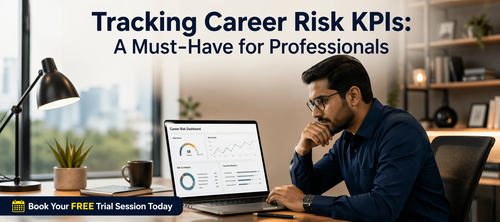
Most professionals track everything—expenses, fitness goals, deadlines, and performance metrics. But when it comes to one of the most critical assets they own—their career—they rely on instinct, assumptions, and reactive decisions.
This is where hidden risks begin to build. You may feel stuck without knowing why, sense your growth slowing down, or worry that your skills may not stay relevant—but without a system, these concerns remain vague and unaddressed.
The Career Risk KPI Tracker changes that. It introduces a structured, measurable approach to understanding and managing your career health. Instead of guessing, you gain clarity. Instead of reacting, you start acting with intention.
Download these resources and apply them alongside your daily work for improved clarity, productivity, and professional growth. You can also book a free trial to gain expert guidance and enhance your communication, problem-solving, and decision-making skills. The materials are designed in a clear, structured format to help professionals learn efficiently and implement insights with confidence.
Who Is This Blog For?
- Working professionals with 0–15 years of experience navigating career growth
- Job seekers and career switchers dealing with uncertainty
- Managers and team leaders planning long-term career direction
- Consultants and freelancers managing multiple income streams
- Professionals who want to proactively reduce career risks instead of reacting to them
Why This Topic Matters Today?
In today’s rapidly evolving job market, career stability is no longer guaranteed. Skills become outdated faster, industries shift unexpectedly, and opportunities increasingly depend on visibility and networks.
As highlighted in the resource, career risk is not just about losing a job. It includes:
- Skill obsolescence due to changing industry demands
- Weak or inactive professional networks
- Lack of visibility despite strong performance
- Overdependence on a single employer or income source
- Misalignment between current work and long-term goals
Ignoring these risks can lead to stalled growth, missed opportunities, and long-term dissatisfaction. Measuring and managing them is no longer optional—it is essential.
Core Concept or Framework Explained
The Career Risk KPI Tracker is built on a powerful principle: what gets measured gets managed.
Instead of treating career growth as unpredictable, this framework introduces measurable indicators—KPIs—that provide clarity and direction.
The system is structured around five key dimensions of career risk:
Skill Obsolescence Risk
This reflects how relevant your skills are in today’s market and how actively you are upgrading them.
Network Atrophy Risk
This measures the strength and growth of your professional relationships over time.
Visibility and Positioning Risk
This evaluates how well decision-makers recognise your capabilities and contributions.
Concentration Risk
This highlights dependence on a single employer, skill set, or income stream.
Goal Drift Risk
This assesses whether your daily work aligns with your long-term career vision
These dimensions collectively create a complete picture of your career health, helping you identify risks early and act strategically.
How This Blog and Guidebook Help You?
This blog translates the structured tracker into a practical, easy-to-use system that helps you:
- Gain clarity about your current career position
- Identify hidden risks before they become major problems
- Make informed, data-driven career decisions
- Build a structured plan for growth and stability
- Track progress over time using measurable indicators
Instead of feeling uncertain or overwhelmed, you develop a clear roadmap for consistent career progress.
Step-by-Step Breakdown
Step 1: Understand the Five Dimensions of Career Risk
Before taking action, you must recognise where risk exists. The five dimensions act as your diagnostic framework.
For example:
- If your skills are outdated, your growth slows
- If your network is weak, opportunities decrease
- If your work is invisible, promotions become harder
Understanding these dimensions is the foundation of strategic career management.
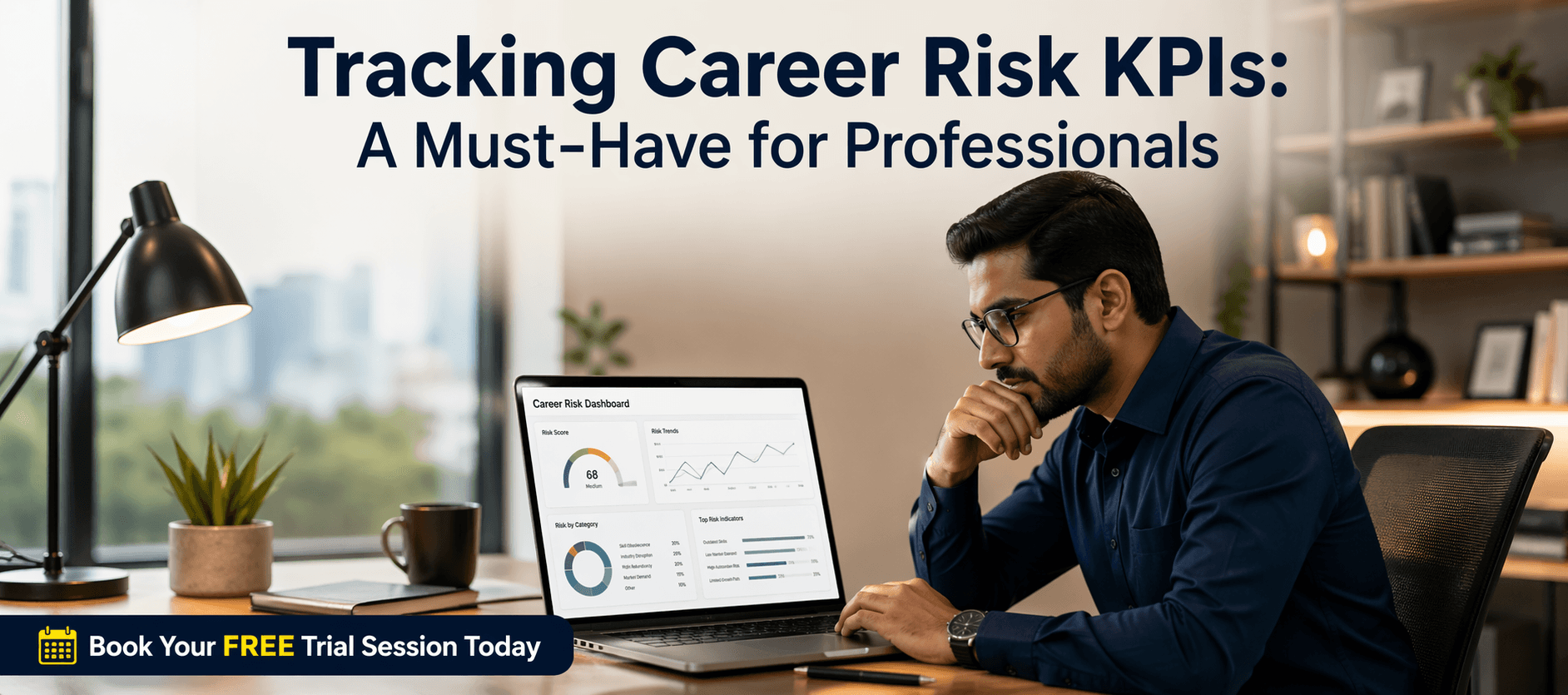
Step 2: Build Your Career Risk KPI Dashboard
The tracker provides a structured dashboard where you score yourself across key metrics on a scale of 1 to 5.
Examples of KPIs include:
- Skill relevance in the job market
- Monthly learning or upskilling hours
- Number of new professional connections
- Frequency of sharing expertise publicly
- Alignment between current role and long-term goals
Your total score gives you a clear snapshot:
- 40–50 indicates strong career health
- 25–39 signals moderate risk
- Below 25 highlights high vulnerability
This transforms abstract concerns into measurable insights.
Step 3: Run a Career Risk Audit
The audit process converts your scores into actionable priorities.
The sequence is simple:
- Score your KPIs
- Map your risks
- Set 90-day goals
- Track progress weekly
Urgent risks (score 1–2) require immediate action, while moderate risks (score 3) should be addressed within 90 days.
This structured approach prevents overwhelm and ensures focused action.
Step 4: Create a 90-Day Action Plan
The guide emphasises that insight without action is ineffective.
A 90-day plan includes:
- Identifying your top 2 risk areas
- Setting clear improvement goals
- Taking weekly micro-actions (30–60 minutes)
- Tracking progress consistently
For example:
- Learning a new skill module weekly
- Reconnecting with professional contacts
- Sharing insights on LinkedIn
- Exploring alternative income opportunities
Consistency, not intensity, drives results.
Step 5: Use Reflection Tools and Worksheets
The tracker includes self-assessment exercises to deepen awareness.
These help you:
- Identify blind spots in your career decisions
- Recognise your strongest skills and assets
- Define a clear 3-year career vision
- Map the gap between your current and desired position
This ensures your actions are aligned with long-term goals.
Step 6: Apply Insights Through Real-World Action
The case study in the resource shows how a professional improved her career trajectory by focusing on just two areas—skills and visibility—over 90 days.
The result:
- Improved KPI score significantly
- Increased opportunities and visibility
- Gained confidence and control over career direction
This demonstrates that small, focused actions can create meaningful change.
Common Mistakes or Pitfalls to Avoid
- Relying only on annual performance reviews for career planning
- Confusing busyness with actual career progress
- Building networks only when opportunities are needed
- Ignoring visibility and personal branding
- Avoiding important career conversations
- Measuring success only through salary and job title
These mistakes lead to stagnation despite hard work.
How Should You Use This Guidebook Effectively?
To maximise the value of this tracker:
- Complete the KPI dashboard honestly
- Focus on only 2 priority areas at a time
- Allocate 30 minutes for your first audit
- Invest at least 1 hour weekly in career development
- Review your progress every 90 days
Treat this as a living tool, not a one-time exercise. Consistency is what drives results.
Key Takeaways
- Career risk is measurable and manageable with the right system
- The five risk dimensions provide a complete career health framework
- KPIs help convert uncertainty into clear action steps
- A 90-day focused plan delivers better results than scattered efforts
- Visibility, networking, and skill development are critical growth drivers
- Regular audits ensure continuous improvement and alignment
- Small, consistent actions create long-term career stability and growth
Your Next Step: Accelerate Your Career with PlanetSpark
Creating an impact-driven resume is not just about landing your next job—it’s about owning your professional story and presenting it with clarity, confidence, and credibility. When your resume clearly communicates value, results, and impact, opportunities follow naturally.
At PlanetSpark, we are committed to empowering working professionals with practical, outcome-focused resources that drive real career growth. From resume building and workplace communication to leadership presence and professional writing, our programs are designed to help you succeed in today’s fast-evolving job market.
Visit https://www.planetspark.in/resources to explore:
- Career and resume-building guides
- Workplace communication and professional writing resources
- Skill-development tools curated for working professionals
Want a deeper, hands-on experience?
You can also book a free trial session to learn more about PlanetSpark’s Working Professional Courses, designed to accelerate your career through personalised coaching, real-world practice, and expert guidance.
Your career deserves more than generic advice.
It deserves clarity, confidence, and measurable impact.
Personalized Communication Roadmaps
Record a video to get a AI generated personalized communication reports