
Ultimate ATS Resume Optimization Checklist for Professionals
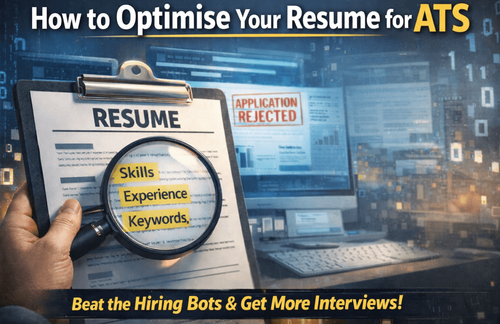

ATS Resume Optimisation Guide: The Complete Checklist to Get Past Hiring Bots and Land More Interviews
Many professionals believe that if their experience is strong enough, their resume will naturally get noticed.
But modern hiring systems rarely work that way.
Today, the majority of medium and large organisations use Applicant Tracking Systems (ATS) to filter and rank job applications before a human recruiter even sees them. These systems scan resumes for structure, keywords, and formatting signals that match the job description. If the resume fails these checks, it never reaches a recruiter — no matter how qualified the candidate may be.
In fact, more than 75 percent of resumes are rejected by ATS software before a human ever reads them.
This means that resume optimisation is no longer optional. It is a critical professional skill.
The ATS Optimisation Master Checklist created by PlanetSpark provides a practical, step by step system that helps professionals structure their resume correctly, use the right keywords, and tailor applications efficiently for modern hiring systems. This blog breaks down the frameworks, strategies, and actionable insights from that guide so you can dramatically increase your chances of getting interview callbacks.
Who Is This Blog For?
- Job seekers struggling to receive interview responses despite strong experience
- Career switchers trying to position their background for new industries
- Early and mid career professionals with 0–15 years of experience navigating modern hiring systems
- Consultants, managers, and professionals applying to competitive roles
- Anyone who wants their resume to pass ATS filters and reach real hiring managers
Why This Topic Matters Today?
The hiring landscape has changed dramatically in the past decade.
Most companies now receive hundreds or even thousands of applications for a single role. To manage this volume, employers rely on Applicant Tracking Systems to scan, parse, and rank resumes automatically.
These systems are not judging creativity or design quality. They are analysing signals such as:
- Resume structure and formatting
- Keyword alignment with the job description
- Presence of specific skills and tools
- Section headings and information hierarchy
If your resume is formatted in a way the ATS cannot read, it effectively scores zero regardless of how impressive your background may be.
Many professionals unknowingly sabotage their own applications by using visually designed templates, non standard section headings, or missing key job description keywords. The result is silence after submitting applications.
Understanding how ATS systems work and optimising your resume accordingly can dramatically increase your visibility and callback rates.
Core Concept or Framework Explained
The ATS Optimisation Master Checklist introduces a layered framework for building a resume that both machines and humans can read effectively.
The framework moves through several key stages:
Foundation Layer
Before content even matters, the resume must be technically readable by ATS systems. File format, structure, and formatting rules determine whether the system can parse your information.
Keyword Strategy
ATS platforms scan resumes for exact terminology from the job description. Keyword alignment determines whether your application is ranked as relevant.
Professional Summary Optimisation
The professional summary is one of the first sections both ATS and recruiters evaluate. It must mirror the job description language while communicating your professional identity clearly.
Experience Evidence
Your work experience bullets must demonstrate the use of key skills in context, ideally supported by measurable results.
Skills and Certification Structure
Skills must be organised in clear categories and written in plain text so ATS scanners can identify them easily.
Application Tailoring System
Every application requires targeted keyword alignment and slight adjustments to match the specific role requirements.
When these layers are combined, the result is a resume that performs well both algorithmically and for human recruiters.
How This Blog and Guidebook Help You?
This guide and the underlying checklist help professionals achieve several practical outcomes.
You learn how to:
- Structure your resume in a format that ATS systems can reliably read
- Identify and use the exact keywords employers are searching for
- Write professional summaries that capture attention in the first few seconds
- Convert descriptive work experience into measurable achievements
- Build a skills section that increases your keyword match score
- Tailor your resume quickly for multiple applications without rewriting everything
Most importantly, the system helps you move from random job applications to a strategic application process that consistently improves your interview conversion rate.
Step by Step Breakdown
Foundation Layer: File Format and Resume Structure
Before worrying about keywords or achievements, your resume must be technically readable.
Many popular resume templates fail at this stage because they prioritise design over machine readability.
Key foundational practices include:
- Save your resume as a .docx file because this format is most reliably parsed by ATS platforms
- Only submit PDF files if the job posting explicitly allows them
- Use a single column layout rather than multi column designs
- Use standard section headings such as Work Experience, Education, Skills, and Certifications
- Use standard fonts like Arial, Calibri, Georgia, or Times New Roman
Several formatting elements should be avoided entirely:
- Text embedded inside images
- Tables or text boxes containing important information
- Icons replacing bullet points
- Decorative shapes or graphical dividers
- Skill rating bars or progress indicators
The guiding principle is simple: clarity and simplicity outperform visual design when submitting resumes through online systems.
Keyword Strategy: Speaking the Language of Hiring Systems
Keywords are the engine of ATS optimisation.
These systems scan your resume for the same terms and phrases that appear in the job description. Candidates whose resumes contain the most relevant keywords receive higher ranking scores.
A structured keyword strategy typically follows four steps:
Deconstruct the Job Description
Carefully analyse the job description to identify frequently repeated terms.
Identify Key Skill Categories
Look for technical skills, tools, methodologies, and certifications mentioned in the posting.
Map Keywords to Experience
Ensure that each relevant keyword appears within the context of your work experience.
Embed Keywords Across Sections
Place important terms in multiple areas of your resume such as the professional summary, skills section, and experience bullets.
The goal is not keyword stuffing. Instead, it is aligning your resume language with the language employers already use.
Professional Summary: Winning the First Six Seconds
Your professional summary is the first substantial text block recruiters see.
Research consistently shows that recruiters often spend only a few seconds scanning this section before deciding whether to continue reading.
An effective summary typically contains three to five sentences and communicates:
- Your professional identity
- Your years of experience
- Your core areas of expertise
- A measurable achievement
- Your value proposition for the employer
A simple framework looks like this:
Job Title with X years of experience in a specific domain. Proven track record of a key achievement. Specialising in several relevant skills. Seeking to apply these capabilities in a role aligned with the employer's needs.
When tailored correctly, this section dramatically improves both ATS keyword detection and recruiter engagement.
Work Experience: Writing Bullets That Demonstrate Impact
Your work experience section carries the most weight in ATS scoring algorithms because it demonstrates real use of relevant skills.
Strong bullet points follow a simple structure:
Action Verb plus Task plus Result.
Examples might include:
- Led product launch initiatives that increased user adoption by 30 percent
- Analysed marketing data to optimise campaign performance and reduce costs by 15 percent
- Mentored junior staff members, improving team productivity by 20 percent
Best practices for experience bullets include:
- Use strong action verbs at the beginning of each bullet
- Add quantifiable results whenever possible
- Avoid vague phrases such as responsible for or assisted with
- Keep bullets concise and focused
Adding numbers such as percentages, revenue impact, or time savings significantly strengthens both ATS relevance and recruiter perception.
Skills Section: Structuring Skills for Maximum Visibility
The skills section is one of the easiest areas to optimise for ATS systems.
Instead of listing skills randomly, organise them into clear categories.
Examples include:
Technical Skills
Project Management, Agile, Scrum, JIRA, Confluence
Domain Knowledge
B2B SaaS, Enterprise Sales, Revenue Operations
Tools and Software
Salesforce, HubSpot, Google Analytics, Microsoft Excel, Power BI
Languages
English Native, Hindi Professional Working Proficiency
Certifications
Project Management Professional PMP, Google Analytics Certification, AWS Cloud Practitioner
This structure allows ATS systems to quickly scan and match skills against job requirements.
Education, Certifications, and Supporting Sections
Many professionals overlook these sections, but they are important for ATS matching when employers require specific degrees or certifications.
Key practices include:
- Listing full degree names rather than abbreviations
- Including university name, location, and graduation year
- Listing certifications with issuing organisations
- Adding expiry dates or progress status where relevant
Additional sections can also strengthen your application:
Projects
Particularly valuable for career switchers demonstrating new skills.
Volunteer Work
Useful when it demonstrates leadership or transferable abilities.
Languages
Always include proficiency level using standard labels.
Tailoring Framework: Customise Every Application
One of the most important insights from the checklist is that tailoring each application dramatically improves results.
Submitting the same resume to every role is one of the most common job search mistakes.
A more effective approach involves maintaining a Master Resume that includes all roles, achievements, and skills. From this master document, you extract and customise targeted versions for each application.
The typical workflow includes:
- Reading the job description multiple times to identify requirements
- Highlighting key skills and tools mentioned
- Updating the professional summary to mirror the job title
- Reordering skills to prioritise relevant ones
- Adjusting the top experience bullets to match job language
Once the system is established, tailoring each resume version typically takes only 15 to 20 minutes but can dramatically increase interview responses.
Common Mistakes or Pitfalls to Avoid
Even experienced professionals frequently make avoidable ATS mistakes.
Common issues include:
- Using visually designed resume templates with multiple columns
- Writing generic professional summaries that lack keywords
- Omitting the exact job title from the resume
- Using acronyms without spelling out their full forms
- Presenting skills using graphical ratings instead of plain text
- Placing contact information only in headers
- Using creative section headings such as My Journey instead of standard labels
- Submitting the same resume to every job without tailoring
- Writing experience bullets without quantifiable results
- Submitting resumes without checking ATS compatibility using tools
Correcting these issues alone can significantly improve your resume's chances of passing automated filters.
How Should You Use This Guidebook Effectively?
The checklist is designed to function as a practical operating system for your job search.
A recommended workflow includes:
First Pass
Read the checklist from beginning to end and rebuild your resume foundation including structure and formatting.
Create Your Master Resume
Compile every role, achievement, certification, and skill into one comprehensive document.
Develop a Keyword Workflow
Use tools such as Jobscan or word frequency tools to identify keywords in job descriptions.
Tailor Each Application
Update your summary, skills, and top experience bullets to match each role.
Run an ATS Audit
Before submitting any application, check your resume using ATS scanning tools and aim for a keyword match score of at least 70 percent.
Over time, this process becomes faster and more efficient while producing consistently better results.
Key Takeaways
- Over 75 percent of resumes are rejected by ATS systems before a recruiter reads them
- Simple formatting and a single column .docx structure are essential for ATS compatibility
- Keyword alignment with the job description dramatically improves resume ranking
- A strong professional summary determines whether recruiters continue reading
- Work experience bullets should demonstrate measurable impact rather than responsibilities
- Organised skills sections help ATS systems quickly match candidates with requirements
- Maintaining a master resume makes it easier to tailor applications efficiently
- Small improvements in structure and keyword usage can dramatically increase interview callbacks
Your Next Step: Accelerate Your Career with PlanetSpark
Creating an impact-driven resume is not just about landing your next job—it’s about owning your professional story and presenting it with clarity, confidence, and credibility. When your resume clearly communicates value, results, and impact, opportunities follow naturally.
At PlanetSpark, we are committed to empowering working professionals with practical, outcome-focused resources that drive real career growth. From resume building and workplace communication to leadership presence and professional writing, our programs are designed to help you succeed in today’s fast-evolving job market.
Visit https://www.planetspark.in/resources to explore:
- Career and resume-building guides
- Workplace communication and professional writing resources
- Skill-development tools curated for working professionals
Want a deeper, hands-on experience?
You can also book a free trial session to learn more about PlanetSpark’s Working Professional Courses, designed to accelerate your career through personalised coaching, real-world practice, and expert guidance.
Your career deserves more than generic advice.
It deserves clarity, confidence, and measurable impact.