
Ultimate Guide to Enterprise Leadership Excellence Resume
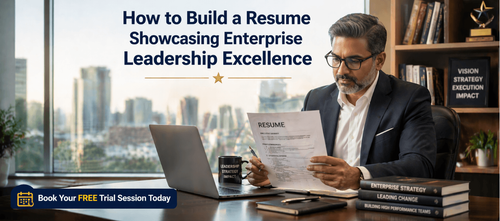

Enterprise Leadership Resume Strategy: How to Build an Impact-Driven Resume That Gets Executive-Level Interviews
Most professionals spend years building real leadership capability—managing teams, driving transformation, owning budgets, and navigating complex business environments. Yet when it comes to their resume, they undersell that experience. Instead of showcasing measurable impact, they list responsibilities. Instead of demonstrating leadership at scale, they describe tasks. And instead of positioning themselves as decision-makers, they sound like contributors.
In today’s enterprise job market, that mistake is costly. Senior hiring managers often spend less than 30 seconds scanning a resume. In that short window, your resume must answer three critical questions: Can you lead at scale? Have you delivered measurable results? Do you think like an executive?
If your resume fails to do this, you are filtered out—regardless of your actual experience.
This guide transforms how you approach resume building. Based on the Enterprise Leadership Excellence framework, it provides a structured, outcome-driven approach to help you reposition yourself as a high-impact leader rather than just an experienced professional.
Download these resources and apply them alongside your daily work for improved clarity, productivity, and professional growth. You can also book a free trial to gain expert guidance and enhance your communication, problem-solving, and decision-making skills. The materials are designed in a clear, structured format to help professionals learn efficiently and implement insights with confidence.
Who Is This Blog For?
- Mid-level managers aiming to step into senior leadership roles
- Consultants transitioning into enterprise leadership positions
- Professionals with 3–15 years of experience seeking strategic career growth
- Leaders preparing for VP, Director, or enterprise-level roles
- Career switchers looking to reposition their experience for higher-impact opportunities
Why This Topic Matters Today?
The enterprise hiring landscape has evolved significantly. Hiring managers are no longer impressed by long lists of responsibilities. They are looking for evidence of impact, scale, and strategic thinking.
Several challenges make this even more critical today:
- High competition for leadership roles means differentiation is essential
- Resume screening time has reduced to under 30 seconds
- Generic resumes fail to communicate leadership readiness
- Organisations prioritise measurable outcomes over effort or tenure
As highlighted in the resource, many professionals fall into the trap of describing what they were responsible for instead of what they achieved. This disconnect is the primary reason qualified candidates fail to secure interviews.
Core Concept or Framework Explained
At the heart of this guide is a leadership-first resume framework designed to align your experience with how enterprise hiring managers evaluate candidates.
This framework is not chronological—it is strategic. Every section of your resume must answer a specific question in the recruiter’s mind.
The five core components include:
Leadership Brand Statement
Your opening summary must communicate your identity as a leader, the scale at which you operate, and your unique differentiator. This replaces generic summaries with a clear executive positioning.
Core Competencies Grid
A structured list of leadership skills such as P&L ownership, transformation, and cross-functional alignment. This ensures your resume is both scannable and ATS-friendly.
Professional Experience
Each role must be structured using a combination of context, leadership scope, and impact-driven achievements. The emphasis is on outcomes, not tasks.
Enterprise Impact Highlights
A curated section showcasing your most impressive achievements upfront. This ensures your best work is immediately visible.
Education and Executive Credentials
Rather than leading with education, this section supports your leadership profile by highlighting credibility signals such as certifications, board roles, and executive programs.
How This Blog and Guidebook Help You?
This framework directly addresses the biggest gap between qualified professionals and successful candidates—presentation.
By applying these principles, you will:
- Position yourself as a strategic leader rather than an operational contributor
- Communicate measurable business impact clearly and concisely
- Increase your interview callback rate significantly
- Align your resume with enterprise hiring expectations
- Build a compelling professional narrative that differentiates you
The real-world case study in the guide demonstrates this transformation clearly. A senior operations professional went from zero callbacks to multiple interviews and competing offers after restructuring her resume using this approach.
Step-by-Step Breakdown
Diagnose Before You Draft
Before rewriting your resume, you must assess where it currently stands. The Enterprise Leadership Audit helps identify gaps across four key areas:
- Strategic positioning: Does your resume reflect leadership identity and scale?
- Impact quantification: Are your achievements backed by numbers?
- Leadership language: Do your words convey authority and ownership?
- Relevance alignment: Is your resume tailored to your target role?
This diagnostic step ensures you focus on high-impact improvements rather than superficial edits.
Build Your Leadership Brand Statement
Your resume should begin with a concise leadership narrative.
This includes:
- Your leadership identity
- The scale of your impact
- Your unique differentiator
For example, instead of stating years of experience, position yourself as a leader who drives transformation, manages large-scale operations, or delivers measurable growth.
Create a Core Competencies Grid
This section acts as a quick snapshot of your expertise.
Focus only on strategic capabilities such as:
- Enterprise transformation
- Change management
- Cross-functional leadership
- Stakeholder management
Avoid listing basic or technical skills that do not reinforce your leadership positioning.
Structure Your Experience Strategically
Each role should follow a structured format:
- Context: Describe the business environment or challenge
- Scope: Include team size, budget, and geographic reach
- Achievements: Highlight measurable impact using strong action verbs
- Legacy: Explain what lasting change you created
This approach ensures clarity and consistency across your resume.
Use the CAR Method for Bullet Points
The CAR method transforms weak bullet points into powerful impact statements.
- Challenge: What problem or situation did you address?
- Action: What did you do specifically?
- Result: What measurable outcome did you achieve?
For example, instead of saying you managed a team, demonstrate how you scaled a team and improved performance metrics.
Front-Load Your Best Achievements
Do not bury your most impressive work deep within your resume.
Create a dedicated section for your top achievements, ensuring they are visible within the first few seconds of review.
Leverage Ready-to-Use Templates
The guide provides templates that simplify the process:
- Leadership brand statement template
- Competency grid structure
- Experience section format
These templates are designed to align with both ATS systems and hiring manager expectations.
Use the Resume Worksheet
A structured worksheet helps you extract key information such as:
- Leadership identity
- Impact metrics across roles
- Unique differentiators
This ensures your resume is built on substance rather than guesswork.
Common Mistakes or Pitfalls to Avoid
Using Generic Objective Statements
Statements like “seeking a challenging role” add no value. Replace them with a strong leadership brand statement.
Burying Key Achievements
Your best work should appear at the top, not hidden in later sections.
Using Uncontextualised Metrics
Numbers without context lack meaning. Always provide scale and relevance.
Listing Responsibilities Instead of Results
Responsibility-based bullet points fail to demonstrate leadership impact.
Ignoring Scope Indicators
Without team size, budget, or geography, your leadership scale remains unclear.
Using a One-Size-Fits-All Resume
Each application should be tailored to the specific role and organisation.
Overlooking Executive Credibility Signals
Board roles, certifications, and speaking engagements strengthen your profile significantly.
How Should You Use This Guidebook Effectively?
To maximise results, follow a structured approach:
- Allocate 60–90 minutes for initial drafting
- Start with the audit to identify key gaps
- Use the worksheet to gather raw content
- Apply templates to structure your resume
- Rewrite bullets using the CAR method
- Tailor your resume for each application
Rather than trying to perfect everything at once, focus on incremental improvements that deliver the highest impact.
Key Takeaways
- Your resume is a strategic marketing document, not a job description
- Leadership positioning matters more than years of experience
- Quantified impact is the strongest differentiator in enterprise roles
- The CAR method is essential for writing powerful bullet points
- Front-loading achievements increases visibility and impact
- Tailoring your resume improves interview success rates
- Small structural changes can significantly enhance perception and credibility
Your Next Step: Accelerate Your Career with PlanetSpark
Creating an impact-driven resume is not just about landing your next job—it’s about owning your professional story and presenting it with clarity, confidence, and credibility. When your resume clearly communicates value, results, and impact, opportunities follow naturally.
At PlanetSpark, we are committed to empowering working professionals with practical, outcome-focused resources that drive real career growth. From resume building and workplace communication to leadership presence and professional writing, our programs are designed to help you succeed in today’s fast-evolving job market.
Visit https://www.planetspark.in/resources to explore:
- Career and resume-building guides
- Workplace communication and professional writing resources
- Skill-development tools curated for working professionals
Want a deeper, hands-on experience?
You can also book a free trial session to learn more about PlanetSpark’s Working Professional Courses, designed to accelerate your career through personalised coaching, real-world practice, and expert guidance.
Your career deserves more than generic advice.
It deserves clarity, confidence, and measurable impact.
Personalized Communication Roadmaps
Record a video to get a AI generated personalized communication reports