
Ultimate Guide to the Career Risk Response Planner for Professionals

How to Navigate Career Risk with Confidence
In today’s dynamic professional environment, career risks are inevitable. Whether it’s a sudden job loss, an industry shift, or a difficult relationship with a manager, these challenges are a part of every professional’s journey. But how do successful professionals handle these risks without letting them derail their careers?
The Career Risk Response Planner provides the answer. It’s not just a theoretical guide; it’s a practical, actionable tool designed to help you identify, assess, and respond to career risks—before they become crises. This blog walks you through the key principles of career risk management, offering a structured approach to navigating the uncertainties of your professional life.
Download these resources and apply them alongside your daily work for improved clarity, productivity, and professional growth. You can also book a free trial to gain expert guidance and enhance your communication, problem-solving, and decision-making skills. The materials are designed in a clear, structured format to help professionals learn efficiently and implement insights with confidence.

Who Is This Blog For?
- Career changers seeking stability and direction
- Early-to-mid-career professionals anticipating potential industry shifts
- Managers and consultants aiming for strategic risk management
- Those facing workplace challenges or significant transitions
- Professionals committed to long-term career growth and resilience
Why This Topic Matters Today?
In an unpredictable job market, professionals must be proactive in managing career risks. Recent trends show that career risks are no longer just external forces; they are often the result of internal changes—shifts in skill requirements, company restructuring, and even personal challenges. Addressing career risks early and systematically gives you the leverage to turn them into opportunities rather than setbacks.
Professionals who do not manage these risks effectively often find themselves caught off-guard, leading to emotional stress, missed opportunities, and unnecessary career setbacks. This planner, however, enables you to take control, offering clear, actionable steps to minimize risk and maximize career growth.
Core Concept or Framework Explained
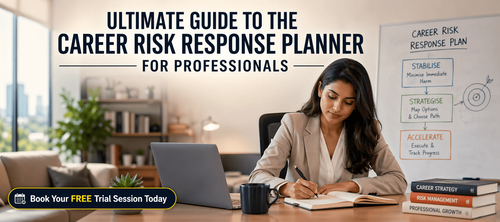
The Career Risk Response Planner emphasizes a systematic approach to managing career risk in three phases: Stabilise, Strategise, and Accelerate.
1. Stabilise: The first phase focuses on minimizing immediate harm. This involves protecting your current role, maintaining critical relationships, and ensuring you have the financial and emotional runway to navigate through the risk.
2. Strategise: Once stability is secured, it’s time to map out your path forward. This phase is about identifying multiple viable options and selecting the one that aligns with your long-term goals.
3. Accelerate: The final phase involves executing the plan with discipline, setting measurable milestones, and tracking progress.
By following this three-phase structure, professionals can ensure that their responses to career risks are both thoughtful and effective, leading to better outcomes in the long run.
How This Blog and Guidebook Help You?
This guide equips you with the tools to respond to career risks with confidence and clarity. By using the Career Risk Response Planner, you’ll be able to:
- Identify and prioritize career risks before they become major issues
- Develop a structured, actionable response plan
- Enhance your decision-making abilities during stressful times
- Take proactive steps to strengthen your career resilience
Step-by-Step Breakdown
Step 1: Identify Your Risks
Start by completing the Risk Identification Worksheet, where you’ll list your top three career risks, rate their likelihood and potential impact, and assign each a Risk Priority Score. This simple exercise transforms vague anxiety into a concrete, actionable plan.
Step 2: Create Your Response Plan
Once you’ve identified your risks, create a clear Response Plan. Use the Stabilise, Strategise, and Accelerate phases to develop a structured approach to each risk. The more detailed your plan, the more effective your response will be.
Step 3: Build and Activate Your Network
Your professional network is a critical resource during times of risk. Reach out to trusted colleagues, mentors, and peers to gain insight, emotional support, and advice. Building these relationships proactively can be a key factor in mitigating risks before they escalate.
Step 4: Execute with Discipline
In the Accelerate phase, focus on executing your plan with precision. Regularly assess your progress, adjust your actions as needed, and stay accountable to your goals. Remember, consistency is key to turning risk into opportunity.
Common Mistakes or Pitfalls to Avoid
1. Waiting for Certainty
Many professionals hesitate to act until they have all the information. The solution? Take one small step within the next 48 hours to break the cycle of indecision.
2. Isolating Yourself from Your Network
Don't wait until you're in crisis to activate your professional network. Reach out early to gain support and advice that will strengthen your position.
3. Neglecting to Build Options
Relying on only one path forward limits your career flexibility. Always maintain at least two options—whether it’s exploring new roles, seeking a lateral move, or pursuing further qualifications.
How Should You Use This Guidebook Effectively?
To make the most of the Career Risk Response Planner, follow these steps:
- Identify your top career risks and prioritize them.
- Reach out to your network for advice and support.
- Develop a response plan for each risk using the Stabilise, Strategise, and Accelerate phases.
- Implement your plan consistently and adjust as necessary.
The planner is designed for ongoing use, so revisit it quarterly to update your risk register and response plans. By treating this planner as a living document, you ensure that you remain proactive, rather than reactive, in your career management.
Key Takeaways
- Career risk is inevitable, but your response is a choice
- Naming your risks reduces anxiety and allows for effective action
- Stabilise your position before strategizing your next steps
- Always maintain at least two paths forward to ensure flexibility
- Your network is one of your most valuable assets in managing risk
- Responding to career risk with composure and strategy enhances your professional reputation
Your Next Step: Accelerate Your Career with PlanetSpark
Creating an impact-driven resume is not just about landing your next job—it’s about owning your professional story and presenting it with clarity, confidence, and credibility. When your resume clearly communicates value, results, and impact, opportunities follow naturally.
At PlanetSpark, we are committed to empowering working professionals with practical, outcome-focused resources that drive real career growth. From resume building and workplace communication to leadership presence and professional writing, our programs are designed to help you succeed in today’s fast-evolving job market.
Visit [PlanetSpark Resources](https://www.planetspark.in/resources) to explore:
- Career and resume-building guides
- Workplace communication and professional writing resources
- Skill-development tools curated for working professionals
Want a deeper, hands-on experience?
You can also book a free trial session to learn more about PlanetSpark’s Working Professional Courses, designed to accelerate your career through personalised coaching, real-world practice, and expert guidance.
Your career deserves more than generic advice.
It deserves clarity, confidence, and measurable impact.
Personalized Communication Roadmaps
Record a video to get a AI generated personalized communication reports