
Use Peer Influence to Improve Team Accountability


Techniques to Foster Team Accountability Through Peer Influence Without Using Authority
In many teams, accountability feels like a constant struggle. Deadlines slip, commitments get delayed, and despite multiple reminders, follow-ups, and check-ins, the same issues keep repeating. As a professional, you may find yourself wondering: why isn’t anything changing?
The answer often lies in a hidden gap. Most teams rely heavily on top-down accountability—managers assigning tasks, tracking progress, and enforcing deadlines. But this approach has limits. When accountability remains external, it rarely becomes consistent or self-sustaining.
What truly drives consistent follow-through is something more powerful: peer influence.
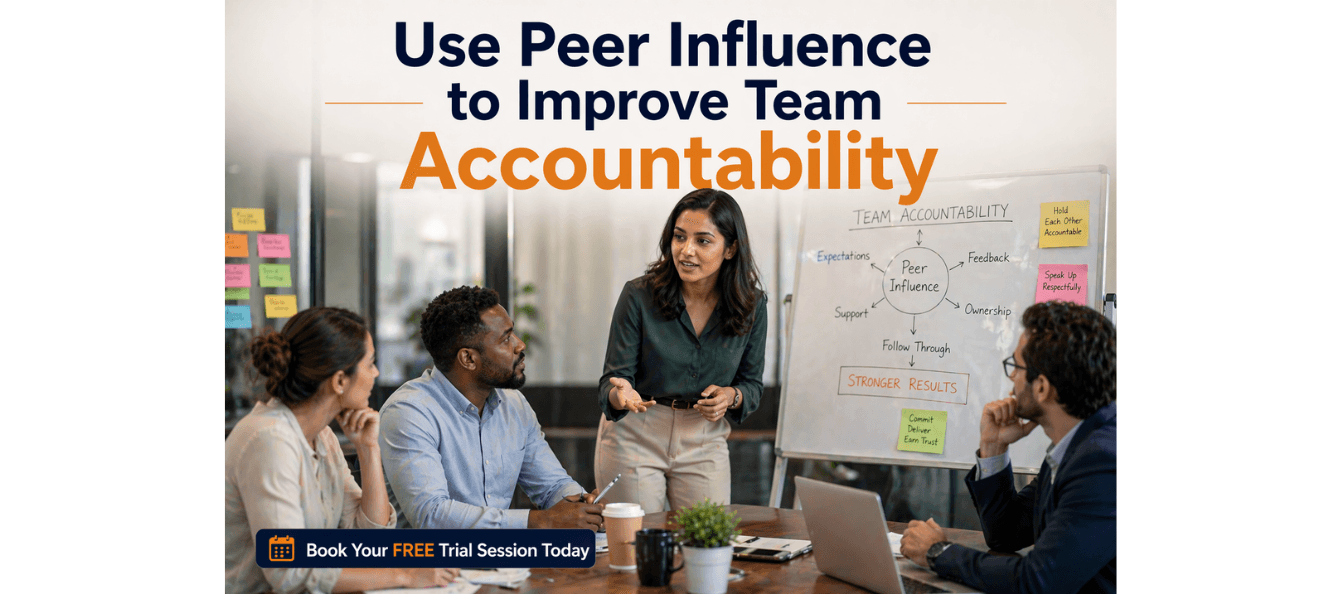
When commitments are visible, shared, and reinforced by colleagues—not just managers—accountability becomes social. People follow through not because they are told to, but because they feel responsible to the team.
This playbook gives you a practical system to build that kind of accountability. Through structured scripts, repeatable rituals, and simple frameworks, you can transform how ownership works within your team—without increasing pressure or micromanagement.
Download these resources and apply them alongside your daily work for improved clarity, productivity, and professional growth. You can also book a free trial to gain expert guidance and enhance your communication, problem-solving, and decision-making skills. The materials are designed in a clear, structured format to help professionals learn efficiently and implement insights with confidence.
Who Is This Blog For?
- Team leads and managers struggling with accountability issues
- Individual contributors influencing peers without formal authority
- Project managers handling cross-functional teams
- Consultants managing client-side execution
- Professionals aiming to build stronger team ownership and follow-through
Why This Topic Matters Today?
Modern teams are increasingly collaborative, cross-functional, and less hierarchical. This shift has made traditional top-down accountability less effective.
Common challenges include:
- Teams agreeing in meetings but failing in execution
- Repeated follow-ups that create fatigue without results
- Lack of ownership clarity across tasks
- Low engagement with commitments
The core issue is not effort—it is ownership.
Research and practical experience show that people are far more likely to follow through when their commitments are visible to and reinforced by peers they respect. This makes peer influence one of the most underutilised yet powerful tools in team performance.
Core Concept or Framework Explained
The playbook introduces a three-layer Peer Influence Accountability Model:
- Psychological Safety: Creating an environment where people can admit misses without fear
- Visible Commitments: Making responsibilities public and clearly owned
- Peer Reinforcement: Encouraging teammates to recognise and support each other
This model shifts accountability from being manager-driven to team-driven.
Instead of relying on authority, it builds a culture where ownership is shared, visible, and socially reinforced—making follow-through more natural and consistent.
How This Blog and Guidebook Help You?
This blog and playbook provide:
- Ready-to-use scripts for real workplace conversations
- Step-by-step methods to introduce accountability structures
- Weekly rituals to sustain team ownership
- Practical tools to diagnose and fix accountability gaps
The result is stronger follow-through, better collaboration, and a more engaged, responsible team.
Step-by-Step Breakdown
Step 1: Create the Right Conditions
Accountability starts with structure.
Key actions:
- Introduce clear commitment norms in meetings
- Ensure every task has a single owner
- Create shared visibility through boards or trackers
- Pair team members as accountability partners
These structures make commitments clear, visible, and harder to ignore.
Step 2: Activate Peer Influence Through Conversations
What you say—and how you say it—matters.
Use structured scripts for key situations:
- Address missed commitments with curiosity, not blame
- Highlight patterns as team issues, not individual failures
- Reinforce follow-through with specific recognition
- Clarify ownership when tasks become ambiguous
- Check in mid-week as a supportive peer
- Renegotiate commitments transparently when needed
These conversations shift accountability from pressure to collaboration.
Step 3: Sustain Accountability Through Rituals
Consistency turns behaviour into culture.
Implement four key rituals:
- Commitment Round: Each team member states a clear weekly deliverable
- Mid-Week Check-In: Peer partners follow up informally
- Shoutout Moment: Recognise specific follow-through publicly
- Monthly Retro: Review commitments versus delivery and improve
These rituals reinforce accountability without requiring constant managerial intervention.
Step 4: Use Visibility to Strengthen Ownership
When commitments are visible, they carry social weight.
Best practices:
- Maintain a shared board for tracking commitments
- Ensure deadlines are specific and time-bound
- Make ownership explicit and public
Visibility transforms individual tasks into shared responsibilities.
Step 5: Build a Culture of Reinforcement
Accountability grows when positive behaviours are recognised.
Focus on:
- Acknowledging specific deliverables, not just effort
- Encouraging peer-to-peer recognition
- Creating norms where follow-through is noticed and valued
This builds a reinforcing loop that strengthens team behaviour over time.
Step 6: Continuously Assess and Improve
Accountability is not a one-time setup—it evolves.
Use tools like:
- Readiness checklists to assess current gaps
- Reflection worksheets to understand team dynamics
- Regular retrospectives to refine processes
Continuous improvement ensures accountability becomes sustainable.
Common Mistakes or Pitfalls to Avoid
Many teams fail to build accountability due to avoidable mistakes:
- Turning accountability into surveillance
- Skipping psychological safety before introducing structure
- Assigning tasks to “the team” instead of individuals
- Recognising effort without linking it to outcomes
- Running rituals inconsistently
- Treating missed commitments as failures instead of learning opportunities
A better approach is to:
- Keep accountability supportive, not controlling
- Build trust before enforcing visibility
- Focus on clarity, consistency, and reinforcement
How Should You Use This Guidebook Effectively?
To maximise results, follow a structured approach:
- Start with one accountability structure (e.g., commitment round)
- Introduce one script in your next relevant conversation
- Implement weekly rituals gradually
- Review progress after 30 days
Suggested workflow:
- Week 1: Set up commitment norms and visibility
- Week 2: Introduce peer check-ins
- Week 3: Add recognition rituals
- Week 4: Run a team retrospective
Time investment:
- 10–15 minutes for setup and reflection
- Minimal additional time during regular meetings
Consistency matters more than complexity—start small and build momentum.
Key Takeaways
- Peer influence is more powerful than top-down accountability
- Psychological safety is essential for genuine ownership
- Visible commitments increase follow-through
- Structured scripts improve difficult conversations
- Weekly rituals sustain accountability over time
- Recognition reinforces positive behaviour
- Consistency transforms accountability into culture
Your Next Step: Accelerate Your Career with PlanetSpark
Creating an impact-driven resume is not just about landing your next job—it’s about owning your professional story and presenting it with clarity, confidence, and credibility. When your resume clearly communicates value, results, and impact, opportunities follow naturally.
At PlanetSpark, we are committed to empowering working professionals with practical, outcome-focused resources that drive real career growth. From resume building and workplace communication to leadership presence and professional writing, our programs are designed to help you succeed in today’s fast-evolving job market.
Visit https://www.planetspark.in/resources to explore:
- Career and resume-building guides
- Workplace communication and professional writing resources
- Skill-development tools curated for working professionals
Want a deeper, hands-on experience?
You can also book a free trial session to learn more about PlanetSpark’s Working Professional Courses, designed to accelerate your career through personalised coaching, real-world practice, and expert guidance.
Your career deserves more than generic advice.
It deserves clarity, confidence, and measurable impact.
Start building that advantage today—with PlanetSpark.
Personalized Communication Roadmaps
Record a video to get a AI generated personalized communication reports