
Vocational Training Biodata Guide for Working Professionals
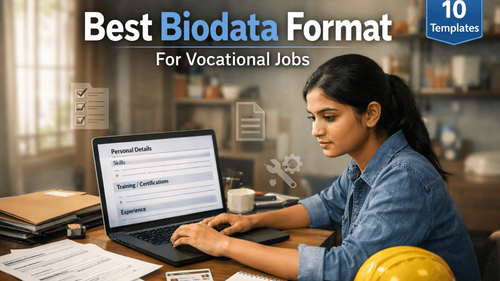

Best Biodata Format for Vocational Training Applicants: 10 Templates to Get Selected Faster
If you are applying for a vocational training programme, apprenticeship, or skill-based job, your biodata is often your first and most important impression. Unlike a traditional resume, vocational applications require a more detailed and structured format that highlights not just your experience, but also your personal background, technical skills, and training readiness.
Many applicants struggle with what to include, how to structure it, and which format to follow. This is where a professionally designed biodata template becomes a game-changer.
The PlanetSpark Biodata Template Pack for Vocational Training Applicants solves this problem by offering ready-to-use, recruiter-friendly formats tailored for different professional scenarios.
Who Is This Blog For?
- First-time applicants applying to ITI, polytechnic, or skill development programmes
- Trade professionals like electricians, welders, plumbers, and technicians
- Career switchers entering vocational or skill-based roles
- Freelancers and gig workers seeking project-based opportunities
- Candidates applying to government schemes like PMKVY, NSDC, or DDU-GKY
- Healthcare, agriculture, hospitality, and IT vocational trainees
Why This Topic Matters Today?
The job market is shifting toward skill-first hiring. Employers and training institutions increasingly prioritise practical competencies over formal degrees.
In such scenarios, a generic resume often fails to communicate the full picture. A biodata format, on the other hand, highlights:
- Personal and demographic details required for government and training applications
- Technical skills and certifications relevant to trade-based roles
- Practical experience, even if informal or project-based
Vocational programmes, especially in government and public sector units, frequently require structured biodata formats instead of resumes.
Without the right format, even qualified candidates risk being overlooked.
Core Concept or Framework Explained
The core idea behind this template pack is simple: one format does not fit all.
Instead of using a single generic biodata, the guide provides 10 unique templates, each designed for a specific professional scenario.
These templates are built on three key principles:
- Scenario-based structure: Each template aligns with a real-world application context such as apprenticeship, freelance work, or government schemes
- Skill-first presentation: Focus on technical competencies, certifications, and practical exposure
- Conversion-friendly design: Works across PDF, Word, and Google Docs without formatting issues
This ensures that your biodata is not just complete, but also strategically aligned with what recruiters and training coordinators expect.
How This Blog and Guidebook Help You?
This blog and the underlying template pack help you:
- Choose the right biodata format based on your career stage
- Avoid common formatting and content mistakes
- Present your skills and experience in a structured, professional way
- Save time by using ready-made templates instead of starting from scratch
- Increase your chances of selection in vocational programmes and skill-based roles
Most importantly, it helps you communicate your value clearly, even if you are a beginner or transitioning careers.
Step-by-Step Breakdown
Step 1: Choose the Right Template
The template pack includes 10 specialised formats, each designed for a specific use case:
- Classic Vocational Biodata for first-time applicants
- Trade Specialist Biodata for experienced professionals
- Apprenticeship Biodata for freshers and school leavers
- Skills-First Biodata for career switchers
- Government Scheme Biodata for structured applications
- Freelance Technician Biodata for independent workers
- Healthcare Biodata for medical and allied fields
- Agricultural Biodata for rural and agri-based roles
- Hospitality Biodata for service industry roles
- Digital IT Biodata for tech and coding programmes
Choosing the right template ensures your application aligns with expectations.
Step 2: Fill in Personal and Contact Information
Every template begins with basic personal details such as:
- Full name, date of birth, and contact information
- Address and identification details (like Aadhaar where required)
- Category, nationality, and other relevant fields
This is especially important for government and training programme applications.
Step 3: Highlight Educational Qualifications
Include:
- School education (Class 10, 12, or equivalent)
- ITI or vocational certifications
- Any additional training or short courses
Keep it structured with institution names, years, and percentages.
Step 4: Showcase Skills and Competencies
This is the most critical section in a vocational biodata.
Depending on the template, include:
- Technical skills such as wiring, machine operation, coding, or patient care
- Tools and equipment you can handle
- Soft skills like teamwork, problem-solving, and time management
The Skills-First Biodata template, for example, places this section at the top to emphasise capability over experience.
Step 5: Add Experience or Practical Exposure
Even if you do not have formal work experience, include:
- Internships or apprenticeships
- Freelance projects
- Hands-on training or workshops
- Volunteer work
Focus on what you did and the outcome or skills demonstrated.
Step 6: Include Certifications and Licences
For many vocational roles, certifications are critical.
Examples include:
- ITI or NCVT certifications
- Safety certifications like OSHA
- Healthcare registrations
- IT certifications such as NIELIT or coding bootcamps
These validate your technical competence.
Step 7: Specify Target Programme or Role
Clearly mention:
- The trade or programme you are applying for
- Preferred training centre or employer
- Availability and duration preferences
This helps recruiters quickly assess your intent and fit.
Step 8: Add Declaration and Signature
Most biodata formats require a declaration stating that the information provided is accurate.
Include:
- Place and date
- Signature
This is especially important for formal and government applications.
Common Mistakes or Pitfalls to Avoid
- Using a generic resume instead of a structured biodata
- Ignoring personal details required for government applications
- Listing skills without examples or context
- Overloading the document with unnecessary information
- Poor formatting that breaks during PDF or Word conversion
- Not tailoring the biodata to the specific programme or role
These mistakes can reduce clarity and lower your chances of selection.
How Should You Use This Guidebook Effectively?
To get the best results from this template pack:
- Spend 15–20 minutes selecting the most relevant template
- Fill in all placeholder fields carefully without changing structure
- Customise sections based on your experience and goals
- Convert the file into PDF for final submission
- Keep multiple versions for different applications
The templates are designed to be print-ready and easily editable across formats, ensuring flexibility and convenience.
Key Takeaways
- A biodata is essential for vocational training and skill-based applications
- One format does not fit all, use scenario-specific templates
- Focus on skills, certifications, and practical experience
- Structured formatting improves readability and selection chances
- Always customise your biodata based on the role or programme
- Keep your document clean, accurate, and conversion-friendly
Your Next Step: Accelerate Your Career with PlanetSpark
Creating an impact-driven resume is not just about landing your next job—it’s about owning your professional story and presenting it with clarity, confidence, and credibility. When your resume clearly communicates value, results, and impact, opportunities follow naturally.
At PlanetSpark, we are committed to empowering working professionals with practical, outcome-focused resources that drive real career growth. From resume building and workplace communication to leadership presence and professional writing, our programs are designed to help you succeed in today’s fast-evolving job market.
Visit https://www.planetspark.in/resources to explore:
- Career and resume-building guides
- Workplace communication and professional writing resources
- Skill-development tools curated for working professionals
Want a deeper, hands-on experience?
You can also book a free trial session to learn more about PlanetSpark’s Working Professional Courses, designed to accelerate your career through personalised coaching, real-world practice, and expert guidance.
Your career deserves more than generic advice.
It deserves clarity, confidence, and measurable impact.
Personalized Communication Roadmaps
Record a video to get a AI generated personalized communication reports